

You’re reading the web version of Foreign Exchanges. If you’d like to get it delivered straight to your inbox, sign up today and get 40% off on your first year:
TODAY IN HISTORY
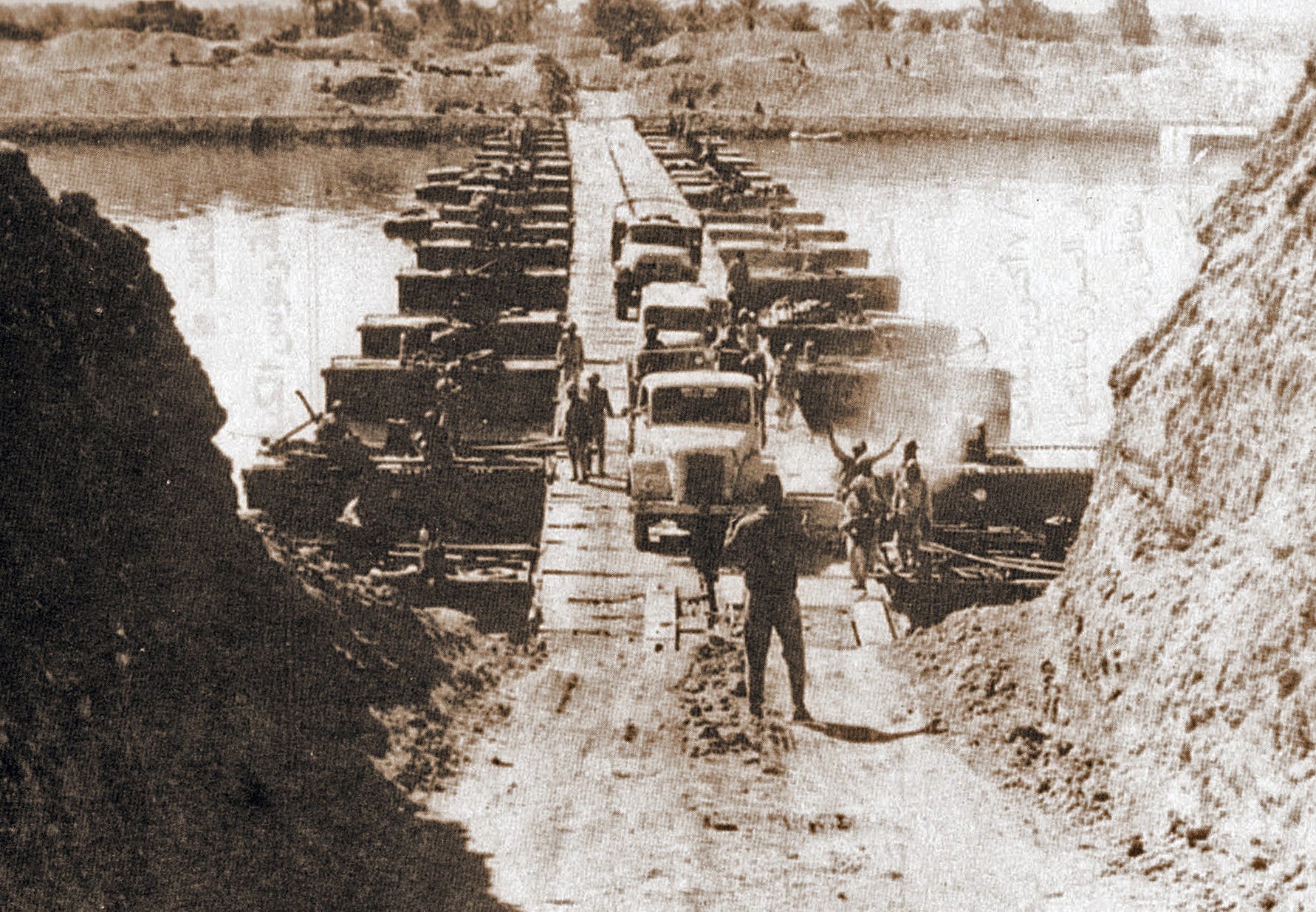
October 6, 1973: The Yom Kippur War begins with an Egyptian surprise attack (“Operation Badr”) against unprepared Israeli military units in the then-occupied Sinai Peninsula and a Syrian attack on Israeli units in the Golan. The war ended almost three weeks later in a tactical Israeli victory that nevertheless sparked a wave of domestic criticism over the intelligence failure that left the Israelis so unprepared for the initial assault. Israeli Prime Minister Golda Meir’s government fell not long after as a result. Despite Egypt’s defeat, its initial success was celebrated back home and gave President Anwar Sadat (at US Secretary of State Henry Kissinger’s urging) the political capital to shift Egypt’s Cold War orientation toward the US and begin the negotiations that would eventually lead to the Camp David Accords.
October 6, 1981: Members of Egyptian Islamic Jihad assassinate Egyptian President Anwar Sadat during the annual “Military Day” parade celebrating the anniversary of the Yom Kippur War. EIJ targeted Sadat over his diplomatic outreach to Israel after the war, most especially the aforementioned Camp David Accords in 1978.
INTERNATIONAL
World Politics Review’s Luca Mattei argues that the current El Niño may prove too intense for farmers in some countries to adjust to its effects:
Farmers around the world are feeling the impact, but on the whole, agricultural systems have so far proven resilient. Producers have adapted by varying their crop mix and finding alternative sources for fertilizers and other inputs, while policymakers have stepped in to offer support. Still, this “super El Niño” will test how well those mechanisms can continue to absorb pressure as weather conditions evolve during relatively narrow agricultural production windows.
El Niño conditions are characterized by warmer-than-average ocean temperatures in the tropical Pacific, which alter weather patterns around the world. The National Oceanic and Atmospheric Administration currently forecasts a greater than 90 percent probability of a very strong El Niño system during the Northern Hemisphere’s fall and winter. The impacts on food security will vary substantially by country and crop, particularly given the severe inequality around the world when it comes to access to irrigation, fertilizer, credit, seeds and reliable logistics. Agricultural exposure will be particularly important across tropical regions and parts of the Southern Hemisphere, where growing seasons will coincide with El Niño-related shifts in rainfall.
On the positive side, global grain supplies are expected to provide a solid cushion. The Food and Agriculture Organization projects that global cereal stocks at the end of the 2026-27 season will be equivalent to nearly one-third of annual consumption, a relatively comfortable scenario by historical standards. But that aggregate picture masks substantial variation at the country level.
Moreover, grain reserves do not finance irrigation pumps or provide foreign currency for imports of key agricultural inputs. The emerging food-security pressure will therefore depend on the interaction between climate exposure, input availability and the capacity of governments and farmers to respond in time.
MIDDLE EAST
ISRAEL-PALESTINE
The Israeli military (IDF) killed at least three people across Gaza on Tuesday. Looking forward, Israeli Defense Minister Israel Katz says that he’s put the IDF on high alert for the possibility of attacks by Hamas and/or other militant groups to mark the third anniversary of the October 7, 2023 attacks. Whether any such anniversary attacks are forthcoming this likely augurs for a violent day in Gaza tomorrow.
YEMEN
Ansarullah attacks reportedly damaged two airports in Saudi Arabia late Monday night, Najran International Airport and King Abdullah bin Abdulaziz International Airport in the city of Jazan. Those attacks wounded three people, according to Saudi authorities, but the extent of the damage is unclear and doesn’t seem to have been severe. Ansarullah also claimed a missile attack on the airport in Riyadh on Tuesday but Saudi officials say that was intercepted. In the face of reports that Yemeni government-aligned forces had pushed Ansarullah out of the Red Sea coastal territory it seized last month, spokesperson Turki al-Maliki took to social media to insist that the group’s fighters still control that territory. Absent some independent reporting from the area, which seems to be impossible at this point, anything I could add here would be purely guesswork.
AFP also reported on Tuesday that some 270 combatants had been killed in total over the previous day, while Ansarullah was reporting that a Saudi airstrike killed at least six people in Yemen’s Hajjah province. And the Yemeni government (such as it is) was claiming to have made new advances on the ground in the heavily contested Taiz and Marib provinces.
IRAN
Amid reports of another apparent Iranian attack on a tanker around the Strait of Hormuz on Tuesday (which would make at least 13 attempted attacks over roughly the last week), an Al Jazeera analysis questions the sustainability of the recent upsurge in oil exports from the Middle East. The answer is that it is, in theory. But the two main conduits for that upsurge are Saudi Arabia’s East-West Pipeline carrying oil to the Red Sea and untracked ship-to-ship oil transfers near the strait. Both are vulnerable to attack and the latter requires a large number of ships to shuttle oil through the waterway to large tankers waiting in the Gulf of Oman or beyond. That’s driving up shipping and insurance costs, which is still inflating global oil prices, to say nothing of the costs being incurred by the US military to maintain its presence in the region and protect those Hormuz transits.
ASIA
SOUTH KOREA
The South Korean government claims that it is preparing some sort of “response” to last month’s apparent landmine blast that wounded two soldiers on the South Korean side of the Demilitarized Zone. Said response is supposed to elicit an apology from the North Korean government over the incident. That seems unlikely. The North Korean Foreign Ministry rejected Seoul’s allegation again on Tuesday, calling it a “premeditated farce” and “grave provocation” while threatening “an immediate and powerful counteraction” to any South Korean action.
JAPAN
The recent arrest of a US Marine stationed on the Japanese island of Okinawa, for allegedly murdering a woman in the city of Naha, has sparked an uptick in public opposition to the US military presence that included a protest before the US embassy in Tokyo on Tuesday. Crimes committed by US military personnel in Japan are a relatively frequent source of public hostility, particularly as the US-Japanese Status of Forces Agreement can make prosecuting those crimes difficult for Japanese authorities. In this case, because the crime was committed while the soldier was off duty and he was arrested off base by Japanese police, there shouldn’t be any legal way for the US to interfere, but politics could still be a factor. It remains to be seen whether this public opposition will manifest as a new drive to reduce the US military presence in Japan, though given the current Japanese government’s proclivities and its tense relations with China that seems unlikely.
AFRICA
SUDAN
Sudan Tribune is reporting that there’s been “fierce fighting” between Rapid Support Forces militants and government-aligned “Joint Forces” militia unit this week near the capital of West Darfur state, Geneina. The Joint Forces group has made gains in West Darfur in recent months, confounding the RSF’s efforts to fully consolidate control of the Darfur region.
Elsewhere, Drop Site’s Aunnab Alman reports that the RSF refused to aid rescue efforts amid a massive gold mine collapse in West Kordofan state last month:
[Survivor Mohammed al-Hassan] said the miners asked the RSF for help and were turned away. “We went to a Rapid Support Forces post about 15 minutes away and told them people were trapped,” he said. “They had two excavators, and they refused to help.”
All six shafts [of the Zaraa gold mine] collapsed into one another, burying the miners inside. At least 82 people were killed and around 50 injured, a local administration official told reporters the following day. A source in the Rapid Support Forces (RSF), the paramilitary group that controls the area, gave AFP the same death toll and said an unknown number of people remained trapped.
No updated toll has been released since. A few days after the collapse, the RSF sealed off the area around the mine, local sources said, clearing out even the miners who were searching for their colleagues. No one has been allowed near the mine since.
The RSF was itself a partner in running the mine, according to local miners, after they took control of West Kordofan state in December 2025. Gold is one of the main sources of revenue for both sides of Sudan’s war—the national military, the Sudanese Armed Forces (SAF), and the RSF—according to conflict economy experts. Over two million people work in the mining industry in Sudan.
Mining is essentially unregulated in Sudan, which makes it a particularly dangerous profession for people working in informal, unstable mineshafts.
MALI
The rebel Azawad Liberation Front (FLA) announced on Tuesday that its forces are withdrawing from the northern Malian town of Kidal, a bit over five months after taking it in a joint offensive with Jamaʿat Nusrat al-Islam wa’l-Muslimin jihadists. The Malian military, with the support of Russian “Africa Corps” forces, has begun a new air and ground campaign to retake the town and the FLA is characterizing this move as “a temporary operational measure” in response.
KENYA
The Kenyan government has reported its first-ever case of Ebola, after a Kenyan national returned to the country from the Democratic Republic of the Congo over the weekend and then succumbed to the illness. He had apparently been ill for about a month before managing to catch a flight from Uganda into Nairobi. Kenyan authorities are tracking his known contacts and have quarantined those who have already been found. So far there doesn’t appear to be any evidence of spread.
EUROPE
UKRAINE
The Ukrainian military undertook one of its largest bombardments of the Moscow region since the start of Russia’s invasion in 2022 overnight, launching some 650 drones at the Russian capital. The attack disrupted air traffic around the city and killed at least two people while wounding nine more. Ukrainian President Volodymyr Zelensky later warned in his nightly address that “there is updated intelligence indicating that Russia is preparing a massive attack.” The parameters of this potential attack remain to be seen.
The Black Sea portion of this conflict continued on Tuesday as somebody’s drones sank one merchant vessel and damaged another off the coast of Bulgaria. There’s no indication as to responsibility but the Ukrainian government disavowed any involvement. Bulgarian authorities rescued the crew of the damaged vessel but were still searching for survivors from the second vessel at time of writing. Additionally a Liberian-flagged tanker was reportedly attacked (presumably by the Ukrainians) and caught fire off of the Russian coast. Russian authorities were able to rescue its crew.
ICELAND
Having secured some degree of additional control over Greenland, the Trump administration is unsurprisingly, and unfortunately for the people living there, turning its attention to Iceland:
Secretary of State Marco Rubio brought President Trump’s Arctic ambitions to Iceland on Tuesday, looking to build on a deal that emerged from Trump’s push to take control of Greenland as the U.S. expands its military reach across the region.
In meetings with Icelandic officials, Rubio said the administration was open to expanding security cooperation, citing Iceland’s infrastructure, technology and surveillance capabilities.
“There’s interest in doing more together,” Rubio said, praising Iceland for allowing “the U.S. military to project power using your land, your air, your sea, giving us a critical outpost for monitoring clandestine behavior and deterring our adversaries.”
While last month’s deal fell short of Trump’s demands to control Greenland, a self-governing territory that is part of Denmark, it paved the way for a larger U.S. military presence. Such a buildup would further increase the strategic importance of neighboring Iceland, which has airfields, ports and surveillance infrastructure that provide a natural staging ground for operations in Greenland and across the North Atlantic.
Iceland being a full-fledged nation-state and not a territory of another country it would be even more awkward for the administration to threaten to annex it the way it did with Greenland — though that hasn’t stopped it from hinting in that general direction. As with Greenland, presumably it will settle for something less than annexation though what that will be is unclear.
AMERICAS
UNITED STATES
Finally, Foreign Affairs’ Ali Vaez offers a pessimistic assessment of the Iran War and the chances of it ending anytime soon:
When will the war in Iran end? American officials claim that the answer is soon. “I think the war is going to end immediately after the [November] election,” declared U.S. President Donald Trump in September. “They can’t hold out any longer.” Iranian leaders agree that the war’s conclusion is near. Tehran has “brought the most heavily armed army in the history of the world to its knees,” proclaimed Ahmad Vahidi, the commander in chief of the Islamic Revolutionary Guard Corps, in August. Many outside analysts think that the conflict will drag on for longer and end with negotiations rather than with a clear winner. But generally, there is a sense that the fighting will soon be resolved, one way or another.
Such thinking is understandable. All wars eventually end, and after months of rising energy prices, the world is especially eager for this one to stop. Yet the unsettling reality is that the conflict is nowhere near over. The war’s two principal belligerents cannot achieve their desired goals, yet they both feel they are accomplishing enough to make continued fighting through a mix of military and economic tools worth it. The United States cannot topple the Iranian regime, get it to give up its missile program, force it to abandon its nuclear program, or make it stop supporting its regional partners. But Washington can keep degrading Iran’s military and constricting its economy. Iran cannot evict the world’s only superpower from the Middle East. Yet it can keep damaging U.S. regional bases, bombing the United States’ regional allies, and disrupting international commerce.
Critically, both states have the resources needed to fight indefinitely—and both believe they have no choice but to use them. They think that if their side lets up, the other will press on until it has either humiliated them or achieved its main objectives. They carry out periodic talks, but there is no mutual trust. In fact, they suspect that their enemy will simply use a cease-fire to regroup and resupply before attacking again. The Iranian government fears that relinquishing leverage, whether over Hormuz, its missile arsenal, or the nuclear program, would leave it exposed to pressure later. Washington, for its part, worries that sweeping sanctions relief would provide Tehran with the resources and time it needs to reconstitute its capabilities. Israel, meanwhile, fears that restraint today would only create a stronger Iran tomorrow. The steps required to escape the war look dangerous precisely because they require each side to temporarily make itself more vulnerable.
The war, then, will carry on as it has. There will not be a comprehensive resolution. There will be no lasting peace deal. But because the status quo is sustainable for each side, and because the parties lack the power to seize the upper hand, there will be no dramatic escalation, either. Tehran and Washington won’t be defeated. Yet no one will win.