

Happy Presidents’ Day to those who are celebrating!
With apologies, today’s roundup is somewhat brief and early. I have an obligation this evening that has cut into my usual writing time but will cover anything I’ve missed in tomorrow’s newsletter.
TODAY IN HISTORY
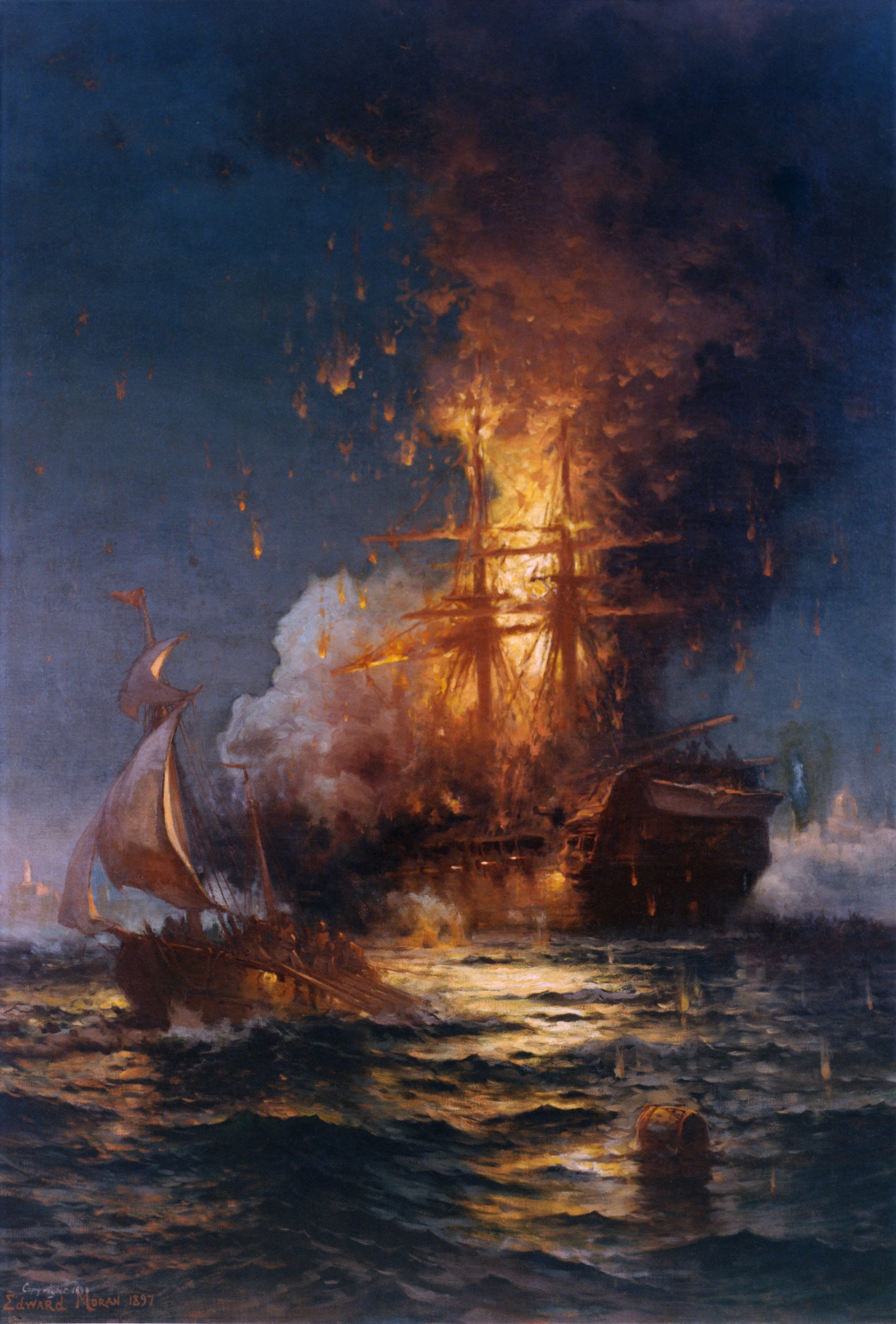
February 16, 1804: A small US naval crew enters Tripoli harbor and destroys the grounded USS Philadelphia. The frigate had run aground in late October amid the First Barbary War and remained salvageable, and so US leaders decided that they couldn’t leave it in Tripolitanian hands. Lieutenant Stephen Decatur Jr. volunteered to lead a mission to enter the harbor, board the Philadelphia, and determine whether to recover or destroy it. He opted for the latter, and in pulling it off became one of the earliest US naval icons.
February 16, 1923: British archeologist Howard Carter opens the inner burial chamber of the 14th century BCE Egyptian Pharaoh Tutankhamun. Carter’s discovery the previous November of Tutankhamun’s tomb, regarded as the best preserved burial site in Egypt’s “Valley of the Kings,” remains arguably the best known achievement in the field of Egyptology. The inner burial chamber was the best preserved part of the tomb and contained a large number of valuable finds. Interest in the tomb’s discovery made celebrities out of Carter and Tutankhamun (AKA “King Tut”) and helped spark a new outbreak of “Egyptomania” around the world, particularly in the US.
MIDDLE EAST
ISRAEL-PALESTINE
Al Jazeera looks at how the Israeli government’s forthcoming land registration project might work in the West Bank:
Michal Braier, an architect and the head of research at Bimkom, an Israeli human rights organisation that focuses on land and housing rights, said it is likely Israeli authorities will take the same approach in the West Bank as they have taken in East Jerusalem since 2018. In East Jerusalem, only 1 percent of settled land has been registered to Palestinians from 2018 to 2024, according to Bimkom.
Braier said Israel will begin by selecting the areas of land it wants to register. The government has set a goal of registering about 15 percent of the unregistered land within the next four years, she added.
“Now we can pretty clearly guess that this 15 percent will be lands where they assume that they can prove the state ownership easily or they can easily reject Palestinian ownership claims because a lot of these unregistered lands don’t have clear records and the records go a very, very long time back. So it will be very hard to prove Palestinian ownership,” she told Al Jazeera.
In theory, she said, Palestinians will be able to file land claims as part of the new process, but in practice, it is likely that they will be prevented from successfully doing so.
