

If you’re interested in history and foreign affairs, Foreign Exchanges is the newsletter for you! Sign up for free today for regular updates on international news and US foreign policy, delivered straight to your email inbox, or subscribe and unlock the full FX experience:
This is just a reminder that FX is on a break from The News and will be back to our regular schedule tomorrow. Thanks for reading!
July 3, 1863: The Union Army of the Potomac defeats the Confederate Army of Northern Virginia at the Battle of Gettysburg. Their defeat ended a brief Confederate invasion of the north and, combined with the Union victory at Vicksburg, Mississippi, a day later, is often considered the turning point of the US Civil War.
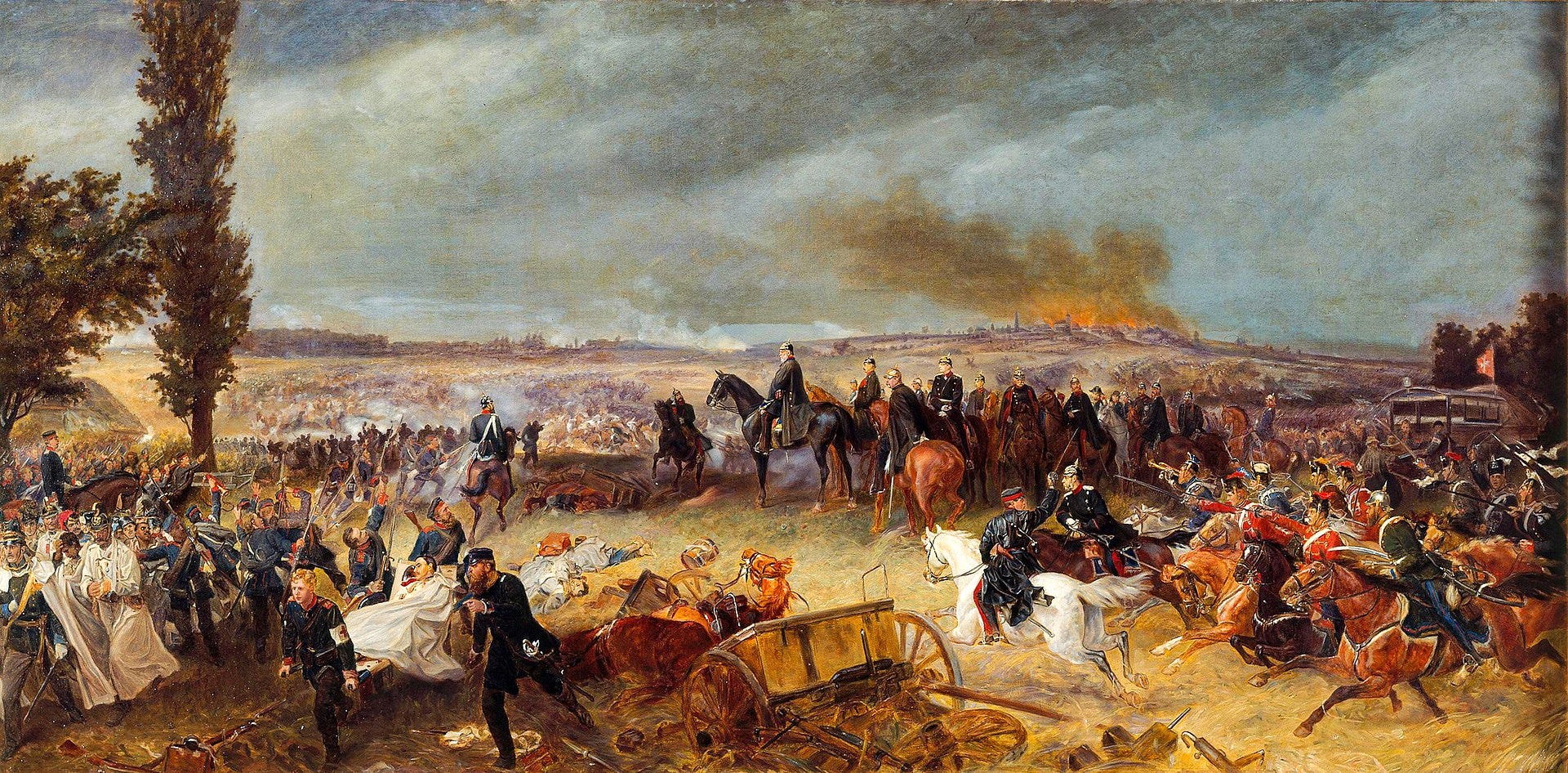
July 3, 1866: The Battle of Königgrätz, the key engagement in the Austro-Prussian War, ends with a decisive Prussian victory. The Austrian army had already suffered a series of defeats and its commander, Ludwig von Benedek, appealed to Emperor Franz Joseph I to make peace with the Prussians but was rebuffed. He drew up his forces for what amounted to a last stand against the far more effective Prussians, and while initially the Austrians held their own against the Prussian First Army and the Army of the Elbe, the arrival of the Prussian Second Army proved too much for the Austrians to handle. The war ended a few weeks later and established Prussia as the dominant German state, paving the way for German unification under Prussian auspices.
July 3, 2013: A military coup led by then-Defense Minister Abdel Fattah el-Sisi overthrows the Egyptian government of Mohamed Morsi, ending a brief experiment in democracy and returning Egypt to military rule. Morsi had been elected president in 2012, after Egypt’s Arab Spring uprising the previous year had toppled the dictatorship of Hosni Mubarak and the Muslim Brotherhood emerged as the country’s strongest political party. But opposition politicians never fully accepted the Brotherhood’s electoral victories, and a combination of other factors including economic weakness, a rise in terrorist incidents, and foreign financing from the UAE brought about the emergence of a protest movement called “Tamarod” (“rebellion”) by late April 2013. The Egyptian military, which regarded Morsi as a threat to its own economic interests, seized upon the (at least somewhat astroturfed) protests as a pretext to remove Morsi from power. Subsequent protests in support of Morsi were met with brutal suppression, with hundreds of people killed in the crackdown.
July 4, 362 BCE: At the Peloponnesian city of Mantinea, a Theban-led army defeats a Spartan-led alliance in what probably should have been the decisive battle of the Theban-Spartan War. The battle was decisive in the sense that the Spartan defeat more or less put the final nail in the coffin in terms of reviving that city’s lost hegemony. But the Theban victory came at great cost because the city’s leader and the architect of its own hegemony, Epaminondas, died in the fighting along with his two potential successors, Iolaidas and Daiphantus. The political decapitation weakened Thebes as well. If there was a winner here it may have been the future King Philip II of Macedon, whose kingdom’s rise to dominance over the Greeks was aided by the absence of a genuinely powerful Greek city-state.
July 4, 1187: The Battle of Hattin, arguably the greatest disaster of the entire Crusading enterprise, sees the army of Jerusalem under King Guy of Lusignan virtually annihilated by the Ayyubid army under Saladin. Guy, in his regal wisdom, allowed Saladin to draw him a) out of Jerusalem and b) away from water, two decisions that proved to be fatal to most of the men under his command. The decimation of Jerusalem’s army left the city vulnerable and Saladin besieged it in mid-September. After a surprisingly robust defense led by noble Balian of Ibelin, the city fell to Saladin’s forces in early October.
July 4, 1776: The “Declaration of Independence” is published in Britain’s North American colonies. Commemorated annually as Independence Day in the United States.
July 5, 1811: Venezuelan Independence Day, marking the adoption of Venezuela’s Declaration of Independence in a congress of colonial provinces.
July 5, 1960: Several Force Publique military units mutiny against their Belgian officers in the Republic of the Congo-Léopoldville (today the Democratic Republic of the Congo), sparking what has come to be known as the “Congo Crisis.” The Belgian military sent soldiers into Congo-Léopoldville and several parts of the country rebelled. Prime Minister Patrice Lumumba appealed to the Soviet Union for assistance, but army chief of staff Mobutu Sese Seko ousted Lumumba in a coup in September and the country began to break apart. The Crisis ended in November 1965, after most of the rebellions had been suppressed and Mobutu, with US support, had ousted President Joseph Kasa-Vubu in a second coup and assumed absolute power.
July 5, 1962: Algeria declares its official independence from France, a few months after the close of the Algerian War. The declaration followed on the heels of an April 1962 referendum in which over 90 percent of French voters agreed with the Évian Accords, the peace treaties that ended the war, and a July 1 referendum in Algeria in which over 99 percent of respondents voted for independence. French President Charles de Gaulle declared Algeria independent on July 3 but the new provisional Algerian government set July 5 as the formal date.
July 5, 1977: Pakistan’s civilian government, under Prime Minister Zulfikar Ali Bhutto, is overthrown in a military coup led by General Zia-ul-Haq. The mostly-conservative Pakistan National Alliance had accused Bhutto and his Pakistan People’s Party of having rigged the country’s March 1977 general election, the second such contest in Pakistani history and first since Bangladesh had won its independence. PNA leaders organized large protests that were met with violence from state security forces that left scores of people dead. Zia stepped in with promises to organize a new election within 90 days—he then ruled Pakistan as president/dictator until his death in a suspicious plane crash in 1988. Claims persist that the coup and Bhutto’s subsequent execution were carried out with at least the acquiescence, if not the encouragement, of the US government.
July 6, 371 BCE: A Theban army defeats the Spartans at the Battle of Leuctra, one of the most significant military engagements of the Greek classical period. Thebes, like the rest of Greece, had come under Spartan hegemony after the Peloponnesian War (431-404 BCE), but relations between the two cities broke down when Theban leader Epaminondas (d. 362 BCE) attempted to reform the Boeotian League against Spartan wishes. A Spartan army invaded Boeotia and the Thebans met it in battle. Epaminondas employed an innovation on the standard tactics of hoplite warfare, focusing his attack on the strong Spartan right rather than its weaker left and thereby crushing the Spartans’ best troops—killing King Cleombrotus I in the process. The rest of the Spartan army fled. Leuctra almost immediately changed the balance of power in Greece, ending the Spartan hegemony and instituting a brief Theban hegemony before the exhausted city-states eventually came under Macedonian rule.
July 6, 640: An Arab army commanded by Amr ibn al-ʿAs defeats a much larger Byzantine force under the command of a general named Theodore in the Battle of Heliopolis. Amr was the driving force behind the decision to invade Egypt, having convinced Caliph Umar I to let him take a small (around 4000 men) force into the region, possibly on a raid rather than a mission of conquest. Umar subsequently reinforced that army and made it possible to think in terms of permanently seizing territory. The Byzantines, still reeling from losing the Levant to the Arabs, were able to muster an army of around 20,000 men to drive the Arabs out of Egypt, but Theodore made the peculiar decision to pick a battle in the open field in which the Arabs’ superior maneuverability and generalship carried the day and left all of Egypt open to Arab conquest. The loss of Egypt was even more devastating to the Byzantines than the loss of the Levant had been.
July 6, 1917: An Arab army under Bedouin chieftain named Auda Abu Tayi and advised by British officer T. E. Lawrence defeats the Ottomans at the Battle of Aqaba. Coming in the wake of an Arab defeat at Medina, the battle was important for several reasons—it helped the Arab Revolt regain momentum, it opened an important Red Sea port to Britain, it cleared the Egyptian Expeditionary Force’s path north, and it allowed the EEF and the Arabs to link up and coordinate their actions moving forward.
July 6, 1967: The Nigerian Civil War begins when Nigerian forces invade the breakaway Niger Delta region of Biafra. The conflict eventually settled into a Nigerian blockade of Biafra, precipitating a massive humanitarian crisis in which hundreds of thousands of people (high estimates run to around 3 million) died of preventable causes, mostly starvation. A final Nigerian assault in December 1969 led to the Biafran rebels’ surrender a month later.