

You’re reading the web version of Foreign Exchanges. If you’d like to get it delivered straight to your inbox, sign up today and get 40% off on your first year:
TODAY IN HISTORY
September 3, 301: According to tradition, this is the date upon which a stonemason-turned-deacon named Marinus founds a new monastery on Monte Titano, some distance outside the Italian city of Rimini. He may have fled Rimini after a woman there accused him of being her estranged husband. The monastery grew quickly, possibly fueled by Christians looking for sanctuary amid the Diocletianic persecutions (though historians continue to debate the actual extent of those persecutions), and, taking the name of its founder, became the historical basis for the tiny nation of San Marino (“St. Marinus”). San Marino commemorates September 3 as “Republic Day.”
September 3, 863: A Byzantine army manages to defeat an Arab raiding party at the Battle of Lalakaon, in the process killing the emir of Melitene, Umar al-Aqta. They may also have killed the leader of the Paulician movement, Karbeas, though he may have died later in 863. The Byzantines then raided into the Caucasus, where at some point they killed the emir of Tarsus, Ali ibn Yahya. In basically one fell swoop the empire had eliminated arguably its three biggest threats in the east. Constantinople was able to shift its focus west and ensure that it, not Rome, would manage the Christianization of the Bulgarians. That in turn pacified the Byzantines’ western border for the time being, which allowed them to shift focus again to the east and make significant gains at Arab expense in the decades to come.
September 3, 1260: A Mamluk army stops the seemingly unstoppable Mongols at the Battle of Ayn Jalut at what is known today as Ma’ayan Harod in Israel. The Mongol commander, Hulagu, had returned east with a sizable portion of his army in order to defend his interests following the death of the great khan, Möngke, in August 1259, leaving behind an undermanned remnant. The Mongols also faced an army of slave soldiers recruited from Central Asia, who fought like the Mongols and seem to have used many of the Mongols’ favorite tactics against them. The battle is a genuine turning point in world history, as a Mongol victory probably would have seen them continue into Egypt and thus there is an argument to be made that the Mamluk victory preserved Islam’s status as a major world religion.
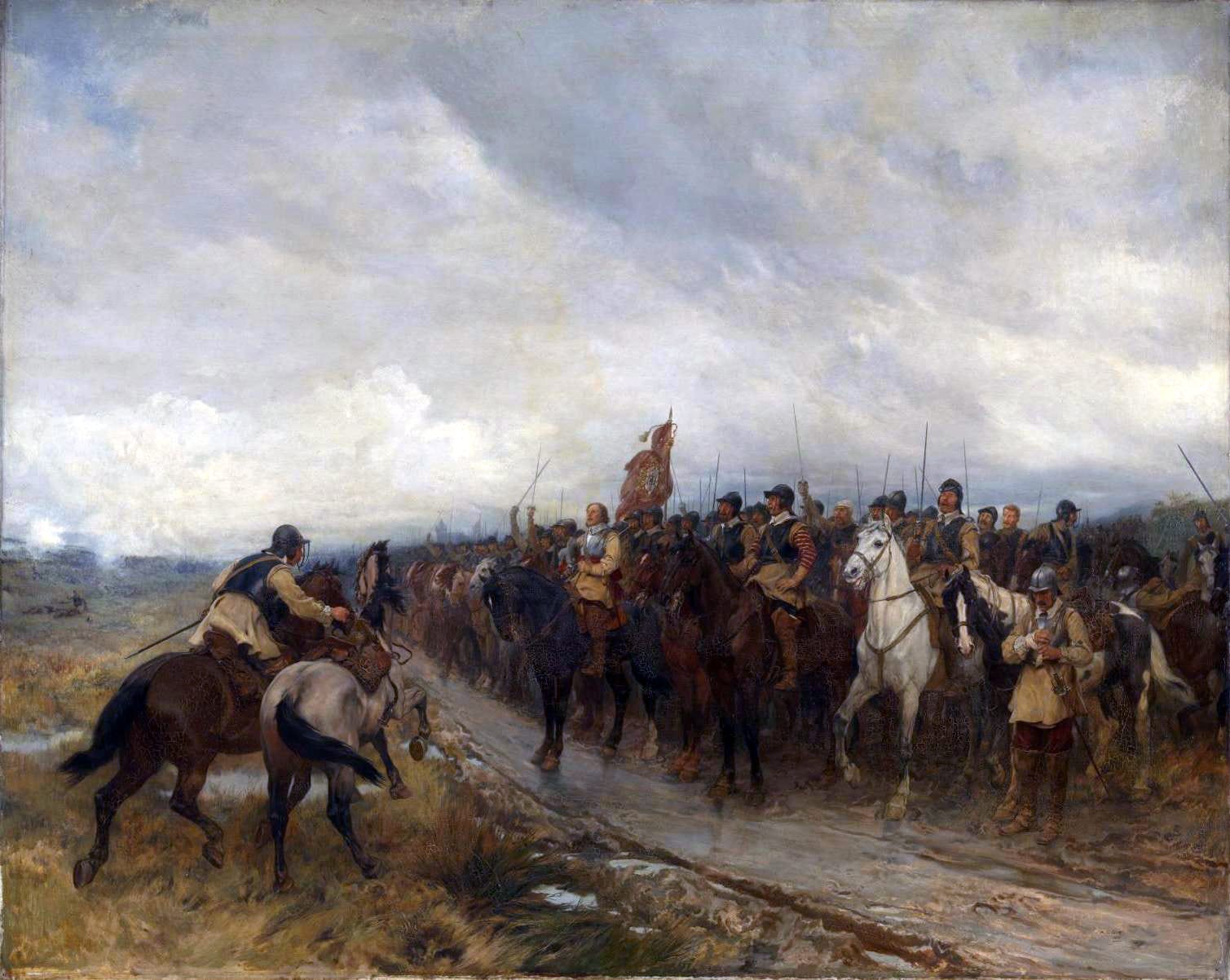
September 3, 1650: The English New Model Army invades Scotland and wins a decisive victory over Scottish/Royalist forces at the Battle of Dunbar. English commander Oliver Cromwell moved quickly to capture Edinburgh and the key Scottish port of Leith. The invasion, prompted when the Scottish Parliament voted to recognize Charles II as the successor to Charles I after the English “Rump” Parliament had the latter executed in 1649, ended coincidentally exactly one year later, on September 3 1651, when Cromwell’s army again crushed a Royalist army at the Battle of Worcester.
September 3, 1783: Representatives of Great Britain and the United States of America sign the Treaty of Paris, ending the American Revolution and establishing the United States as a newly independent nation. US negotiators went around the French government, which saw itself as the leader of an anti-British alliance, to negotiate a bilateral treaty with London. As a result they reached an agreement that, among other things, gave the new nation control of all North American territory east of the Mississippi River. The French delegation, by contrast, had favored a settlement that confined the US to the territory east of the Appalachian Mountains.
September 3, 1939: France and the United Kingdom, along with Australia, Canada, New Zealand, and South Africa, declare war on Germany in response to the German invasion of Poland, officially kicking off the Second World War.
INTERNATIONAL
The United Nations World Meteorological Organization issued a new El Niño forecast on Thursday that projects the current system to persist through at least February and “to be the strongest in at least 70 years.” Weather and agricultural disruptions are already apparent and the system is expected to strengthen further over the next few months.
MIDDLE EAST
LEBANON
The Israeli government released one of its Lebanese prisoners on Thursday and is preparing to free four more, all civilians. According to Israeli Prime Minister Benjamin Netanyahu these prisoner releases are part of a deal whereby the Lebanese government has promised to facilitate a search for the bodies of several Lebanese Jewish community leaders who were abducted and killed by Hezbollah and groups aligned with it back in the 1980s. The Israelis are believed to be holding more than 30 Lebanese civilians taken captive since the Israeli military (IDF) invaded southern Lebanon in 2024.
Elsewhere, the IDF claimed on Thursday that it has secured “operational control” over the Ali al-Taher ridge in southern Lebanon after clearing two underground Hezbollah tunnels in that area. That ridge has been an IDF focus for some time now, both because of the tunnels beneath and because it is a strategic high point in the region. The IDF is now apparently planning to destroy the tunnels. Reuters reported earlier on Thursday that the Iranian government had issued a warning a couple of weeks ago regarding IDF operations on the ridge, in part because there were Islamic Revolutionary Guard Corps personnel stationed there, and that the Israelis had delayed their plans as a result. Israeli officials are denying the details of that report.
ISRAEL-PALESTINE
The IDF killed at least three people in Gaza on Thursday, one in a drone strike and two others (including a 13 year old) in a shooting incident in the Beit Lahia area. Elsewhere, Israeli National Security Minister Itamar Ben-Gvir announced a plan for ethnically cleansing Gaza on Thursday that involves the creation of a new cabinet ministry devoted to the task. Defense Minister Israel Katz made it clear the previous day that ethnic cleansing — er, I mean “voluntary migration” — is still the Israeli government’s ultimate goal for the territory.
On the diplomatic front, DRC President Félix Tshisekedi announced on Thursday that he will move his country’s Israeli embassy from Tel Aviv to Jerusalem. Tshisekedi made the announcement as he was wrapping up a visit to Israel. Aside from Israeli investment one assumes that he’s looking to curry additional favor with the Trump administration.
YEMEN
Ansarullah launched a new offensive on Thursday aiming to cut a road between the port city of Mokha and the southern city of Taiz, sparking clashes that left at least 18 Ansarullah personnel and 13 Yemeni military personnel dead. The main thrust appears to have been an operation to seize Mokha from the Yemen government, which would be a significant gain for Ansarullah though there’s no indication as to whether or not the group made any meaningful gains.
IRAN
The latest US-Iran flareup continued on Thursday, with Iranian forces striking targets in Kuwait and the United Arab Emirates (allegedly, as UAE authorities denied that any attack took place there). Iranian officials say they’re retaliating for a US missile strike earlier this week that reportedly struck a civilian home during a wedding ceremony and killed at least five people. The US military is “probing” that claim for the possibility that the damage was caused by missile debris or an errant Iranian air defense interceptor, though video and still photos of the damage apparently point toward a direct hit on the home by a US weapon. Additionally at latest count at least 13 Iranian military personnel have been killed this week.
The good news is that this isn’t a war, according to noted expert JD Vance. He might want to explain that to his boss, though, because Donald Trump keeps referring to it as a war even though it would benefit him and his Republican Party if he stopped doing that.
US Energy Secretary Chris Wright told CNBC on Wednesday that 17 million barrels of oil made it out through the Strait of Hormuz the previous day. The Trump administration has been claiming for some time now that it’s secretly moving all the oil that there is, was, or ever will be out through the strait. I guess the ultra secrecy is supposed to explain why maritime traffic monitors can’t track any of the related tanker movements and why global oil prices are still rising, to $97 per barrel on Thursday with diesel prices hitting their “highest level since 2022.” Clearly the monitors and the market don’t have access to the information that JD Vance has.
Reuters claims that the combination of the US blockade and “Maximum Pressure 2.0” has the Iranian economy struggling even more than it was struggling previously. The blockade has substantially reduced Iranian oil exports and the intensified sanctions (or at least intensified rhetoric about sanctions) campaign has reportedly closed down avenues that the Iranians were using to evade the blockade (or made them much more expensive to maintain). There’s no reason to doubt that the Iranian economy is being squeezed and we already knew that the US was capable of inflicting pain on Iranians. The question is whether it can inflict enough pain to force the Iranian government to make any concessions and/or to provoke a revolution. Otherwise it’s just pain for pain’s sake.
ASIA
INDIA
The Permanent Court of Arbitration at The Hague ruled earlier this week that the Indian government is still bound by the terms of the 1960 Indus Waters Treaty, which is supposed to ensure an adequate water supply for Pakistan by limiting Indian activity on the upstream portions of the Indus River system. The Indian government suspended the treaty last year after a terrorist attack in Kashmir and the Pakistani government has been growing increasingly agitated about that. It’s begun a major dam project on the Chenab River that the Pakistanis insist will violate the treaty and that the court ordered mostly suspended pending a ruling from an “expert” appointed by the World Bank. The Indian government rejected the PCA ruling, which may leave the Pakistanis a step closer to taking drastic action.
SOUTH KOREA
The South Korean government is reportedly planning to send military assets to the Persian Gulf later this year to support “freedom of navigation” through the Strait of Hormuz. This is likely to be a token gesture that has much less to do with the strait than it does with South Korea’s relationship with Donald Trump. You may recall that when Trump scaled down last month’s joint US-South Korean military exercises he said that he was doing so in part because Seoul had not supported the Iran war. Presumably South Korean officials are hoping to pacify him.
AFRICA
SUDAN
The United Nations Independent International Fact-Finding Mission for the Sudan issued a new report on Thursday highlighting the role of foreign interference in expanding and extending Sudan’s civil war:
Foreign recruitment and external support networks are fuelling the war in Sudan, strengthening the military capabilities of the country’s warring parties and enabling increasingly sophisticated military operations with devastating consequences for civilians, the UN Independent International Fact-Finding Mission for the Sudan said in a new report today.
The report, “Fuelling Sudan’s conflict: weapons, fighters and external support networks,” documents how transnational entities operating across several countries have recruited, trained and deployed foreign personnel to support the Rapid Support Forces (RSF), while also facilitating the transfer of weapons, ammunition, military technology and logistical support. The report also finds reasonable grounds to believe that the Sudanese Armed Forces (SAF) used foreign-supplied drones in its operations that harmed civilians and civilian objects.
States linked to these supply chains are under strict international legal obligations to exercise due diligence, investigate and halt illicit mercenary and supply networks operating from or through their territories, prevent violations, and enforce the UN arms embargo.
Directing attacks against civilians and civilian objects constitutes war crimes. “The consequences of this external support are being felt most acutely by civilians,” said Mohamed Chande Othman, Chair of the Fact-Finding Mission. “This external support has not brought greater protection for civilians. Instead, civilians are paying the price through attacks on homes, hospitals, schools, markets and places of refuge.”
NIGER
In the wake of last month’s mutiny/attempted coup in Niger, Sawahil’s Alex Thurston highlights the factors that put that country’s junta at greater risk of a being overthrown than the region’s other military (or basically military) governments:
Unlike in 2020 in Mali or 2022 (x2) in Burkina Faso, Niger’s General Abdourahamane Tiani was a senior officer and an insider who appears to have acted to protect his own position within the existing system; that image and posture contrast sharply with the Malian and Burkinabè coups that brought relatively young, combat-tested officers to power promising systemic change. The ideological foundations of Niger’s junta are weaker and less credible, in other words, than are those of the juntas in Mali and Burkina Faso. Meanwhile, although Tiani came out of a particular political dispensation and rearranged it, he does not have the kind of lynchpin position that Chad’s Mahamat Déby has - Déby may be resented and contested by numerous other factions in Chad, but the Déby family has been the center of gravity in Chadian politics since 1990, a kind of continuity Tiani does not embody. Tellingly, of all the successful Sahelian coups of the 2020s, the 2023 Niger coup appeared to be the least cohesive, the one that most relied upon various factions of the military reluctantly assenting to a takeover. So while all four of these Sahelian juntas are vulnerable, Niger’s may be the most politically vulnerable, meaning the one where front-line soldiers would have the least sympathy for their current rulers.
SOMALIA
Somali security forces apparently held off another attack on the city of Baidoa by forces loyal to former Southwest state governor Abdiaziz Hassan Mohamed Laftagareen on Thursday. It’s been a bit over two weeks since Laftagareen’s forces last tried to take the city, and as they did then Somali officials are accusing Laftagareen and his militia forces of collaborating with al-Shabab jihadists. It’s unclear whether al-Shabab was a participant in Thursday’s attack but if it was then it’s unclear whether it was working with Laftagareen or just exploiting the chaos. Laftagareen was forced from office earlier this year after he declared that he no longer recognized the authority of the federal government in Mogadishu.
EUROPE
RUSSIA
Ukrainian strikes killed at least four people in Russia’s Belgorod oblast on Thursday. Additionally, authorities in the Russian-occupied portion of Ukraine’s Donetsk oblast reported that drone strikes killed at least three people.
UKRAINE
Foreign Policy’s Adrian Karatnycky says that Ukrainian President Volodymyr Zelensky is losing public support over a series of corruption scandals:
Recent polling from Ukrainian political research company SOCIS shows that Ukrainians now regard corruption as a greater problem than the war itself, in part because they link Ukraine’s fate on the battlefield to corruption at the highest levels of the state. Fully 90 percent of Ukrainians believe that corruption stands at a high or extremely high level. Most significantly and most emblematic of the shift, nearly 57 percent of Ukrainians blame Zelensky for the prevalence of corruption, nearly double the number in a similar poll by SOCIS in April 2025. The SOCIS polling also projects that three different rivals would beat him in a second-round election, each by a landslide margin of around 2-to-1.
Zelensky’s loss of support is largely a self-inflicted wound, the product of a philosophy of governance based on rule through a small group of functionaries prized for their personal loyalty. For years, Zelensky has touted and defended this highly centralized system of governance, in which nearly all decision-making emanates from the presidential office. In December 2023, he famously declared that he relies on a team of five to six key managers to run the country’s affairs. Such centralization, while in violation of the constitution, was long accepted by the public as necessary amid the wartime emergency.
In the past year, however, numerous scandals inside the heart of Zelensky’s office have shaken public confidence, and his system of rule through close confidants and managers is a shambles. Four of Zelensky’s top managers are implicated in allegations of illicit activities.
AMERICAS
CUBA
The Trump administration blacklisted five Cuban entities plus Fidel Ernesto Castro, grandson of Cuban grandee Raúl Castro, on Thursday. The entities involved included one bank, two mining firms, and two energy companies.
UNITED STATES
Finally, The Conversation’s Wendy Whitman Cobb considers Donald Trump’s plans to create a “US Space Academy” and the militarization of outer space:
Establishing the U.S. Space Academy could be a wise decision, as space is becoming more important in everyday life. The pace of space activities – civilian, commercial and military – has increased significantly in the past decade and is poised to continue. For example, satellite constellations like SpaceX’s Starlink provide internet access globally, and the Global Positioning System, GPS, is a vital part of the economy worldwide. A space academy could help educate the next generation of engineers, scientists and spacecraft operators.
But the biggest implication of this space academy proposal is that it would almost certainly lead to a reconsideration of the relationship between military and civilian space. The distinction between these two areas has been a cornerstone of U.S. space policy for over 65 years. While the lines have been blurred at times, a U.S. Space Academy that serves as both a military and civilian institution confuses them even further.
As tensions in space between the United States and its potential adversaries continue to rise, balance will be necessary to avoid any potential escalation. Space activities that are civilian in nature, like scientific exploration, should not be confused with those that are distinctly military related, such as missile warning or defense, that might be seen as more aggressive. Keeping this distinction clear will help to clear up any confusion about U.S. intentions in space.
re: Lebanon. I know I don't need to say this, but can I suggest referring to them not as 'Lebanese prisoners' but as "hostages"?