

You’re reading the web version of Foreign Exchanges. If you’d like to get it delivered straight to your inbox, sign up today and get 40% off on your first year:
TODAY IN HISTORY
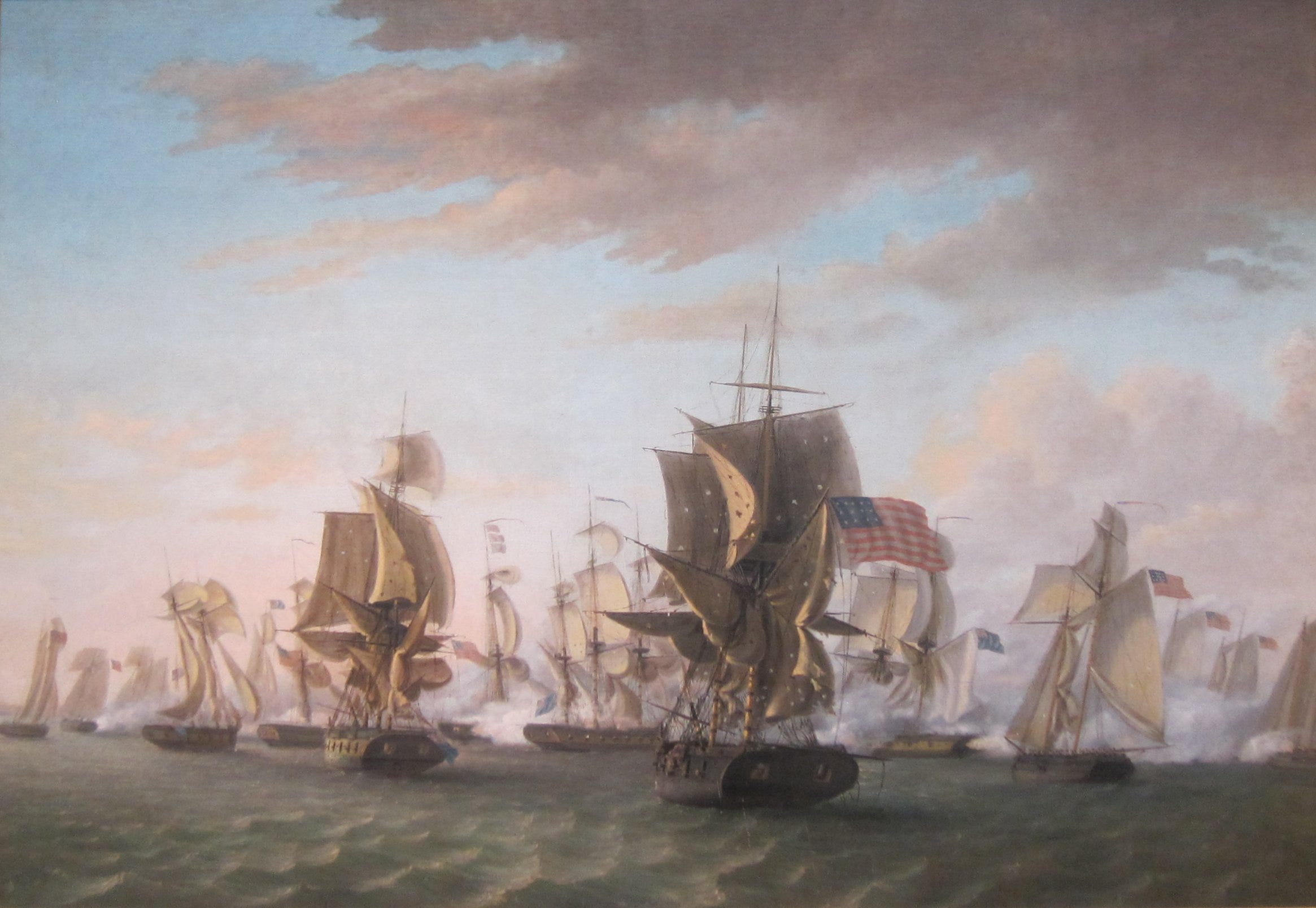
September 10, 1813: In one of the largest naval engagements in the War of 1812, a US fleet defeats a smaller British fleet in the Battle of Lake Erie. This was a significant strategic victory, in that it gave the US control of the lake and enabled both the recapture of Detroit in late September and the US defeat of Tecumseh’s confederacy at the Battle of the Thames in early October. The victory also prompted US Commodore Oliver Perry’s famous message to General William Henry Harrison: “we have met the enemy and they are ours.”
September 10, 1942: In World War II, Allied forces undertake an amphibious landing at Mahajanga, in northern Madagascar, kicking off their final push to take that island from Vichy France. An initial Allied invasion of Madagascar in May had stalled, but over the ensuing months the British military was able to bring in reinforcements and to seize the nearby island of Mayotte for use as a base. The overwhelmed French forces resisted the renewed Allied push for several weeks but by early November Madagascar was in Allied hands. The victory was important for the Allied war effort as it prevented Madagascar from being used by the Japanese Navy to project power into the western Indian Ocean and threaten India as well as the “Persian corridor” used to funnel arms to the Soviet Union. The campaign also demonstrated the potential effectiveness of combined sea, land, and air operations.
MIDDLE EAST
SYRIA
Israeli Prime Minister Benjamin Netanyahu visited military (IDF) personnel in southern Syria on Thursday. This is the third time he’s done something like this but that doesn’t make it any less problematic, inasmuch as the IDF occupation in Syria is legally dubious and regarded (reasonably) as an affront by that country’s government. The Syrian Foreign Ministry condemned his visit, calling it “a provocative move and a blatant violation of the sovereignty and territorial integrity of the Syrian Arab Republic and of international law.”
LEBANON
Netanyahu and his defense minister, Israel Katz, declared on Thursday that the IDF has “destroyed Hezbollah underground infrastructure at the Ali al-Taher ridge in southern Lebanon.” Lebanese media reported a “powerful” explosion in that area that was presumably said destruction.
ISRAEL-PALESTINE
The IDF killed at least four people, a married couple and their two children, in Gaza city on Thursday. Israeli officials claimed that they were targeting a Hamas operative but made “no mention of a wife or children.” Coincidentally, a new Israeli documentary titled NAZA reportedly sheds new light on the tools that the IDF has been using to find and kill low-level Hamas personnel and their families:
Interviews were filmed at night on rooftops in Tel Aviv, on the condition of anonymity because of the risks involved in speaking publicly about Israel’s war activities. The appearance and voices of participants in the film were digitally altered to disguise their identities.
The interviewees detail the secret methods used by the Israeli military in Gaza, including AI-based systems built to identify large numbers of potential low-ranking Hamas targets, who were then bombed in their homes at night, in the knowledge attacks would also kill their families.
The Israeli military hacked into phones to identify the location of such targets, and covertly listened into conversations with their wives and children moments before they were all killed.
The film also features first-person accounts about the destruction of neighbourhoods where the Israeli military estimated that up to 25% of residents were still sheltering in their homes, the systematic burning of civilian homes, and the killing of civilians at a food distribution site.
YEMEN
In what may be the most significant battlefield developing in Yemen in several years, Ansarullah fighters seized control of Mokha on Thursday, about a week after they began a new offensive aimed at isolating and capturing that port city. Mokha lies just north of the Bab al-Mandab strait connecting the Red Sea to the Gulf of Aden, a major maritime chokepoint. If Ansarullah is able to assert effective control over the strait it will give major heft to the group’s blockade of Saudi Arabia and allow it to potentially throttle other commercial traffic. Assuming it holds on to Mokha it’s now also positioned to push further south along Yemen’s Red Sea coast to the strait itself. Ansarullah fighters have also been sighted on the Hanish islands, which are some ways north of the strait but still well-positioned to allow the group to expand its maritime activities.
IRAN
Drop Site’s Fateme Karimkhan reported on Thursday that wages and food prices have become so disconnected in Iran that people are going into debt to buy groceries. This carries risks for both buyer and seller, inasmuch as shops are extending credit to people who may never be able to repay it at this rate. For the Trump administration, which seems to believe that it’s causing this hardship in service of overthrowing the Iranian government, the effect seems to be exactly the opposite. People who don’t know where their next meal is coming from tend to have more immediate concerns than revolution. And as Esfandyar Batmanghelidj writes, the Iranian government has had plenty of time to figure out how to bear US sanctions even as the country’s population is immiserated:
Yet for the better part of a decade, Iran has been able to resist U.S. economic coercion. Until the recent blockade, it used sanctions-evasion techniques to continue oil exports to its key customer, China. Its non-oil industries also adapted to the sanctions, as currency devaluation reduced competition from imports and made Iranian products more competitive in regional markets, boosting exports. Iran thereby avoided the kind of runaway economic collapse seen in other sanctioned countries, such as Syria and Venezuela.
Today, war is testing the resilience of the Iranian economy in ways that sanctions alone could not. Numerous U.S. and Israeli airstrikes have targeted critical industrial facilities, including some of Iran’s most important steel and petrochemical plants. The damage sustained during these attacks has led to major production outages for key industrial goods. The general decline in maritime traffic in the Strait of Hormuz and the specific disruptions caused by the U.S. naval blockade have not only reduced Iran’s exports; they have also throttled imports of much-needed capital and consumer goods. According to a July estimate by the International Monetary Fund, Iran’s GDP is set to contract 5.4 percent this year after shrinking by less than half that over the previous 12 months. Year-on-year inflation climbed from 52.6 percent in December 2025 to 88.6 percent by the start of the summer. The value of the country’s currency has hit a record low of over two million rials to the dollar.
But even as the country’s economic situation is getting worse, Iran’s leadership remains better able to resist the coercive effects of sanctions than it might appear. The state of the economy is not yet impinging on Iran’s ability to wage war. Stockpiles of various goods remain deep, thanks to years of sanctions experience. And the Iranian state, with its powerful repressive tools, has figured out how to offload much of the economic pain onto ordinary Iranians while making sure its own needs are met. Trump’s approach, in other words, can certainly immiserate most of the country’s people. But it cannot successfully strangle the Islamic Republic itself.
To wit, The Wall Street Journal reported on Thursday that Iran is manufacturing ballistic missiles again, “using stockpiled components and working in underground facilities.” They’re not able to produce them at scale but the fact that they’re able to produce them at all suggests that the economic warfare isn’t working. Reuters reported that Iran has been evading US sanctions for several years in part via “a barter-like arrangement” with China whereby Iranian oil exports purchased “credits” that could be put toward Chinese products. They’ve been able to avoid using financial networks to facilitate transactions, which significantly reduces their exposure to sanctions. The US blockade is probably interfering with this system but the extent of that interference is unknown.
Speaking of sanctions, on Thursday the Trump administration blacklisted several individuals and entities that are allegedly supporting “Iran’s proxies,” in particular Hezbollah in Lebanon and Kataʾib Hezbollah in Iraq.
ASIA
INDIA
Jacobin’s Sajad Hameed and Rehan Qayoom Mir report on the cooking fuel crisis that is impacting low income Indians due to subsidy cuts and the Iran war:
Across India’s cities and industrial belts, the basic act of cooking a meal is becoming increasingly precarious for low-income households. Part of that shock reflects spillovers from the conflict in the Middle East, particularly due to disruptions around the Strait of Hormuz, a key transit route for crude oil and [liquefied petroleum gas].
India depends heavily on LPG imports, making domestic prices highly sensitive to global energy markets and external supply conditions. Fluctuations in international fuel prices and supply disruptions are increasingly passed on directly to households.
Provision of India’s LPG subsidy, which exceeded 400 billion rupees annually in the mid-2010s, fell sharply by 2020–21 before being partially restored in recent years. Government budget data shows LPG subsidy expenditure has fluctuated sharply over the past decade, reflecting a broader shift toward market-linked pricing.
Today LPG subsidies have become increasingly targeted rather than universal. In 2025–26, the government allocated around 120 billion rupees to support Pradhan Mantri Ujjwala Yojana (PMUY), a program that subsidizes cooking gas for low-income households, reflecting a narrower approach to welfare support.
For consumers, this translated into a steep rise in refill costs. The price of a standard 14.2-kilogram domestic LPG cylinder, which hovered around 400 to 500 rupees a decade ago, crossed 1,000 rupees in many cities in 2022, before easing slightly to around 850 to 950 rupees. For low-income households, this remains prohibitively expensive.
CHINA
The Chinese Commerce Ministry expressed optimism about a potential agreement to lower tariffs with the US on Thursday. This seems noteworthy inasmuch as Chinese President Xi Jinping will visit the US in two weeks for a summit with Donald Trump, and the ministry’s statement suggests that the two governments are on track to announce a deal, which according to Chinese media would cover $30 billion worth of products on each side, at that time.
AFRICA
SUDAN
Falling debris from what appear to have been Rapid Support Forces drones rained down on the city of Omdurman on Thursday, killing at least one person and wounding nine more. Military air defense systems intercepted the devices, which may have been targeting military facilities north of the city.
ALGERIA
The Algerian government announced on Thursday that it is cutting off relations with the United Arab Emirates in response to what it called “provocative or hostile” Emirati actions. The severing of ties includes closing Algerian airspace to UAE commercial and military aircraft, save for flights to and from Algiers that will apparently continue through the end of the year. Disagreements over the UAE’s normalization of relations with Israel, its support for Morocco’s claim on the Western Sahara region, and its relationships with the Sahelian junta states (Burkina Faso, Mali, and Niger) appear to be fueling this decision.
SOMALIA
The leader of Somalia’s breakaway Somaliland region, Abdirahman Mohamed Abdullahi, told a conference audience in Washington on Wednesday that he’s prepared to commit 2000 military personnel to the planned International Stabilization Force in Gaza. If the US were to take him up on this offer one assumes it would come at the cost of recognizing Somaliland’s independence. The Ugandan government has already committed personnel to the ISF but that’s apparently caused some public discontent in Uganda.
ETHIOPIA
The Tigray People’s Liberation Front accused the Ethiopian military of carrying out a drone strike in the Tigray region on Tuesday, killing an unspecified number of civilians. There’s no confirmation of this but AFP reported that local medical sources are saying that at least three people were wounded, which doesn’t preclude the possibility of deaths. The Ethiopian military hasn’t commented but this certainly wouldn’t be the first time it’s carried out a strike in Tigray in recent months, as tensions with the TPLF have risen.
EUROPE
NATO
According to POLITICO, the Trump administration is now pushing other NATO members to help it “dismantle” the International Criminal Court:
The U.S. attempted to enlist its NATO allies in a campaign to “systematically dismantle” the International Criminal Court, straining already fraught transatlantic relations.
During a closed-door meeting of NATO’s 32 ambassadors in Brussels in mid-July, U.S. envoy Matthew Whitaker asked NATO countries for help in disassembling the international body, and urged them to leave the ICC’s founding document, the Rome Statute, according to three NATO diplomats who were granted anonymity to speak freely.
Whitaker ended his intervention by saying: “We will be watching closely who stands with America,” the three diplomats said.
The pressure on allies to quit the court — driven by U.S. concern that its own officials could face war crimes prosecutions — is part of a broader Trump administration campaign against international institutions and rules seen as limiting U.S. freedom of action. The White House has moved to pull the U.S. out of the Paris climate agreement, withdrawn from the World Health Organization, ended U.S. participation in the U.N. Human Rights Council and pressured companies to boycott this week’s space summit in Paris, while also launching a series of trade wars.
Two of the anonymous diplomats told POLITICO that they did not believe that the administration was trying to “compel” NATO members to join its anti-ICC crusade, but that doesn’t mean it won’t go that route eventually.
UKRAINE
Russian attacks killed at least 15 people across Ukraine overnight into Thursday. On a related note, Ukrainian President Volodymyr Zelensky was in Canada, where Prime Minister Mark Carney pledged another $260 million for bolstering Ukraine’s air defenses and its energy infrastructure. Ukrainian strikes killed at least two people in Russia’s Belgorod oblast and at least one person in Voronezh oblast.
AMERICAS
UNITED STATES
Finally, Spencer Ackerman offers his 25th anniversary thoughts on the 9/11 attacks and their aftermath:
TWENTY-FIVE YEARS LATER, it is important to remember that the 9/11 catastrophe itself changed nothing. Regardless of the pabulum that politicians and journalists will intone for this sorrowful anniversary, what changed everything was not the attacks but the U.S. response to them.
What became known as the “Global War on Terror” was a choice, not an inevitability. As politically arduous as it would have been, there was a possible response in which the U.S. recognized that its decades-long extractive, exploitative approach to the Middle East, one that imported the region’s resource wealth and exported the means to subjugate its people, had been proven unviable and began unraveling it. Instead, the U.S. intensified its violent status quo. The War on Terror took the lives of what the Costs of War Project at Brown University tallies as between 4.5 and 4.7 million people.
But while the War on Terror was a choice – a choice made by American elites in both parties, after exploiting the post-9/11 fear and bloodlust to manufacture consent – and for the peoples of the Middle East and Southwest Asia a death sentence, it was also, for many rising powers around the world, an opportunity.
America loves to think of itself as a beacon of freedom to humanity. Its historical record of infamy will never disturb this self-conception. But after 9/11, ambitious architects of repression from Moscow to Beijing to Tel Aviv were inspired by the infamy. Never would there be a better opportunity than the War on Terror to unleash their visions for power unconstrained by justice. After all, they were doing what Washington said it wanted: following the example of the United States.