

You’re reading the web version of Foreign Exchanges. If you’d like to get it delivered straight to your inbox, sign up today and get 40% off on your first year:
PROGRAMMING NOTE: Substack has rolled out a new “freewall” feature that requires non-subscribers to sign up as free subscribers to read a post. This is not a paywall so if you’re already a free subscriber to FX you should have no trouble reading this roundup as usual. I don’t have any idea how many non-subscribers read the newsletter but I figured I’d give the new feature a try and see if it convinces them (if there are any) to sign up for the free version of the newsletter. Consider it an experiment.
TODAY IN HISTORY
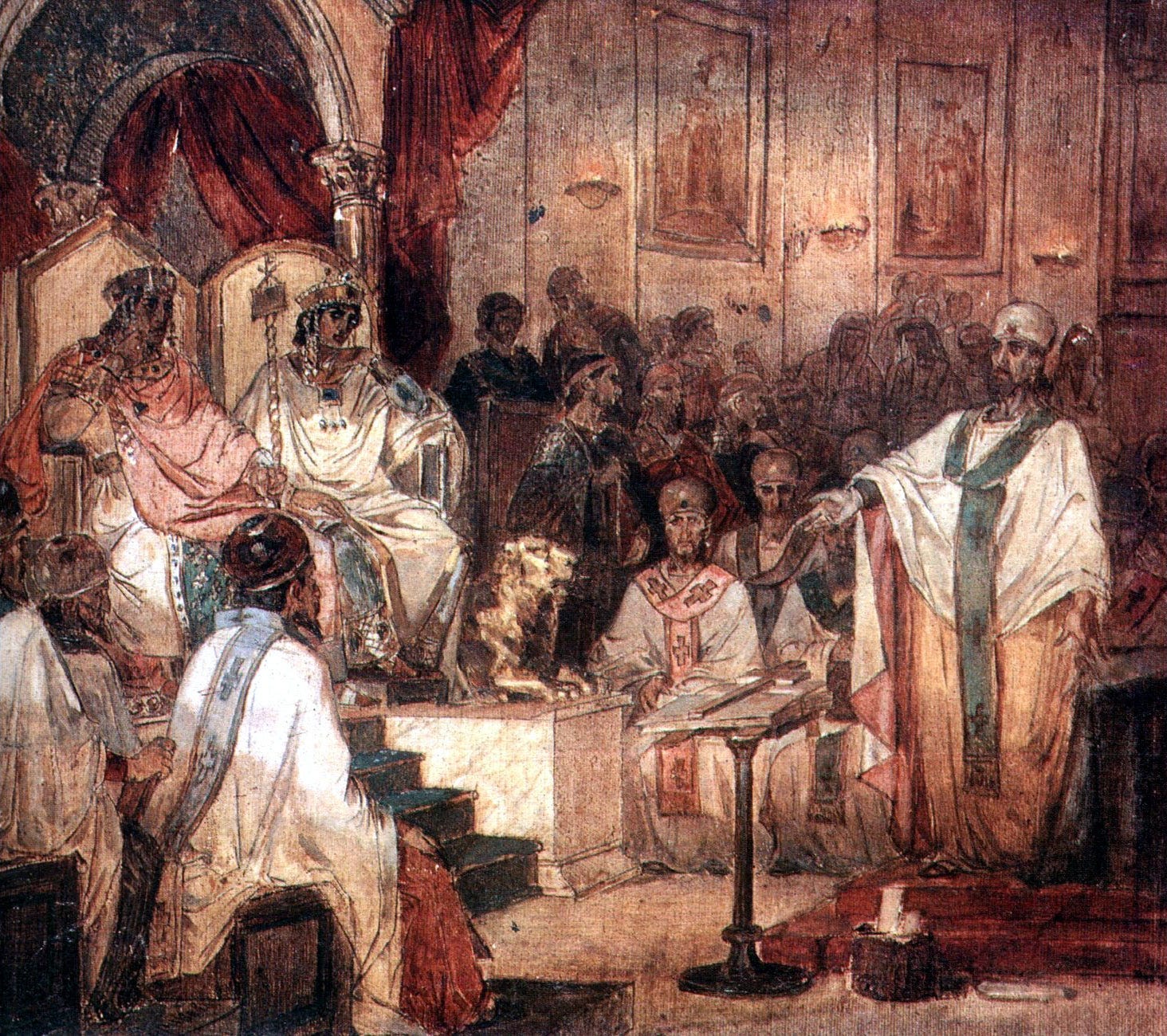
October 8, 451: The Council of Chalcedon opens, with the aim of settling the Christological debates embroiling Christianity. The council repudiated the 449 Second Council of Ephesus and adopted a dyophysite position on the nature of Christ, declaring that Jesus had two natures, one fully human and one fully divine, joined in a “hypostatic union.” This was a major theological debate at the time and it would continue to be an issue all the way up to the Arab conquests of the 7th century, which saw several communities that had rejected Chalcedon come under Islamic rule.
October 8, 1856: Chinese authorities storm a British-flagged ship, the Arrow, in Canton harbor on suspicion of piracy. What probably didn’t seem like a big deal at the time wound up kicking off the Second Opium War, which ended with China ceding additional territories to Britain’s colony at Hong Kong and parts of Outer Manchuria to Russia.
October 8, 1912: Montenegro declares war against the Ottoman Empire, beginning the First Balkan War. The Ottomans, outmanned and outgunned by the Balkan League (Bulgaria, Greece, Montenegro, and Serbia, backed by Russia), lost decisively within a matter of months. The Treaty of London, signed on May 30, 1913, ratified Albania’s independence, with its borders to be determined by the “Great Powers” (Austria-Hungary, Germany, Italy, Russia, and the United Kingdom). The treaty also forced the Ottomans to cede the rest of their Balkan territory to the League and give up the island of Crete, which promptly formalized its annexation to Greece. Bulgaria emerged as the new dominant Balkan state, which created an imbalance of power that ultimately led to the Second Balkan War.
MIDDLE EAST
LEBANON
The Israeli military (IDF) reported on Thursday that one of its soldiers was killed and three others wounded in an apparent vehicle accident in southern Lebanon. Elsewhere, Reuters reports on the conditions facing residents of Zawtar al-Gharbiyah (“West Zawtar”) following their return to that village back in July:
Dodging the broken glass carpeting her home in southern Lebanon, Mariam al-Yaghi exited onto her upper balcony and pointed. A few hundred metres away was a sight the 67-year-old had grown accustomed to: military vehicles moving through the adjacent Lebanese village, still occupied by Israeli troops.
At night, Israeli soldiers patrol so close to Yaghi’s home in West Zawtar that she can hear their voices. By day, she is often trailed by a small Israeli surveillance drone as she toils in her garden. Booms echo throughout the morning as Israel’s military destroys homes in the surrounding occupied towns with controlled detonations and bulldozers.
“We hear them all the time from that house over there with the tile roof. We hear their voices yelling, the tanks when they move this way and that way. We hear all of that. They’re very close to us, but we’re sitting here and we’re not scared. Never,” Yaghi told Reuters.
Israeli troops withdrew from West Zawtar in July, the first test of a US-backed “pilot zone” plan for Israel to withdraw gradually from southern Lebanon, in exchange for the disarmament of the Iranian-backed militant group Hezbollah.
But two months on, no further “pilot zones” have been agreed and residents of West Zawtar say their village is no blueprint.