

You’re reading the web version of Foreign Exchanges. If you’d like to get it delivered straight to your inbox, sign up today:
PROGRAMMING NOTE: I have unfortunately had another serious flare up of the ailment that has been affecting my ability to write the newsletter. My aim is still to continue doing these through Sunday as planned before taking time off for the US Thanksgiving holiday, but if I am unable to do that or if I at least need to take tomorrow off please excuse the absence.
TODAY IN HISTORY
November 19, 636: The Battle of al-Qadisiyah ends with the army of the Rashidun caliphate victorious over the forces of the Sassanid Persian Empire. Combined with its victory over the Byzantines at the Battle of Yarmouk in August, Qadisiyah established the caliphate’s control over most of what is today considered the Middle East. For the Persians, the battle was essentially the end of their empire. The Arab armies seized most of Iraq, including the Persian capital Ctesiphon. Emperor Yazdegerd III attempted to reconquer the region but the Arabs defeated him again in 642, at which point he went on the run until he was murdered in Central Asia in 651.
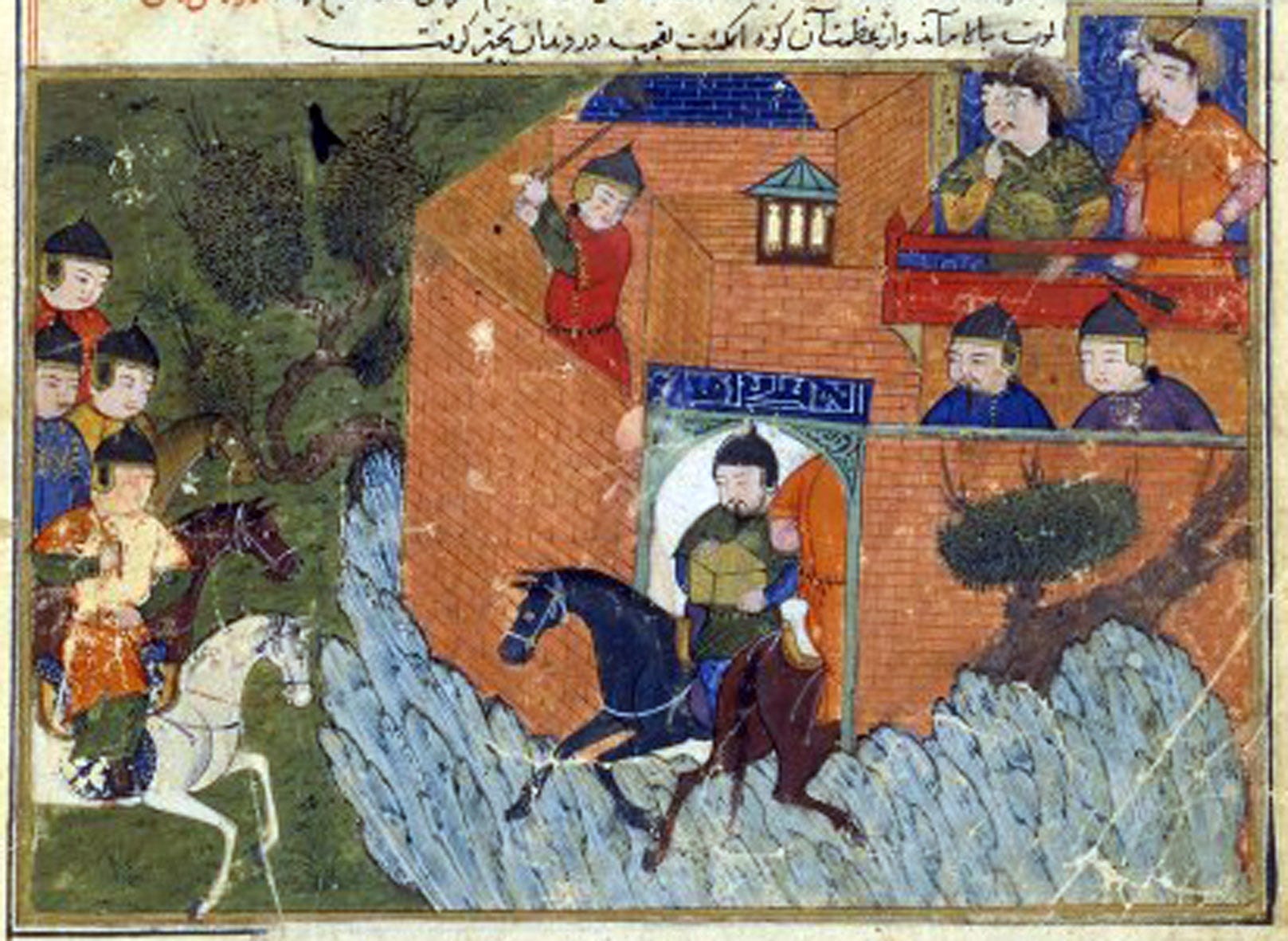
November 19, 1256: The last Assassin imam, Rukn al-Din Khurshah, surrenders to the Mongols, who had besieged him at his fortress at Maymun-Diz. Realizing that they could not hold out against a Mongol siege, Rukn al-Din surrendered at Maymun-Diz and ordered the surrender of the Assassins’ main fortress at Alamut in hopes of avoiding unnecessary deaths, including his own. The Mongols wound up executing him anyway. A branch of the Assassin order survived in Syria, which except for a brief interlude around 1260 remained outside Mongol control, but it was subjugated by the Mamluk sultanate and ceased to be an independent entity.
MIDDLE EAST
ISRAEL-PALESTINE
The Israeli military’s (IDF) invasion of central Gaza’s Nuseirat refugee camp ended on Thursday, one day after it had begun. It is still not clear as far as I can tell what prompted the operation, which displaced some 6000 people. Many of the displaced had begun returning to the camp on Thursday after the IDF pulled out, finding mostly rubble. The IDF also killed at least four people across Gaza on Thursday.
YEMEN
Al Jazeera reports on the worsening water crisis in the besieged Yemeni city of Taiz:
The United Nations children’s agency (UNICEF) says that water production in Taiz has nearly halved, while more than 800,000 people are reported to be cut off from humanitarian assistance.
The crisis has left the city reeling, even as government soldiers try to defend it, in the latest round of fighting to hit the area since the war in Yemen started in 2014.
Hospital administrators are warning of a public health disaster, while government officials are unsure how much longer they will have the funds needed to carry out even limited services.
Taiz has been in water deficit since 2015, when the initial Ansarullah siege cut the city off from most of its wells, but the tightening of that siege this year is what’s driven this situation to crisis levels.
Meanwhile, Ansarullah on Thursday claimed that Saudi airstrikes had killed at least ten people in the city of Sanaa over the previous two days. The group also attacked and damaged Saudi Arabia’s Public Investment Fund Tower, the tallest building in Riyadh. There’s no word of any casualties.
IRAQ
The Iraqi government and the Kataʾib Hezbollah militia have reportedly reached an agreement to end their standoff in the town of Jurf al-Sakhar. Instead of sending security forces into the town to drive KH out, as was supposed to happen on Friday, this deal will see Baghdad deploy a “combined force” in a new “joint operations center” that will include some KH fighters alongside members of other Iraqi militias, an Iraqi army brigade, federal police, and other security units. This appears to be partially the result of mediation work by Iranian Quds Force commander Esmail Qaani, who few to Baghdad earlier this week for that purpose.
IRAN
Donald Trump told Fox News on Thursday that, when it comes to Iran, he wants to “see what happens after January 1.” This would suggest that the “Israeli pressure” he’s been under to resume the war isn’t working, at least for the moment. Trump continues to vacillate between war and not war (or maybe “total war and economic war” would be a better way to put it). I don’t know what he expects might be different when the calendar flips to 2027.
ASIA
PAKISTAN
The Pakistani military claimed on Thursday that its forces had killed at least 22 militants (presumably Pakistani Taliban) in a series of raids across northern Pakistan’s Khyber Pakhtunkhwa province over the previous two days. There’s no confirmation of this and no indication as to casualties among the Pakistani personnel.
MYANMAR
The United Nations International Court of Justice ruled on Thursday that Myanmar’s government committed genocide against the Rohingya people in 2017. This is the first time that the ICJ has found a state guilty of genocide and the fourth time since the Holocaust that any world legal body has found that a genocide was committed. The Gambia brought this case back in 2019, based on a military campaign against the Rohingya in Myanmar’s Rakhine state in 2017 that killed some 10,000 people and displaced hundreds of thousands mainly into neighboring Bangladesh.
The ruling included a number of remedies for the Rohingya people, including the repatriation of refugees, restitution, and guarantees of their protection within Myanmar, but whether any of those will come to pass is an open question since the ICJ has no enforcement mechanism. It also bolsters the Rohingya’s status as an ethnic community, which runs counter to the Myanmar government’s repeated assertions that they are simply illegal Bengali immigrants. A finding of genocide rests on the idea that the people who were targeted constitute a specific protected community. Then there is the precedent it sets, which The Conversation’s Max Pensky says could easily find application beyond this case:
The Hague’s highly anticipated judgment in Gambia v. Myanmar is a major victory for Gambia, the tiny west African nation that filed a complaint with the court against Myanmar in 2019. It is also a major moment of accountability for the military leadership of Myanmar.
But as an expert in genocide and mass atrocity prevention, I believe the ruling goes far beyond these nations. Indeed, it is also a watershed moment for international legal justice that is bound to have important effects on the court’s other ongoing genocide cases, particularly the case of South Africa v. Israel.
MONGOLIA
The Mongolian State Great Khural accepted President Ukhnaagiin Khürelsükh’s resignation on Thursday. Khürelsükh tendered that resignation earlier this week amid accusations that he benefited financially from a rail project back in 2019, when he was prime minister. He insists he did nothing wrong. Parliamentary chairperson Sandagiin Byambatsogt will serve as interim president until a new election, which by law has to be held within four months. It’s conceivable that Khürelsükh could run in that election though that’s speculative.
CHINA
Donald Trump, Vladimir Putin, and Xi Jinping held their long-something (anticipated? dreaded?) three-way summit on the sidelines of the Asia-Pacific Economic Cooperation conference in China on Thursday. The results seem somewhat underwhelming, which frankly is probably a good thing. The three leaders issued a four-point “Declaration toward Peace” (notably not a declaration of peace or for peace, more of a nod in the general direction of peace) in which they agreed on the inadvisability of nuclear war — a bold stance indeed — and pledged “to increase the production and supply of refined petroleum products” because I guess they feel that they’re not cooking the planet quickly enough.
Notably they did not agree to do anything to lessen the possibility of nuclear war, which would have gotten into arms control discussions that Xi has resisted. Nor did they hatch a plan to get more gas and diesel to market, possibly because the quickest way to do that would be for Trump to admit defeat and end the Iran war. The third point was a similarly vague call for “reforming” the United Nations, while the fourth and most concrete point was basically a complaint about the International Criminal Court. Since Trump is already trying to destroy the ICC this doesn’t mark any sort of shift in policy. Trump also referred to both Putin and Xi as “friends,” which is already generating a predictable round of how-dare-you-sirs from people in Washington but seems fairly meaningless all things considered.
Ultimately the main significance of this get together may be completely symbolic, in the demonstration that these three men are the bosses of the new new world order and everybody else is a subordinate to one degree or another. I’m not sure the summit was necessary to demonstrate that, though it did elevate Putin’s stature somewhat to have the president of Russia situated alongside the presidents of China and the US in that grouping. If there is anything of substance that emerged from this meeting, maybe it’s that Xi agreed to broach the nuclear issue even on a philosophical level. That could be the first step toward reviving arms control as a three-way project, though I would guess that’s still a long shot.
NORTH KOREA
After all the speculation, Trump left China on Thursday without arranging a rendezvous with North Korean leader Kim Jong-un. It sounds like Kim stayed home though his specific whereabouts on Thursday haven’t been established.
AFRICA
SUDAN
The Sudanese military (SAF) bombed the Rapid Support Forces militant group’s intelligence headquarters in the city of Nyala on Thursday, “killing and wounding paramilitary fighters, including an officer, security personnel and media staff” according to Sudan Tribune. SAF airstrikes regularly hit Nyala, which is the capital of Sudan’s South Darfur state and also the RSF’s de facto capital, but Thursday’s attacks seemed to mark an intensification. In addition to the intelligence building the SAF also claimed to have struck a command and control facility and the RSF’s civilian administration building.
Elsewhere, the RSF claimed on Thursday that its forces had taken control of the Bau district in southeastern Sudan’s Blue Nile state, after the SAF units in that area fled toward the state capital Ad-Damazin. If true this would put the RSF in control of three of the state’s seven districts. However, Sudan Tribune is reporting that the two sides have made “competing claims” regarding the town of Derang in the Bau district so there’s still some question as to what’s actually taken place.
SOMALIA
The Somali government expelled the UAE’s ambassador from the country on Thursday and withdrew its own ambassador from Abu Dhabi, citing repeated Emirati violations of Somali sovereignty that officials likened to an “open invasion.” The UAE government has bypassed its federal Somali counterpart and made a number of ports deals with Somali regional governments, including the administrations in Jubaland, Puntland, and Somaliland. The first two have strained relations with Mogadishu and the third is outright secessionist. Those deals are lucrative for the Emiratis and also provide crucial revenue to the regional governments that strengthens their autonomy from the federal government.
KENYA
Al Jazeera reports that the expansion of Kenya’s oil industry is threatening the country’s cultural and environmental heritage:
EUROPE
UKRAINE
The Russian military killed at least one person and wounded four others in Kyiv on Thursday, while its strikes also damaged the Austrian and Dutch embassies in the Ukrainian capital. The Ukrainian military, meanwhile, attacked the Kerch Strait bridge linking Russia and Crimea for the third time this week and caused at least a suspension of rail traffic (though the full extent of the damage is unclear). Afterward a “visibly angry” Vladimir Putin told reporters in China that he’s now putting the kibosh on any further discussion of ceasefires, moratoria on attacking energy sites, etc. Putin clearly wasn’t interested in discussing those things anyway, so this is more posturing than an actual change in his position.
SERBIA
In its first act of governance since winning last month’s election, Serbia’s “Student List” movement elected Belgrade Faculty of Traffic and Transport Engineering lecturer Aleksandar Čupić as the new speaker of the country’s parliament on Thursday. Beyond unseating the long-ruling Serbian Progressive Party it’s been unclear how the Student List intends to govern or even whom it intends to do the governing. There is still no indication who will stand as the bloc’s candidate for prime minister. Čupić, meanwhile, immediately becomes Serbia’s interim president, in which capacity he’ll need to organize a presidential election by the end of the year.
UNITED KINGDOM
The Financial Times reported on Thursday evening that the UK and European Union could conclude an agreement to “reset” their relationship as soon as Friday, “after a late-night breakthrough resolved tensions with France.” The terms would bring the UK into closer alignment with the EU on the food and drink trade and in the EU’s carbon market among other areas. There may also be some EU-UK alignment with respect to trade with China though I’m unclear as to the details. The French government had objected to terms that would have given the UK some say in setting EU laws but they appear to have reached a compromise that gives the UK an advisory role rather than any actual authority.
This deal doesn’t unwind Brexit by any means, but UK Prime Minister Andy Burnham is hoping that it will ease tensions and public sentiment enough that he could begin a “national conversation” about the UK-EU relationship that could end with an attempt to rejoin the bloc. Polling suggests that if a referendum on that subject were held today a plurality (at least) of UK voters would support rejoining, and perhaps more importantly for Burnham the polling also suggests that this could be a politically beneficial position for him and his Labour Party to take.
AMERICAS
GUYANA
Something like this was probably inevitable, but according to Reuters former US State Department Director of Policy Planning Jeremy Lewin suggested to Guyanese Foreign Secretary Robert Persaud back in September that he could help resolve the territorial dispute between Guyana and neighboring Venezuela by brokering the cessation of land from the former to the latter. For context Venezuela has a colonial-era claim on the western two-thirds of internationally recognized Guyana, the Essequibo, which is home to actual and theorized oil resources.
Persaud and other Guyanese officials were reportedly “stunned,” not least because US policy hitherto has been that this territory is an conclusively Guyanese. Of course that policy was set when Venezuela was an Enemy, and now that it’s a subsidiary of Trump Incorporated perhaps that policy is changing. To be sure it is unclear whether Lewin was actually representing the administration when he made this offer and at any rate he’s not in the State Department anymore so this may be irrelevant.
MEXICO
A new report from the World Peace Foundation and the Costs of War project paints a grim picture of the US “War on Drugs in Mexico:
The following pages put a description of U.S. security assistance into conversation with the broader costs of Mexico’s drug war during the Mérida Initiative period. Although some scholars and policymakers question the extent to which Mexico’s drug-related violence constitutes a “war,” this paper underscores the profound pressures this conflict has placed on Mexican institutions—pressures comparable to those experienced during national mobilization for conventional warfare. U.S. security assistance constituted only one component of Mexico’s drug war and cannot be said to be responsible for its costs. Nonetheless, the Mérida Initiative became an important bolster of the militarized strategy adopted during this period and therefore warrants evaluation alongside the broader costs of that strategy. The U.S.’ role as a major consumer market for illicit drugs, its longstanding influence in shaping Mexico’s prohibitionist enforcement strategies, and the substantial aid it has provided to support Mexico’s security apparatus have collectively bound Washington to the trajectory of the drug war.
We argue that the cumulative costs of this conflict have been substantial: manifest in widespread deaths, disappearances, significant economic burdens, the proliferation of U.S. firearms in Mexico, and the erosion of state authority across wide regions of the country. Recent estimates indicate that the total homicides since 2006 have exceeded 460,000.1 Civilians have borne the overwhelming share of this violence: massacres, kidnappings, and targeted killings have become widespread. More than 130,000 people have been reported missing, though these figures are contested at multiple levels of the Mexican government.
HAITI
Haitian police are reportedly engaged in “heavy fighting” with gang militants in western Port-au-Prince’s Martissant neighborhood. They undertook an operation alongside Vectus Global mercenaries on Thursday to retake that area from the gangs, which if successful would help them regain control over a key highway that extends out of the city into parts of western and southern Haiti. Authorities were claiming that they’d killed at least 34 gang members at last report.
UNITED STATES
Finally, in US news:
The US National Security Agency’s internal communications network is apparently still down after crashing on Tuesday, which modifies previous reporting that the agency had made significant progress in restoring the network by as quickly as Tuesday evening. Two sources told NBC News that this has been an “inconvenience” for the agency but “has not affected” its work, though they could be intentionally downplaying the severity. They’re still insisting that there’s no evidence of a cyberattack. Donald Trump fired his national cyber director, Sean Cairncross, on Thursday over the recent spate of online incidents though how much the NSA situation influenced that decision is anybody’s guess.
The Trump administration leased 31.5 million acres of Pacific floor seabed near American Somoa to the firm Wetstone US Ventures on Thursday. Under this arrangement Wetstone will be allowed to map the area and do other work that would be preliminary to mining the seabed for critical minerals, but it cannot actually begin any mining activity. The Trump administration has latched on to deep sea mining as a potential source of critical minerals outside the current Chinese-dominated global supply chain, but there’s been a considerable amount of caution about this because of the very strong potential that it will be catastrophic to both the environment and Indigenous communities. A federal judge in Hawaii ruled that this lease is illegal on environmental grounds earlier this week but the administration apparently decided to ignore that ruling. There is understandably significant opposition to this effort in American Somoa and other US Pacific territories.