

You’re reading the web version of Foreign Exchanges. If you’d like to get it delivered straight to your inbox, sign up today:
PROGRAMMING NOTE 1: Please join Elizabeth Urban and me for our monthly Substack livestream this Tuesday at 8 PM Eastern. We will be joined by Georgetown University’s Jonathan Brown, author of Misquoting Muhammad. We will be talking about the Hadith tradition, a formative element of Islam, and as always taking any viewer questions.
PROGRAMMING NOTE 2: The Thanksgiving holiday is approaching in the US, and between my physical ailments of late and the fact that this is the first year in which my daughter will be coming home from school I’m going to ask for your indulgence as I take a bit of a longer break this year than I usually do. The newsletter will continue through next Sunday and then pause until Tuesday, December 1.
TODAY IN HISTORY
November 14, 1965: The Battle of Ia Drang, the first major engagement between the United States and the North Vietnamese Army, begins. It ended on November 18 with both sides claiming victory, though the NVA’s ability to fight the much better armed US Army to a draw was a boost to their morale and probably the battle’s most important effect.
November 14, 2001: Fighters with the Northern Alliance rebel coalition enter and occupy the city of Kabul, marking the end of the US war in Afghanista—just kidding. I had you going there for a second, didn’t I?
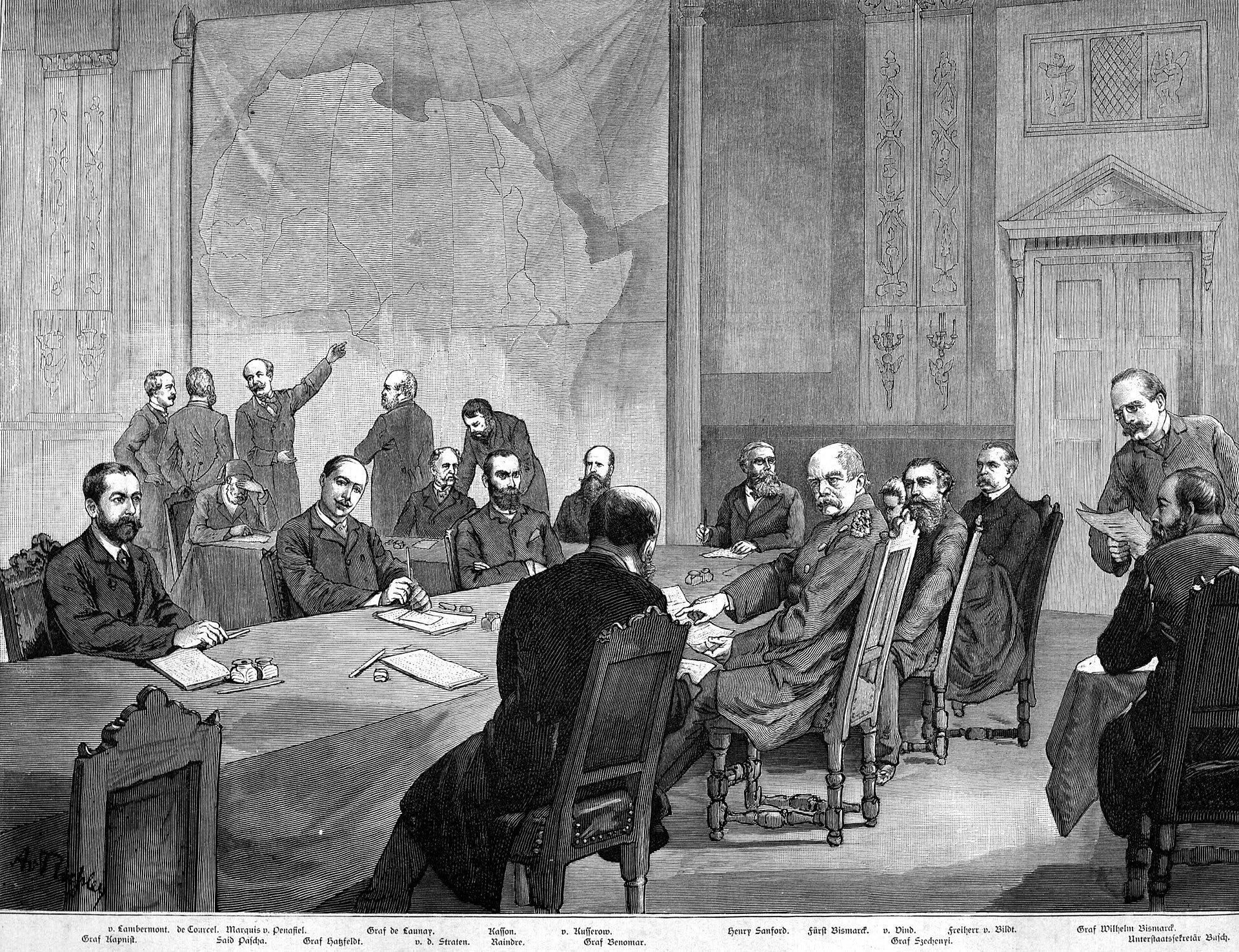
November 15, 1884: The Berlin Conference begins, with the goal of regulating European colonization of Africa. Its declaration obliged European powers to establish political control over their spheres of influence in Africa in order to claim possession of them. This is sometimes identified as the beginning of the “Scramble for Africa,” though in actuality African colonization was already well underway and only sped up in the wake of the conference.
November 15, 1889: A republican military coup ousts Brazilian Emperor Pedro II, ending the Brazilian monarchy.
November 15, 1983: The “Turkish Republic of Northern Cyprus” declares its independence, some eight years after the “Turkish Federated State of Cyprus” broke away from the Cypriot government after a pro-Greek military coup and the invasion of northern Cyprus by Turkish forces. Turkey is the only country that has diplomatically recognized the separatist state.
INTERNATIONAL
The United Nations will hold the “Convention on Certain Conventional Weapons” in Geneva this week to discuss placing global guardrails on artificial intelligence-directed Lethal Autonomous Weapons Systems (LAWS). Basically the question is how much human input should be required before a computer can decide to kill somebody. Unsurprisingly the Israeli, Russian, and US governments are all hoping to quash any sort of binding international regulations on these types of weapons. The “European three” — Germany, France, and the UK — are said to be undecided between regulations and non-binding guidelines. Collectively that’s probably enough to prevent this conference from getting anywhere.
MIDDLE EAST
SYRIA
An apparent car bomb killed at least two people, including a child, and wounded at least one more in a southern suburb of Damascus on Saturday. The population of the suburb, Jaramana, is predominantly Druze and Christian so this attack may have been intended to target one or both of those communities. The Druze community in particular has had past tension with the Syrian government and some of its more jihadist-oriented elements.
ISRAEL-PALESTINE
The Israeli military (IDF) killed at least two people in a drone strike in northern Gaza’s Jabalia region and the commander of Hamas’s Rafah brigade in another drone strike in the southern Khan Younis area on Saturday. Gaza’s health ministry reported on Saturday that the IDF had killed at least 16 people over the preceding 48 hours.
Also on Saturday, the European Union issued a statement calling for “immediate, unimpeded access” for humanitarian aid in Gaza in the wake of recent severe weather that has caused flooding, landslides, and a spike in illness. The statement comes as a new investigation by Haaretz finds that Israeli authorities are still not meeting their aid obligations under last October’s “ceasefire.” That agreement stipulates that an average of roughly 18,200 aid trucks are supposed to be entering Gaza per month, but after a surge in January and February that figure has settled at roughly half of the required number. Most of the aid that is getting in is food, while medical supplies and durable shelter materials have lagged well behind.
On the political front, Israeli Prime Minister Benjamin Netanyahu’s Likud party and wannabe PM Gadi Eisenkot’s Yashar party were scheduled to meet on Sunday to discuss the prospects for forming a “national unity” government, after Netanyahu and Eisenkot themselves met on Thursday. Eisenkot’s chances of forming a government without Netanyahu seem to have diminished in recent days as ultra-orthodox parties are demanding that he agree to codify their military service exemption into law rather than simply ignoring the issue, and that may be a bridge too far for some parts of Eisenkot’s coalition. Nevertheless one of the ultra-orthodox parties, United Torah Judaism, claimed on Sunday that it has made “significant progress” in negotiations with Eisenkot and company.
Prospects for a “unity” government are hindered by the personal animosity between Eisenkot and Netanyahu and the question of who should serve as PM. Likud won more seats than Yashar but Eisenkot currently has the mandate from Israeli President Isaac Herzog, so both of them have some claim on the office. Eisenkot is reportedly refusing any sort of “rotation,” which makes sense because the last time Netanyahu entered a rotation system (with Benny Gantz) he forced a new election rather than abide by the agreement. Netanyahu could provoke a resumption of the Iran war in an attempt to pressure Eisenkot into conceding to a joint arrangement.
This situation may have taken a major turn on Sunday, however, when a bombshell report from Israel’s Channel 12 outlet accused Netanyahu of collaborating with Israeli police and with the Shin Bet security service to try to manipulate last month’s Knesset election by inventing phony charges against members of the Palestinian-Israeli United Arab List party. Eisenkot issued a statement in response in which he declared that Netanyahu “cannot remain at the head of the government for a minute longer” and said that his “behavior…constitutes a concrete, direct and immediate threat to Israeli democracy.” It’s hard to see how he could justify entering a “unity” government with Netanyahu after that. He could appeal to other members of Likud to buck Netanyahu and join his coalition but that seems like a long shot.
YEMEN
AFP reported on Sunday that Ansarullah forces have advanced to within 60 kilometers of the de facto Yemeni capital, Aden, forcing the nominal Yemeni government to withdraw its remaining forces from the vicinity of the Bab al-Mandeb Strait to reinforce defenses around the city. Ansarullah has mainly been advancing through neighboring Lahij province, where it killed at least eight people and wounded another 12 in a missile attack on Sunday. The group also released 600 prisoners on Sunday, according to the International Committee for the Red Cross.
IRAN
According to Reuters, Donald Trump has been telling his advisers “that he may hold off on attacking Iran” provided he doesn’t feel provoked into doing so by the Iranian government or Ansarullah in Yemen. This is consistent with what seems to be the Trump administration’s post-midterm position on Iran, which is that it intends to just keep the status quo in place indefinitely. It may be inconsistent with what the Iranian government will allow. The Islamic Revolutionary Guard Corps attacked a US radar facility in Bahrain on Sunday, marking the second time it’s attacked a US facility in that country in three days. Bahraini air defenses appear to have intercepted the attempted drone strike but the point is that if they tire of the status quo, the Iranians can keep doing this sort of thing until Trump does feel “provoked.”
In other items:
The IRGC is claiming that a supertanker carrying some 2 million barrels of oil has sunk after hitting a mine in the Strait of Hormuz. There’s no confirmation of this, but the United Kingdom Maritime Trade Operations monitoring group did report that a tanker had come under some sort of attack in the vicinity. This could be an environmental catastrophe if it’s actually true.
The Wall Street Journal reported on Saturday that the latest US intelligence estimate is that Iran still “has between 1,500 and 2,500 missiles” in its arsenal, and while that is a “low confidence” estimate it aligns with an Israeli intelligence estimate that puts Iran’s stockpile at more than 1500 missiles. These estimates run counter to repeated claims from the Trump administration that the Iranian military is a spent force, but at the same time they may also be informing the administration’s reluctance to restart the war.
The New York Times reported on Sunday that the USS Theodore Roosevelt and its carrier group are expected to arrive in the region sometime on Monday. If the administration is still planning to resume the military conflict then it would make sense to do so while it has three aircraft carriers available. That’s not a state of affairs that the US military can sustain indefinitely.
Iranian officials informed the International Atomic Energy Agency earlier this month that they will not continue to discuss the resumption of IAEA inspections while under US threat. Tehran has largely frozen the IAEA out since the “12 Day War” in June of last year, though it did permit an inspection of its civilian nuclear plant at Bushehr in September. That facility is not much of a proliferation risk so that wasn’t much of a concession to the agency.
ASIA
MYANMAR
Leaders of the Association of Southeast Asian Nations member states opened their annual summit on Sunday by stressing that they are not normalizing relations with Myanmar’s (essentially) military government, which seems like the sort of thing that if you have to say it, then it’s probably not true. Myanmar junta leader Min Aung Hlaing has been making the regional rounds of late and the normalization is pretty apparent, even if the bloc still won’t allow him or Foreign Minister U Tin Maung Swe to attend any of its events in an official capacity. Lower level Myanmar officials are allowed to participate in ASEAN events but the bloc is apparently aiming to use the prospect of full normalization to try to prod the junta toward a peace process with Myanmar’s various insurgent groups.
CHINA
It certainly appears that Donald Trump, Xi Jinping, and Vladimir Putin will get together for a three-way summit during the forthcoming Asia-Pacific Economic Cooperation conference in China. As Reuters notes, the rationale for this get together is much easier to see for Putin, who wants to elevate Russia’s status in the “multipolar world order” and to talk about carving the world up a la the 1945 Yalta Conference, and for Trump, who seems amenable to carving the world up and also wants to talk about arms control and make himself look like a serious statesman, than it is for Xi. The APEC conference, and the impression it makes about China’s geopolitical stature, is Xi’s focus and this summit is likely to detract from the wider event. It’s also discordant with Chinese foreign policy toward the developing world to be hosting an event that looks like the leaders of three major powers making decisions on everyone else’s behalf. And Xi has consistently rejected Chinese involvement in US-Russia arms control talks. At this point it’s somewhat unclear what he’s hoping to gain.
AFRICA
SUDAN
According to Sudan Tribune the Sudanese military undertook an “intensive” drone campaign targeting Rapid Support Forces positions across Sudan’s West Kordofan state on Sunday, as its forces continued their advance on the city of En Nahud. Thousands of civilians are reportedly fleeing ahead of that advance, which could complicate the RSF’s defensive efforts.
Thousands of people are also fleeing inter-tribal violence in Sudan’s South Darfur state, according to the United Nations International Organization for Migration. The Habbaniya and Rizeigat tribes began “sporadic” fighting on November 8, apparently over “accusations of cattle rustling.” Both of those tribes are major sources of manpower for the RSF and there’s some potential that their fighting could cause problems for the RSF’s cohesion in what has been the group’s heartland.
SOUTH SUDAN
The South Sudanese government announced on Saturday that it’s postponing the general election that had been scheduled for December until at least February. It cited internal insecurity as well as a lack of funding and preparation for the decision. I wouldn’t start marking my calendar for February either, considering that this is just the latest in a series of postponements of what is supposed to be the country’s first election since it seceded from Sudan in 2011.
SOUTH AFRICA
At Jacobin, South African Federation of Trade Unions general-secretary Zwelinzima Vavi discusses the ongoing collapse of the African National Congress and the emergence of the South African far right:
While the global left celebrates the recent successes of the Workers’ Party in Brazil and the Democratic Socialists of America in the United States, the African National Congress (ANC) has suffered a historic collapse in South Africa’s November 4 local government elections. After three decades of mass unemployment, deepening inequality, corruption, and economic policies that have failed the working class, the former liberation movement is losing its political authority. The principal beneficiaries of the ANC’s electoral rout are parties of the Right, including an increasingly powerful far right that has built its project around aggressive and often violent xenophobia.
With more than 70 percent of votes counted, the ANC’s national share of the vote fell to around 32 percent. The ANC is not expected to retain an outright majority in any major city, and the center-right Democratic Alliance (DA), historically the principal party of the white liberal establishment, is making substantial gains and is projected to become the largest party in most of South Africa’s big cities. Former President Jacob Zuma’s Zulu nationalist uMkhonto weSizwe Party (MKP) is on track to be the largest party in Durban. The far-right ActionSA has made a strong showing in Johannesburg and Pretoria and is likely to be the second-largest party in Pretoria, with the ANC in third place.
The central question is not only why the ANC has lost so much support. It is why the suffering and anger of the working class have failed to produce a powerful democratic socialist alternative, and why the Right has been so successful in presenting itself as the answer to a crisis created by the existing economic and political order.
EUROPE
RUSSIA
A Ukrainian drone strike killed a family of three in Russia’s Belgorod oblast on Saturday, according to Russian officials. A Ukrainian strike overnight into Sunday killed one person at an “electricity substation” in the city of Taganrog, while other strikes triggered a fire at one of Russia’s largest petrochemical plants in the city of Nizhnekamsk.
The Washington Post reported on Saturday that the Russian delegation at the tripartite peace talks in Abu Dhabi on Tuesday and Wednesday presented “hard-line demands” regarding NATO’s future role in Eastern Europe. Essentially, according to this account, the Russians demanding that NATO pull its joint forces back to where they were prior to eastern expansion in 1997. These are demands that the Biden administration rejected as “nonstarters” prior to Russia’s 2022 invasion of Ukraine, and whatever your thoughts on the merits of NATO expansion they are conditions that the alliance is extremely unlikely to ever accept or really could ever accept unless it wants to make Vladimir Putin its new de facto secretary-general.
The Russian position now apparently goes beyond those prewar demands to include severe restrictions on the size and capabilities of Ukraine’s military that the Ukrainian government presumably wouldn’t be able to accept either. If this is the basis for the “security agreement” that the Trump administration has reportedly asked Moscow to draft then the whole thing may be dead on arrival.
ESTONIA
The Estonian government is closing its border with Russia after authorities arrested eight people in connection with an attempted arson attack on a drone manufacturer. Officials are blaming Russian military intelligence for orchestrating that operation. The Russian Foreign Ministry has criticized the closure as an example of “aggressive and unrestrained Russophobia.”
UKRAINE
According to Volodymyr Zelensky, the recent peace talks also included a proposition from the Trump administration that Ukraine cede the rest of the Donbas to Russia in return for NATO membership. It was apparently the first time that the US has made that linkage and it seems like a dead end. The Russian government has never indicated that it would be willing to accept Ukrainian membership in NATO under any circumstances and the question of giving up territory is politically charged in Ukraine. Zelensky has said that he would be willing to put the question to a national referendum as part of a potential peace deal.
AMERICAS
BRAZIL
Brazilian authorities report that supporters of defeated presidential challenger Flávio Bolsonaro are taking their anger out on Indigenous communities since their man lost last month’s presidential run-off:
Across Brazil, reports of violence against Indigenous people have grown since the Oct. 25 vote. While Indigenous voters make up just 0.18 percent of the Brazilian electorate, not enough to have decided an election [incumbent Luiz Inácio Lula da Silva] won by more than 4 million votes, authorities say some communities have been targeted for their perceived support of the president and his Workers’ Party.
The Ministry of Human Rights received 189 reports of violence in the first five days after the vote; the Ministry of Indigenous Peoples received 13 complaints. (Not all the reports have been independently verified, and not all have been confirmed to have been politically motivated.)
Brazilian authorities and Indigenous leaders say such incidents are the modern manifestation of a larger and older problem: Communities that for generations have suffered discrimination and encroachment are now being targeted for their political preferences.
UNITED STATES
Finally, The Intercept’s Josh Ruebner considers the possibility that a lame duck Congress could race to complete the merger of the US and Israeli military sectors:
After President Biden’s unrelenting support for Israel’s genocide in Gaza helped pave the way for President Trump’s reelection in 2024, Trump’s own foolish decision to launch an Israel-backed war against Iran played a large role in putting Democrats back in control of both chambers of Congress — a fact Vice President JD Vance diagnosed in no uncertain terms.
Now Democrats and Republicans alike have the opportunity to demonstrate they’ve finally learned the lesson voters have tried to deliver to both parties over the last three years: The American people do not want to be entangled and complicit in Israel’s aggression and atrocities. Their first opportunity to heed that call is arriving sooner than one might expect.
Right now, the House Armed Services Committee and Senate Armed Services Committee are engaged in an informal but highly consequential conference to finalize the text of the National Defense Authorization Act (NDAA), which sets policy for the Pentagon. A disturbing provision in current versions of the texts passed by the House and Senate committees would integrate Israeli weapons companies into the Pentagon procurement process at an unprecedented level — opening a back door to almost untraceably send billions of taxpayer dollars to Israeli weapons makers without congressional oversight. The House bill would create a new “executive agent” position within the Pentagon to steer this integration—a level of amalgamation that exceeds collaboration with nations in NATO.
Members of Congress on both sides of the aisle are opposing this provision. On Tuesday, Sen. Chris Van Hollen and nine other Democratic senators, plus independent Bernie Sanders, demanded it be removed. In the House, Democrat Ro Khanna and Republican Thomas Massie have made clear they will also try to strip the NDAA of this measure. In doing so, they are representing what the vast majority of Americans want—and their colleagues should take note.