

You’re reading the web version of Foreign Exchanges. If you’d like to get it delivered straight to your inbox, sign up today:
TODAY IN HISTORY
November 12, 1893: Afghan ruler Abdur Rahman Khan agrees to accept the boundary drawn by British Foreign Secretary for India Sir Mortimer Durand as the new border between Afghanistan and British South Asia. The Durand Line, which ran through the traditional homelands of both the Pashtun and the Baluch peoples, has for better or worse (usually worse) remained the border between Afghanistan and Pakistan to the present day.
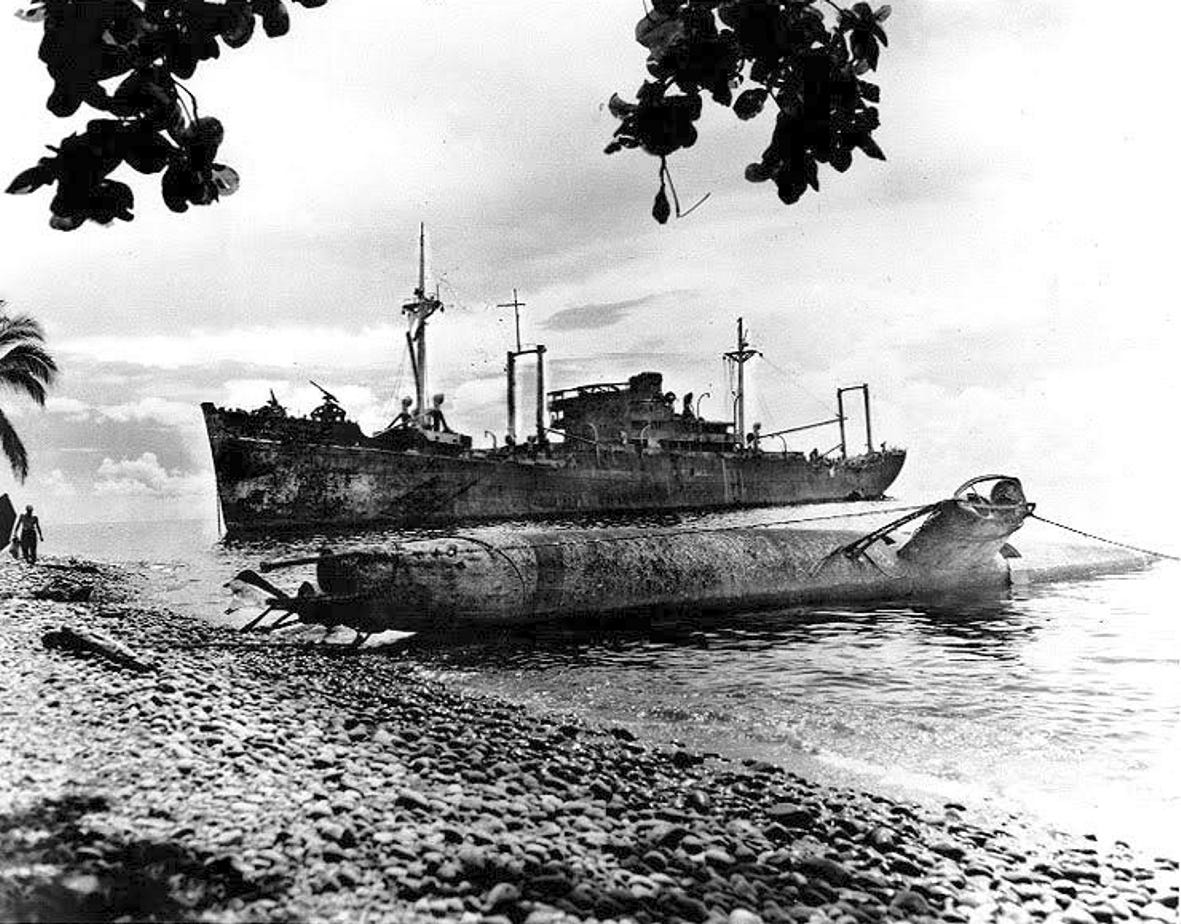
November 12, 1942: The naval Battle of Guadalcanal begins. The battle ended three days later with a decisive US victory over Imperial Japan that ensured the Japanese would be unable to provide significant support to their soldiers on Guadalcanal itself. It thus marks a decisive turning point in the Guadalcanal Campaign and, at least for some historians, marks the overall turning point in World War II’s Pacific Theater.
MIDDLE EAST
ISRAEL-PALESTINE
The Israeli military (IDF) attacked Nasser Hospital in southern Gaza’s Khan Younis area overnight, killing at least seven people at last count. It killed at least three more people in the territory later on Thursday. And a nine month old died of hypothermia after a cold night in one of the territory’s inadequate tent shelters. With winter approaching, and no sign that the Israeli government will allow adequate shelter materials into the territory, there may be more deaths like this to come.
YEMEN
Ansarullah claimed on Thursday that it had attacked a pumping station along Saudi Arabia’s East-West pipeline as well as an oil facility at the Red Sea terminus of that route, the port city of Yanbu. The group also claimed to have attacked an Aramco facility in Riyadh. There’s no word as to whether any of these attacks succeeded. The Yemeni military is claiming to have killed or wounded at least 138 Ansarullah combatants around the besieged city of Taiz, but its claims are often…oh, let’s say “overstated” and leave it at that.
IRAN
Donald Trump yanked on Vice President JD Vance’s leash on Thursday, more or less ordering him via social media to focus his attention on “crime and corruption” in US cities that are run by Democrats rather than on diplomacy with Iran. “We don’t need a deal with Iran,” he said, on a day in which Iranian forces may have attacked an oil tanker off the coast of the UAE and four other tankers may have struck sea mines in the Strait of Hormuz.
Trump and US Secretary of State Marco Rubio have been talking about maintaining the status quo with respect to Iran, which means a costly and intensive naval blockade and other forms of economic warfare. This seems untenable over a long-term, but Trita Parsi suggests another potential way forward:
The most likely scenario may prove to be neither war nor peace - yet different from the middle path Trump chose last Friday. In this scenario, Trump’s economic warfare and blockade would only exist on paper. Meaning, Trump rejects both war and peace, walks away and claims to retain the blockade and sanctions infrastructure, but in reality imperceptibly begins to let it wither away.
The blockade begins to loosen, sanctions enforcement begins to decay, and slowly but surely, Asian and Middle Eastern countries begin trading with and investing in Iran. A new equilibrium emerges in which sanctions enforcement is strong enough for the U.S. to claim the restrictions are still in place, yet weak enough to prevent Tehran from challenging the new status quo.
This Swiss cheese scenario is the only walk-away option that could work. Because if Trump seriously retains the blockade and the sanctions, tensions between the US and Iran would be such that the two countries would constantly be on the verge of war with each other - as they are right now. Such an unstable status quo would eventually escalate into another war, defeating the very purpose of the walk-away.
This may be the least worst outcome at this point, if we can assume that a negotiated settlement is completely off the table. The potential fly in the ointment is Israel. Israeli media reported on Wednesday evening that Prime Minister Benjamin Netanyahu and his “security cabinet” have ordered the IDF “to step up preparations for an attack on Iran.” That report drew threats of an intense retaliation from Iranian officials on Thursday. Politically Netanyahu could benefit from restarting the war with Iran as it could interfere with opposition leader Gadi Eisenkot’s efforts to form a new government. It is unclear if he would be prepared to go to war without Trump’s explicit commitment to join him, but he may figure that he can start things off and the US will inevitably go along.
ASIA
CHINA
Nvidia CEO Jensen Huang resigned on Thursday, after it emerged that not only was he apparently honeypotted by an alleged Chinese spy but he’s also been engaging in affairs with his own employees. These revelations are fueling calls for Donald Trump to fire US Commerce Secretary Howard Lutnick, who apparently continued to authorize the sale of advanced Nvidia chips to the Singapore-based firm Megaspeed even as it was suspected of passing those chips on to China in violation of US export controls. The alleged Chinese spy, Alice Huang, was working for Megaspeed when she and Jensen Huang (no relation) were cavorting with one another.
This story is also fueling calls for intensifying those export controls, which Jensen Huang had lobbied against because selling chips to China is very lucrative for Nvidia and perhaps also because he was under the influence of the alleged Chinese agent. This may be the main foreign policy-related development at this point, as the Chinese government is not only denying that it honeypotted Jensen Huang it is also accusing the US of fabricating this entire story as an excuse to impose a “technological blockade.” With Donald Trump set to meet Chinese President Xi Jinping next week on the sidelines of the Asia-Pacific Economic Cooperation conference, this affair could color that encounter.
NORTH KOREA
Although Donald Trump will be in the neighborhood when he attends the APEC conference, South Korean officials estimate that there is “little prospect” for any US-North Korean interaction next week. Trump has expressed a desire to meet with North Korean leader Kim Jong-un but there’s been no public commitment to such a meeting from Pyongyang and the North Korean government recently seemed pretty irritated over US allegations that it was behind the Binance cryptocurrency theft. If there were to be an encounter it could take place in China. North Korea is unlikely to attend APEC but it wouldn’t be out of the question for Kim to make a trip to China to meet with Xi while the conference is happening. Even if he were to do that though a meeting with Trump still seems like a long shot.
AFRICA
LIBYA
World Politics Review’s Mustafa Fetouri explains how the rapprochement between the Turkish government and authorities in eastern Libya benefits Ankara and the Haftar family:
The shift reflected Turkey’s recognition of a fundamental political reality: To solidify its status as Libya’s indispensable power broker and safeguard its long-term strategic investments in the country, it could no longer rely exclusively on a fragile Tripoli. It had to engage all sides, including Haftar and his allies. Egypt had viewed Turkey’s initial intervention as a direct threat to its national security, with Egyptian President Abdel Fattah El-Sisi famously threatening direct military action in June 2020 if Turkish-backed forces crossed into the east. Yet as regional rivalries cooled, Ankara mended ties with Cairo, further aiding the efforts to deepen ties with eastern Libya.
This quiet realignment reached its decisive moment with the eastern-based parliament’s unanimous vote to approve the 2019 maritime memorandum of understanding on Oct. 20. Signed out of sheer desperation in November 2019 by the GNA in return for the Turkish military intervention that eventually defeated Haftar’s march on the capital, the deal now carries the imprimatur of both sides.
The driving force behind the eastern faction’s pivot is not the aging Khalifa Haftar himself, but his son and heir apparent, Saddam Haftar. As deputy commander of the LNA, the younger Haftar has spent the past two years systematically consolidating political, military and financial power in the east, positioning himself as his father’s inevitable successor in any future Libyan settlement. Knowing that legitimacy cannot rest on coercion or on foreign backers like Moscow and Cairo alone, he has pursued an aggressive, pragmatic foreign policy of his own.
Saddam Haftar has already gained the approval of the United States through multiple meetings with President Donald Trump’s envoy, Massad Boulos, and by signing on to the administration’s reunification initiative. And Saddam’s frequent trips to Ankara, where he has met officials including Foreign Minister Hakan Fidan, were not mere diplomatic courtesy calls. They signaled a strategy: securing Turkish backing, or at least neutralizing Turkish opposition, in exchange for protecting Ankara’s coveted geopolitical prize in the Mediterranean. For Saddam Haftar, ratifying the maritime agreement is the price of turning Ankara from a formidable adversary into an informal guarantor of his political future.
You’ll note that there’s nothing in there about benefiting Libya itself or the Libyan people, which is because there is nothing about this arrangement that will do that.
SOUTH SUDAN
A new report from Amnesty International accuses both the South Sudanese government and the United Nations South Sudan peacekeeping mission (UNMISS) of failing to protect civilians prior to an attack that killed over 200 people back in March. That attack took place in South Sudan’s Ruweng Administrative Area. The government accused the insurgent “White Army” group, which has ties to the Sudan People’s Liberation Movement-in Opposition, of carrying out that attack but this report points toward inter-communal violence involving a group from neighboring Unity state. Regardless of the identity of the attackers the report contends that “both the government and UNMISS had sufficient information and time to take more effective preventive action” and yet they failed to do so. UNMISS is arguing that it did the best it could with limited resources and multiple obligations.
EUROPE
RUSSIA
An apparent car bombing killed a member of the Russian military in St. Petersburg on Thursday. There’s no official indication as to the identity of the deceased but previous incidents like this have tended to focus on relatively senior officers. There’s also no indication as to responsibility though unsurprisingly suspicion in these types of attacks tends to point towards Ukraine. Elsewhere, a Ukrainian drone strike hit a Russian ship in the Gulf of Finland on Wednesday. This was apparently a military vessel and it sounds like it did take damage though that’s about all that seems to be available as far as details are concerned. According to the BBC this is “thought to be the first time Ukrainian drones have attacked a Russian ship in an area of the Baltic Sea open to civilian maritime traffic,” and if that continues it could prove to be a major concern for the other countries in that region.
US envoys Steve Witkoff and Jared Kushner visited Moscow on Thursday and appear to have gotten Russian President Vladimir Putin to agree on allowing “European representatives” to participate in the next round of Russia-Ukraine peace talks. This is necessary inasmuch as the talks seem to be focused primarily on crafting a European security framework rather than on ending the Ukraine war per se, and yet Putin had hitherto resisted it. Putin also reportedly proposed the idea of a humanitarian ceasefire around the city of Kostiantynivka in Ukraine’s Donetsk oblast, similar to last month’s ceasefire around the city of Oleshky. Moscow claims to have captured Kostiantynivka but the Ukrainian government insists that it still holds part of the city. A ceasefire would undoubtedly be welcomed there but the Ukrainians may resist, fearing that the Russian military would take advantage of it to seize more territory.
UKRAINE
The Russian military killed at least one person and wounded five others in Kyiv overnight. Russian officials claimed that they’d targeted military facilities in and around the city.
Volodymyr Zelensky claimed on Thursday that the Ukrainian military’s Starshield (military Starlink) service is once again being throttled. According to Ukrainian officials the service has over the past three days gradually reintroduced the “speed limit” that had been imposed on Ukrainian terminals last month. The restrictions affect Ukrainian air defense munitions and substantially reduce their effectiveness in intercepting incoming Russian missiles. SpaceX is denying that any new restrictions have been imposed.
AMERICAS
VENEZUELA
A new report from the accounting firm KPMG finds that the United States government took in some $12 billion in Venezuelan oil revenue over the first nine months of 2026. According to this report almost all of that money was distributed back to Venezuela, though what happened to it after that is unclear. The Trump administration hired KPMG to produce this report ostensibly to bring some level of transparency to its Venezuelan oil operations. But there are major questions that are unanswered by this report, such as what ultimately happened to the money and whether the Trump administration made any effort to ensure that it sold Venezuela’s oil at fair market value.
COLOMBIA
A military airstrike targeting the Gulf Clan killed at least eight people in Colombia’s Antioquia department on Thursday. According to Colombian President Abelardo de la Espriella, one of the deceased is Haminton Mosquera, allegedly a “senior leader” in the cartel/militant group. De la Espriella described him as one of the top ten “priority targets” for the Colombian government.
HAITI
Haitian police declared on Thursday that they had retaken control of the country’s largest stadium in Port-au-Prince, in concert with private security contractors and Salvadoran military forces. That facility had been held by criminal gangs since 2024.
CUBA
The Wall Street Journal reports that the US fuel blockade on Cuba has had the effect of making the island wholly dependent on fuel from the US:
Only one oil tanker, from Russia, has docked in Cuba since Trump’s “ironclad energy blockade” began in January. By May, the Communist government said it had run out of fuel oil and diesel.
Yet U.S. fuel arriving in smaller shipments has kept cars, trucks and household generators running, a Wall Street Journal analysis of trade data and interviews with U.S. exporters, Cuban business owners and officials in Havana and the U.S. show. The Trump administration began allowing U.S. fuel sales to private businesses on the island just weeks after the embargo began. Since then, U.S. ports have shipped more than 1.6 million barrels of fuel, worth over $230 million, according to U.S. Census Bureau data through August.
The shipments have made U.S exporters a lifeline for Cuba’s private businesses, even if some of the fuel reaches the very government Washington is trying to squeeze.
UNITED STATES
Finally, Van Jackson argues that the Jensen Huang/Nvidia scandal may reflect the national security apparatus reasserting itself and eliminating a nuisance:
I mentioned last week that national security leaders / China hawks in both parties were hoping that the midterms might give them a chance to reassert themselves against a newly weakened Trump. This didn’t take long. This is what the Jensen Huang / alleged spy scandal is about.
Many in the national security state and the AI oligarchy are eager for a merger. The natsec leaders hope AI will yield the US an advantage in an arms race against China and possibly also that fabulously wealthy tech capitalists can provide a big new source of political support in the face of rising discontent with US national security elites. For AI oligarchs the natsec state is an essential source of protection against both rising populist opposition and competition from China; they want a bailout in the event the AI bubble crashes and the Pentagon could be the source.
More so than other top tech oligarchs, Jensen Huang has resisted this natsec-AI merger, and the formation of an exclusionary tech-industrial-military bloc entailed by it. This is because Huang’s position in the US-China AI race is contradictory: most of Nvidia’s profits come from the US AI giants, but (unlike most of the US tech sector) Nvidia also has the potential to earn major profits if it can access markets in China; they can even sell chips at massively inflated prices if given a bit of access. Thus Huang has lobbied Trump to weaken the chip export controls that block China from accessing the most advanced chips (and he is incentivized to do so even setting aside any supposed influence from an alleged spy). Trump, who is independently interested in maintaining warm relations with Xi Jinping, has been very responsive to Huang’s lobbying.
For these folks, getting Huang out of the way is desirable on its own merits. But doing it under the guise of an alleged Chinese spy scandal comes with the added benefit of coarsening US-Chinese relations and maybe even putting them back on a more adversarial footing.