

You’re reading the web version of Foreign Exchanges. If you’d like to get it delivered straight to your inbox, sign up today:
REMINDER: I’m taking the next few days off for Memorial Day here in the US. We will return to our regular schedule on Tuesday.
GiveDirectly is raising funds to help families affected by the Ebola outbreak in the Democratic Republic of the Congo. If you’re able to contribute, please do so!
TODAY IN HISTORY
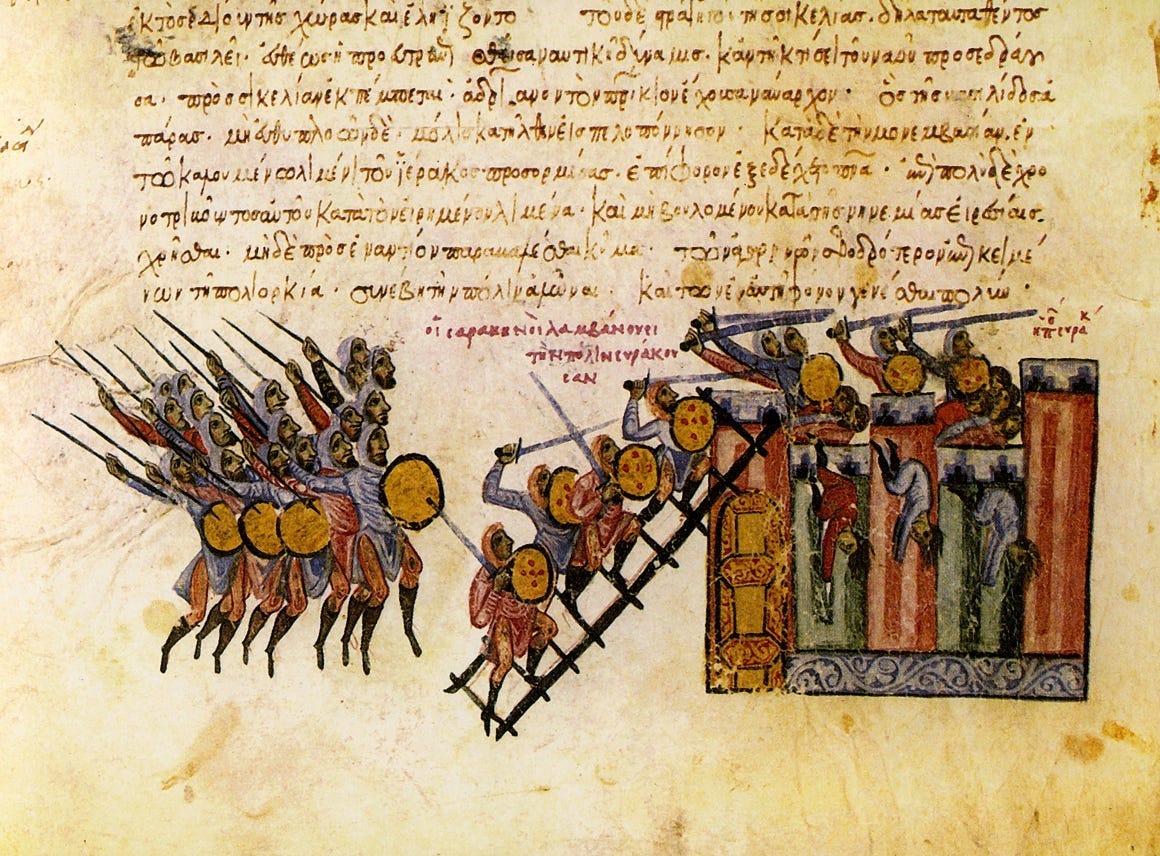
May 21, 878: The Aghlabid Emirate captures the Sicilian city of Syracuse after a roughly nine month siege.
May 21, 1799: Napoleon lifts his failed siege of Acre and withdraws to Egypt (and, not long after that, to France).
May 21, 2006: Montenegro holds a referendum on leaving what remains of Yugoslavia and becoming an independent state. Amid allegations of irregularities, 55.5 percent voted in favor of independence, which was just over the 55 percent needed to pass the referendum. May 21 is now annually commemorated as Independence Day in Montenegro.
MIDDLE EAST
TURKEY
A Turkish court ruled on Thursday that the opposition Republican People’s Party’s 2023 leadership election was fraudulent, stripping current party boss Özgür Özel of his position and reinstating former CHP leader Kemal Kılıçdaroğlu. This is the product of another lawfare campaign against the party by the Turkish government, which has already imprisoned its presidential nominee Ekrem İmamoğlu. Kılıçdaroğlu, who lost the 2023 presidential election to incumbent Recep Tayyip Erdoğan, is basically controlled opposition and that is unlikely to change now that he’ll owe his reinstatement to Erdoğan. The ruling can be appealed and in the meantime Özel held a rally for party supporters in Ankara on Thursday in which he said he would “fight” Kılıçdaroğlu’s return.
LEBANON
The Trump administration blacklisted eight Lebanese nationals and Iran’s ambassador to Lebanon on Thursday, all for their alleged support for Hezbollah. Notably, this round of designations included for the first time two active Lebanese security personnel—a colonel in Lebanese military intelligence and a general in the General Directorate of General Security intelligence agency. Both are accused of funneling intelligence to Hezbollah. In Lebanon, meanwhile, the Israeli military (IDF) carried out multiple airstrikes again on Thursday, killing at least one person.
ISRAEL-PALESTINE
An IDF drone strike killed a 13 year old child in northern Gaza on Thursday. He’d apparently encroached on the “yellow line” and Israeli officials alleged that he was part of a group that “may have been attempting to place an explosive device.” The Palestinian outlet WAFA reported that the IDF killed at least four people in Gaza on Thursday in total. Meanwhile, ABC News reports that satellite imagery suggests that the IDF might be building a new wall along the “yellow line”:
The Washington Post reported on Thursday that part of the reason that the US military is running short of air defense interceptors is that it used “far more high-end munitions defending Israel amid hostilities with Iran than Israeli forces used themselves.” The US burned through some 300 interceptors of various types protecting Israel versus around 190 interceptors deployed by the IDF. The discrepancy calls into question US resource allocation decisions (I feel comfortable assuming that it didn’t expend anywhere near that amount of ordnance defending the Gulf states, for example) and makes recent calls to stop funding Israeli air defense systems ring hollow. If the US is going to shoulder most of the burden for Israeli air defense itself, then halting that funding doesn’t really make much of a difference.
OMAN
According to The New York Times (picking up on an earlier report from Bloomberg), the Omani government may be warming to Iran’s idea of charging ships for transiting the Strait of Hormuz:
In recent days, Iran’s state-controlled foreign media arm, Press TV, has reported that Iran has created a new mechanism to control maritime traffic through a designated route and to charge fees for “specialized services.”
Two people familiar with the discussions over management of the waterway said that Iran was not planning a toll system, which would charge simply for transit. Instead, the talks with Oman have explored a proposal to charge vessels fees for services.
Oman had initially rejected a joint partnership with Iran on the strait but is now in discussion over a share of the revenues, according to two Iranian officials familiar with the talks but not authorized to speak publicly. The officials said Oman told the Iranians that it was willing to use its influence with neighbors in the Gulf, including Bahrain, Kuwait, Qatar, Saudi Arabia and the United Arab Emirates, and with the United States to push the plan, having realized the potential economic benefits of a fee system.
Conceptualizing this as a “fee” system is intended to make it justifiable under international law. But to fully pass muster the Iranians and Omanis would have to show that they’re actually providing real services to the vessels they’re charging. “We won’t shoot a missile at you” is not a legitimate service, nor is “we’ll let you know where our mines are.”
IRAN
Pakistani army chief Asim Munir headed to Iran on Thursday in another bid to get the US and Iran back to the negotiating table, after the Trump administration reportedly submitted a new proposal that Iranian media claimed had “reduced the gaps” between the two sides “to some extent.” For Munir to involve himself personally suggests that this is a serious push, but he’s made this trip to Tehran before to no effect. Donald Trump said on Wednesday that he’s prepared to wait “a few days” for Iran’s response but yet again threatened to resume the shooting war if that response comes back in the negative. How long is “a few days,” you ask? Well, The New Arab is reporting that the Saudi government has asked the US to hold off on a renewed conflict until after this year’s Hajj pilgrimage, which is scheduled to take place between May 25 and May 30. So maybe that long.
In other items:
The disposition of Iran’s highly enriched uranium continues to be a sticking point in these negotiations. According to Reuters, Iranian Supreme Leader Mojtaba Khamenei has promulgated a “directive” that the uranium must remain in Iran. The Trump administration has been demanding that Iran give up that stockpile to the US, a demand that Trump reiterated on Thursday. This seems like more trouble than it’s worth on both sides. Khamenei reportedly believes that possession of this HEU is a hedge against future US/Israeli attack, which is demonstrably untrue. What may concern him is that the destruction to Iran’s uranium enrichment facilities have Tehran unable to produce more HEU should Khamenei decide to pursue that course of action at some point. But with Iran disavowing nuclear weapons, the only reason to have uranium enriched to the 60 percent level is to use it as leverage in a new nuclear deal—which means trading it away. On the US side, there are many other ways to neutralize this material that would be less provocative to the Iranians than just taking it from them, like transferring it to a third country or blending it down to a lower enrichment level.
CNN reported on Thursday that US intelligence estimates that “Iran has already restarted some of its drone production during the six-week ceasefire that began in early April.” One “US official” told the outlet that “the Iranians have exceeded all timelines the [intelligence community] had for reconstitution” of its military industrial base. Support from Russia and China explains part of this rebuild but it also seems that the US military hasn’t done as much damage to Iran’s manufacturing capacity as previously thought. This is another in what’s starting to look like a small avalanche of leaks from the intelligence community picking apart claims by Trump and other administration officials (
WhiskeyPete Hegseth, for example) about how thoroughly they’ve devastated Iran’s military capabilities.
ASIA
AZERBAIJAN
The Azerbaijani government is resuming rail service to and from Georgia on May 26, which believe it or not will be the first time it’s opened any of the country’s land borders since the start of the COVID pandemic. Even North Korea hasn’t maintained this level of lockdown for this long, though Azerbaijani President Ilham Aliyev now attributes the lockdown to national security rather than public health concerns. Georgian Prime Minister Irakli Kobakhidze visited Baku earlier this week and negotiated the reopening of the rail link.
MYANMAR
Myanmar’s military reportedly recaptured two significant border towns this week: Tonzang in Chin state near the Indian border and Mawtaung in the Tanintharyi region near the border with Thailand. Tonzang had been held by the Chin National Army rebel group since 2024 and Mawtaung had been controlled by the Karen National Union rebel group.
INDONESIA
West Papua National Liberation Army (TPNPB) rebels killed at least eight civilian miners in Indonesia’s Highland Papua province on Thursday, according to the Indonesian military. The TPNPB claimed responsibility for the attack but insisted that its fighters killed “military intelligence officers disguised as gold miners.”
AFRICA
ETHIOPIA
Al-Monitor’s Rosaleen Carroll reports on a new round of tension in the Horn of Africa:
Speaking at a press conference on Thursday, Ethiopian Foreign Ministry spokesperson Nebiat Getachew said Addis Ababa accused Egypt of attempting to “obstruct” Ethiopia’s access to the Red Sea.
He added that Ethiopia “will continue working to secure sea access through a peaceful and sustainable path.”
Al-Monitor has reached out to the Egyptian government for comment.
This is not the first time Ethiopia has made such an accusation, but it comes less than a week after Egypt and Eritrea — a longtime adversary of Ethiopia — signed agreements on cooperation in the Red Sea. The agreements were signed in the Eritrean capital, Asmara, in the presence of President Isaias Afwerki during a visit by Egyptian Foreign Minister Badr Abdelatty and Transport Minister Kamel al-Wazir.
The agreements included a “cooperation agreement on maritime transport and the establishment of a shipping line linking Egyptian and Eritrean ports via the Red Sea,” Egypt’s Foreign Ministry said in a statement.
Ethiopian Prime Minister Abiy Ahmed has insisted that does not intend to fulfill his goal of acquiring a Red Sea port through use of force, so on that basis it’s not immediately apparent why a maritime cooperation agreement between Egypt and Eritrea would be an obstruction. Beneath the surface, though, the Egyptian and Eritrean governments have clearly been working to forge an ad hoc regional bloc of countries that have grievances with Ethiopia, which presumably has officials in Addis Ababa on edge.
TANZANIA
The US State Department blacklisted Faustine Jackson Mafwele, a senior assistant commissioner in the Tanzanian police force, on Thursday. He’ll be barred from entering the US. The department’s press release claims that “members of the TPF detained, tortured, and sexually assaulted Ugandan Agather Atuhaire and Kenyan Boniface Mwangi, who were in Dar es Salaam to observe the judicial trial of opposition leader Tundu Lissu” last year. It cites “credible information” that Mafwele was involved in that incident.
DEMOCRATIC REPUBLIC OF THE CONGO
The eastern DRC Ebola outbreak has reportedly spread to South Kivu province’s Kabare region. The outbreak originated in Ituri province and has now moved south through North Kivu province, with cases also reported in Uganda. Kabare is under the control of the M23 militant group, highlighting the degree to which conflict in this region has complicated efforts to contain the outbreak. The World Health Organization sounded a new warning over the outbreak on Wednesday, noting in part that it involves a relatively rare strain of the illness that was difficult to detect early and for which there is not yet a vaccine. WHO officials suspect that the scope of this outbreak is greater than health workers have been able to confirm and fear that it could last at least two months.
EUROPE
UKRAINE
A Russian bombardment killed at least two people in Ukraine’s Chernihiv and Dnipropetrovsk oblasts overnight, while a long-range Ukrainian drone strike killed at least two people and targeted an oil refinery in southern Russia’s Samara oblast, hundreds of kilometers from the border. Another Ukrainian drone strike reportedly hit a train in Russia’s Bryansk oblast on Thursday, killing at least three people.
Ukrainian officials are also claiming that they carried out a strike overnight on a Russian “drone pilot training camp” in Donetsk oblast and another strike (it’s unclear when) on “a Russian security service headquarters and an air defense system” in Kherson oblast. They say that they killed at least 66 people in the Donetsk strike and killed and wounded nearly 100 people in the Kherson strike. There’s been no word from the Russian military and no independent confirmation.
POLAND
Donald Trump has apparently changed his mind about sending troops to Poland. A bit over a week after the Pentagon suspended the deployment of a combat brigade to that country, part of an overall plan to downsize from four combat brigades in Europe to three, Trump announced via social media on Thursday that he will send 5000 soldiers to Poland after all. That’s actually more soldiers than the ~4000 person brigade that the US was previously sending. Trump cited his friendly relationship with Polish President Karol Nawrocki as the reason for his decision.
AMERICAS
UNITED STATES
Finally, Jacobin’s Nandita Shivakumar and Shikha Silliman Bhattacharjee make the case for international labor protection for workers employed by US tech firms:
On April 16, news broke that Meta had cut ties with its contractor in Kenya, Sama, ending a long-standing outsourcing arrangement it had for content moderation and artificial intelligence training. The decision followed nearly eighteen months of organizing and litigation by Kenyan content moderators, during which the country’s courts had begun to recognize that Meta itself — rather than only its intermediary contractors — could be held accountable for labor rights violations within its supply chain.
Rather than remaining within the jurisdiction to confront these claims, Meta withdrew from its arrangement with Sama altogether, resulting in the layoffs of more than 1,100 workers in Nairobi. Many of these workers had taken significant personal and professional risks to organize and pursue legal action, only to face the immediate consequences of corporate restructuring. The company is also reportedly lobbying to shape legislative responses in Kenya to limit similar forms of liability in the future.
The implications of this case are particularly significant in the context of AI supply chains for two reasons. First, AI systems are expanding rapidly and are increasingly being positioned as integral to economic development, technological competitiveness, and national security. Second, the workers performing this labor occupy an intensely precarious position within these supply chains. Hired through layers of subcontracting, they face psychological harm, intense production pressures, and high job insecurity, leaving them vulnerable to the kind of abrupt contractual withdrawal witnessed in Kenya.
Meta’s withdrawal from its contract with Sama is an example of a recurring dynamic: when workers in the Global South begin to challenge the organization of production, capital does not simply resist within existing frameworks but relocates or withdraws, using its cross-border mobility to evade emerging forms of accountability.
What can states and labor movements, especially in the Global South, do when the firms they confront can reorganize production across borders, circumvent jurisdictional constraints, and exercise disproportionate power within labor markets? More fundamentally, what would it mean to confront these dynamics at the scale at which capital operates rather than within the fragmented limits of individual workplaces or national jurisdictions?