

You’re reading the web version of Foreign Exchanges. If you’d like to get it delivered straight to your inbox, sign up today:
PROGRAMMING NOTE: My apologies but I cannot do a voiceover tonight. My voice is failing after several days of podcasting and I am mentally exhausted to boot. Hopefully the Substack app’s text-to-speech service is working and available for those who need it. Thanks for understanding.
TODAY IN HISTORY
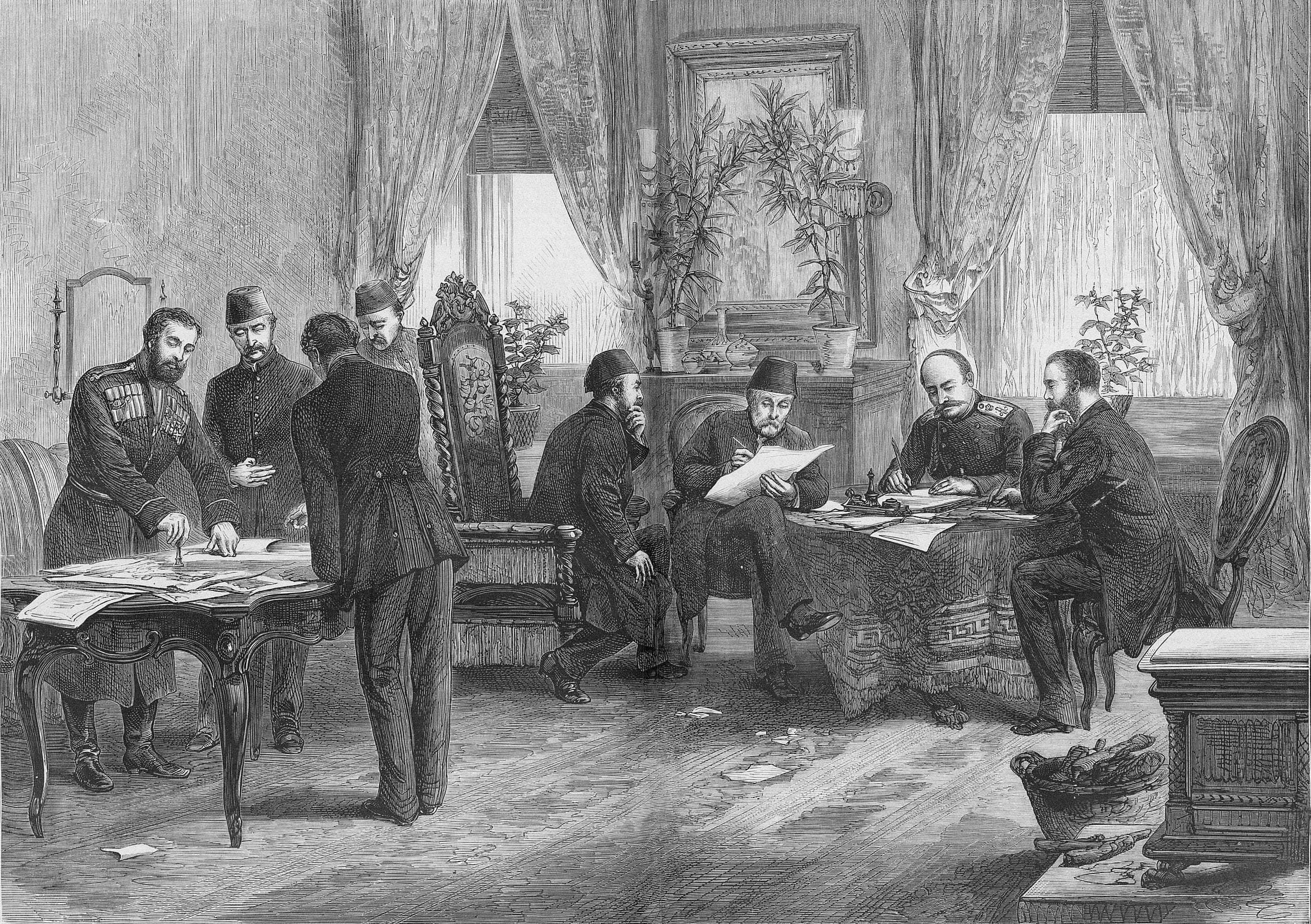
March 3, 1878: The Treaty of San Stefano ends the 1877-1878 Ottoman-Russian War with a decisive Russian victory. The treaty was so lopsided, and in particular the amount of territory given to Bulgaria was so large, that Britain and France stepped in and forced it to be substantially revised at the Congress of Berlin held that summer.
March 3, 1918: The Bolshevik government of Russia signs the Treaty of Brest Litovsk with the Central Powers, marking Russia’s formal withdrawal from World War I. In addition to quitting the war, Russia ceded its claims on Belarus, Estonia, Finland, Latvia, Lithuania, Poland, and Ukraine in Eastern Europe, all of which were expected to come under German domination, and its territories in the Caucasus, which were expected to come under Ottoman domination. Naturally all of those plans were upset when the Central Powers lost the war.
MIDDLE EAST
LEBANON
Lebanese parties are reportedly working out a plan to delay the country’s next parliamentary election, scheduled for May, for two years. That’s because the Israeli military (IDF) appears to be going ahead with another invasion of southern Lebanon, as its forces advanced beyond the border on Tuesday while the Lebanese army unsurprisingly withdrew. Israeli officials characterized this as a “defensive” occupation of another country’s territory, which is likewise how they are describing a two day air campaign that’s included over 160 strikes and killed at least 52 people (wounding at least 154 others) in Lebanon. Some 58,000 people have been displaced inside Lebanon so far.
Hezbollah has fired several rounds of rockets and drones into Israel, wounding an unknown number of people. There’s no word as to damage. The group says that it is ready for “an open war” with Israel but the rest of the Lebanese establishment is clearly not. Even Nabih Berri, Lebanese parliament speaker and leader of the Shiʿa and Hezbollah-aligned Amal Movement, seems to be supporting the Lebanese government’s decision to proscribe Hezbollah’s military activities (Hezbollah has not recognized that decision). This indicates that every major Lebanese party is now aligned against Hezbollah, save for Hezbollah itself of course.
ISRAEL-PALESTINE
The Israeli government began to back off of its new blockade of Gaza on Tuesday, announcing that it will reopen the Kerem Shalom checkpoint and resume aid shipments into the territory on a “gradual” basis. It had reimposed its Gaza blockade on Saturday citing alleged “security” concerns due to the war with Iran, which sparked immediate concerns about fuel and food supplies in the territory. It’s unclear whether the Israelis have plans to reopen Gaza’s other checkpoints anytime soon.
BAHRAIN
The Bahraini government is reportedly “cracking down” on anyone accused of “celebrating” Iranian strikes on that country. It’s unclear how many have been arrested but those who have will likely be charged with crimes against the state and could face extremely severe sentences. Bahrain is something of an anomaly among the Gulf Arab states in that its population is probably plurality Shiʿa. I say “probably” because it’s been decades since the Bahraini government did a census that counted people by sectarian affiliation. Officials now claim that the country is home to more Sunni than Shiʿa, but independent and likely more reliable estimates say otherwise.
Regardless, Bahrain’s sizable Shiʿa population has been suppressed by the country’s Sunni monarchy and it is unsurprising that some portion of that community might respond to Iranian strikes in this fashion. I have seen reports floating around on social media of a Saudi intervention to put down unrest in Bahrain, similar to what the Saudis did in 2011 during the Arab Spring, but I haven’t been able to find mention of it in anything I would consider a reliable source.
IRAN
Israeli Prime Minister Benjamin Netanyahu offered a projection for his war on Iran on Monday evening, telling Fox News that “it may take some time, but it's not going to take years.” So that’s good to know. Netanyahu reassured his audience that this is “not an endless war,” which is undeniably true if for no other reason than that the sun will expand and consume the Earth around 7 or so billion years from now (look it up). He also made it clear that, while Donald Trump can’t seem to figure out quite what he wants out of this conflict, the Israeli aim is definitely regime change—or, rather, “creating…the conditions” for the Iranian people “to change the government.” This is regime collapse, not regime change, in keeping with the US-Israeli revision of Colin Powell’s “Pottery Barn Rule” from “you break it, you own it” to “we broke it, fuck off.”
In Tuesday’s war news:
Trump’s Tuesday assessment of the war so far was, as you might have expected, very rosy. Speaking to reporters at the White House, Trump assessed that “just about everything's been knocked out” in Iran, which must come as a surprise to anyone who’s still dodging Iranian missiles and/or drones. Speaking to questions about how long the US military can sustain this war before it starts running out of munitions, Trump confidently told his social media followers that the US can fight “forever” and later informed POLITICO that “we have unlimited of the middle- and upper middle- ammunition and things. We save it and we build it.” Unlimited! Wow that sure sounds like a lot!
Al Jazeera’s casualty tracker now shows at least 787 deaths in Iran since the US and Israel began attacking the country on Saturday. Iranian retaliatory strikes have now killed at least 11 people in Israel, at least eight people across the Gulf Arab states, and at least six US service members. The network is also publishing a daily list of the war’s lowlights that may be useful for those who want to follow this in greater detail than I can manage here.
Tuesday’s most dramatic strikes, at least from what I’ve been able to gather and I am admittedly feeling somewhat overwhelmed at present, were the Iranian attack on the US embassy in Riyadh in the early morning and an Israeli strike that hit the Qom headquarters of Iran’s Assembly of Experts later in the day. The former apparently caused minimal damage but it was one of a handful of attacks targeting US diplomatic facilities in the Gulf and the State Department began evacuating personnel and closing some of those facilities in response.
As for the Assembly of Experts attack, Israeli officials claim that they were attempting to stop the body from fulfilling its main purpose: electing a new supreme leader. The supreme leader election may be delayed and there is certainly a symbolic impact to destroying the building housing one of Iran’s most important (in theory) political bodies, but the assembly has no day-to-day role in running the country so there’s not much practical impact to destroying this building.
If/when the assembly does finally elect a successor for Ali Khamenei there is good reason to expect that person is going to serve more as an enabler/figurehead for an Islamic Revolutionary Guard Corps-run system than as an active head of state. To that point, The New York Times reported on Tuesday that Khamenei’s son, Mojtaba, has “emerged as the clear front-runner.” Given his lack of religious or political qualifications and his reportedly tight relationship with the IRGC, his appointment as supreme leader would effectively amount to a full (or fuller) IRGC takeover of the state. This is not a choice that would endear the Islamic Republic to Iranians who have soured on it, as Mojtaba is not a particularly public or popular figure and the symbolism of turning the supreme leader office into an inherited monarchy is unlikely to go over well. The NYT also reported, by the way, that the assembly’s Qom building was empty when the Israelis destroyed it.
The US military’s Central Command said that it targeted IRGC “command and control” facilities and air defenses on Tuesday. The Trump administration keeps touting a “big wave” of heavier attacks that is coming and the focus on these kinds of targets may be meant to soften things up for that wave. Or maybe they’re just bullshitting everybody. It’s hard to know anymore. The International Atomic Energy Agency also confirmed that it now sees evidence that Iran’s uranium enrichment site at Natanz has been bombed. IAEA and Iranian officials were disputing that point as recently as Monday.
The Trump administration still cannot get its story straight about how it decided to go to war. Secretary of State Marco Rubio got in trouble (you can probably figure out why) for suggesting on Monday that an Israeli decision to attack Iran forced the US to attack as well in order to preempt an Iranian retaliation. So on Tuesday he offered a new explanation that downplayed any Israeli role. Trump, meanwhile, suggested that he forced the Israelis into action, without really bothering to explain how that might have worked. From my perspective anybody looking to blame just Israel or just the US for taking this course of action is oversimplifying. The Israelis may have dictated when the war started and Netanyahu certainly seems to have put a lot of effort into bringing Trump along to this point, but Trump and his people also wanted this and they’d been planning it for weeks or months prior. It was a joint effort.
Trump announced on Tuesday that the US Development Finance Corporation to provide maritime insurance “at a very reasonable price” for tankers and cargo ships passing through the Gulf. Major insurers have begun suspending that coverage given Iran’s “closure” of the Strait of Hormuz. Trump further declared that “if necessary, the United States Navy will begin escorting tankers through the Strait of Hormuz, as soon as possible.” Doing so would seemingly put its ships in range of Iranian anti-ship missiles, but maybe that’s not a concern.
In terms of potential endgame scenarios, The Wall Street Journal confirmed on Tuesday that Trump “is open to supporting groups in Iran willing to take up arms to dislodge the regime,” including Kurdish militias. And CNN broke the news that the Central Intelligence Agency is already “working to arm Kurdish forces with the aim of fomenting a popular uprising in Iran” and that a Kurdish ground operation could begin in a matter of days. It’s unclear whether Kurdish groups would be interested in marching all the way to Tehran, but they could serve as a conduit for funneling US-provided arms to other factions. For the record it’s hard to imagine anything that could go wrong with this plan.
Iran’s decision to retaliate against Gulf Arab states—though officials are disputing some of the strikes that have been attributed to them especially with respect to energy facilities—has raised the question of if/when those states might start retaliating themselves. It may not be much longer, as the UAE and Saudi Arabia are both reportedly considering strikes against Iran.
Al Jazeera has done a preliminary investigation into the strike that killed at least 165 people at a girls’ elementary school in the southern Iranian city of Minab on Saturday. Both the US and Israeli militaries have professed ignorance of this attack and there’s been some suggestion that it was hit accidentally because of its proximity to a nearby IRGC base. But the investigation finds that the school has over the past ten years been consciously separated from that facility, raising the possibility that it was targeted using dangerously outdated information at best, or deliberately at worst.
ASIA
AFGHANISTAN
The Afghan-Pakistani war appears to have seen a bit of an uptick in intensity on Tuesday, according to AFP, with multiple explosions reported in Kabul and in the Afghan city of Jalalabad. Pakistani officials are claiming that their forces repelled an attack on several border positions on Tuesday morning, killing 67 Afghan soldiers in the process. Afghan officials are denying that claim and say that it was actually their forces that repelled a Pakistani attack. While it’s been difficult to establish objectively how either military is doing in this seemingly aimless conflict—Pakistan’s grievance, the presence of insurgent groups in Afghanistan, can only be resolved through negotiations and there are no negotiations taking place—what is clear is the impact it’s having on civilians. The United Nations says that at least 42 Afghan civilians have been killed and 104 wounded so far and some 16,400 “households,” meaning tens of thousands of people, have been displaced.
CHINA
Obviously the question at the forefront of everyone’s minds these days is: what does the Iran war mean for the New Cold War? OK, I’m not sure how many people are actually asking that question, but The Guardian did, and then it tried to answer it. There are downsides here for Beijing, mostly related to the fact that Iran has been a reliable source of low cost oil and the war is raising global oil prices overall. On the other hand, the US is depleting stockpiles of munitions that a) could be used in a potential war with China and b) probably can’t be replenished without Chinese supplies of critical minerals. That gives Beijing new leverage in trade negotiations. There are diplomatic costs for both countries, as the US offers more evidence of its instability and unreliability while China looks somewhat impotent amid the suffering of a strategic partner. So I guess the answer is that China Is A Land Of Contrasts.
AFRICA
WEST AFRICA
Economic Community of West African States (ECOWAS) member states reportedly agreed last week to create another “regional standby force” for dealing with (or attempting to deal with) jihadist violence. The aim is to have 2000 soldiers ready to deploy by the end of this year. ECOWAS has previously deployed “standby forces” in Ivory Coast (at least twice—once during a civil war and again during the country’s 2016-2017 political crisis) and Mali, but notably those forces were criticized for dealing harshly with civilians. That’s not exactly going to serve the bloc well in a counterinsurgency operation like this.
Two major complications here are funding, though that Al Jazeera piece suggests that the bloc may request support from the United States, and the fact that ECOWAS no longer includes “Alliance of Sahel States” (AES) members Burkina Faso, Mali, or Niger—the three regional countries (that have been hardest hit (alongside Nigeria) by jihadists. ECOWAS will be aiming in part to stop the spread of jihadist violence from those three states into coastal West Africa and northwestern Nigeria, which will be very difficult to do if the regional force can’t at least coordinate with the AES members’ militaries. The two blocs are not on great terms though some ECOWAS members have made inroads in rebuilding their relationships.
SOUTH SUDAN
Doctors Without Borders (MSF) says that 26 of its aid workers are still missing one month after two of the organization’s facilities were attacked in South Sudan’s Jonglei state. One MSF facility was bombarded by the South Sudanese military on February 3, while the second facility was attacked by “unknown assailants.” Jonglei has been experiencing an uprising by militants from the ethnic Nuer White Army and the Sudan People’s Liberation Army-in Opposition.
EUROPE
UKRAINE
Reuters reported on Tuesday that the notion of “fast tracking” Ukraine’s accession to the European Union as part of a Russia-Ukraine peace deal is facing “stiff resistance from EU governments.” Volodymyr Zelensky is seeking guaranteed EU membership by 2027 as one of the “security guarantees” Kyiv would receive when the war ends, and the European Commission is reportedly considering a process whereby the bloc would admit Ukraine as a member first and then begin its formal accession process. This is obviously the reverse of how things are supposed to work, but Ukraine’s membership would be heavily restricted until it “earns” the privileges of regular membership by completing the accession steps.
There is apparently some concern within the EU, including from the governments of France and Germany, that the Ukrainians might be content with the restricted membership and decide to forego the sorts of reforms that would be required to progress beyond that. Some sort of graduated accession process, whereby Ukraine would be granted membership in particular aspects of the EU (like the single market) over time as it meets the bloc’s benchmarks, might be more acceptable.
SPAIN
Donald Trump said on Tuesday that he’s ordered Treasury Secretary Scott Bessent to cut economic ties with Spain, because the Spanish government is refusing to allow the military bases it jointly operates with the US to be used in the war on Iran. Trump likely cannot do this legally, something Madrid noted when it issued a statement pointing out that the “US must comply with international law and bilateral EU-US trade agreements.” US-Spain trade would be governed by the EU rather than handled bilaterally. The US runs a trade surplus with Spain, so by Trump’s own somewhat baby-brained rubric (trade surpluses are Good, trade deficits are Bad) breaking off US-Spanish trade would actually hurt the US.
AMERICAS
VENEZUELA
According to Reuters, the Trump administration is “quietly building a legal case against Venezuelan interim president Delcy Rodriguez including readying a draft criminal indictment.” This is despite the fact that Rodríguez has been a reliably subservient agent for the administration in Caracas since the ouster of Nicolás Maduro in January. Apparently the administration has informed her that she needs to stay subservient or else it will move forward with the indictment and give her the Maduro treatment. Perhaps as a test of her subservience, the administration has reportedly given her “a list of at least seven former high-level party officials, associates and their family members that it wants her to arrest or to keep in Venezuela’s custody for potential extradition.”
UNITED STATES
Finally, Un-Diplomatic’s Van Jackson offers “Five Uncomfortable Truths” about the Iran war—I think the fifth one is particularly crucial:
the part of all this that even many smart people seem not to get is that imperial decline is not randomly happening, and it’s not happening because the US state is run by politicians with poor judgment. Neither is it because America’s political leadership are evil. The root source of imperial decline is a crisis of capitalism that gets managed through zero-sum patches, improvisational fixes that sacrifice others…and that aim at sustaining oligarchy. How oligarchic capitalism sustains its wealth- and power-hoarding is through the permanent war economy. Oligarchy cannot survive the tendency of the declining rate of profit within capitalism without pouring resources into the permanent war economy. And the permanent war economy requires a permanent war footing.
The parlor game of “Will Trump strike this specific country?” misses the point that the US state must be in conflict in many places to sustain its form of governance, which is oligarchy + elections. Iran is downstream of that, but even if caprice led the US to not strike Iran, it would need to bomb a dozen other places anyway. The US will seek out reasons to police others by force on behalf of those who benefit from the imbalance between the forces of capital and the forces of labor. That’s why Trump committed to $1.5 trillion for the military against the advice of his own advisers, who admit they have no idea what to even spend that ungodly sum on. The real humane promise of “great-power competition” for so many liberal national security wonks was an illusion that they could perpetuate the trillion-dollar war machine without having to bomb brown people on a fortnightly basis. Sure, they were prepping for World War III, but they also told themselves nice stories about how laying down the tracks for war was the best way to avoid it. Joke’s on them, because now we’ve got World War III prepping plus bombing brown folks on a fortnightly basis.