

GiveDirectly is raising money to provide relief to those who have been affected by the devastating earthquakes in Venezuela earlier this week. If you are able to contribute please consider doing so!
TODAY IN HISTORY
June 26, 1243: The Mongols defeat the Seljuk Sultanate of Rum at the Battle of Köse Dağ. Where losing to the Mongols usually meant absorption into their empire, however, in this case they opted to leave the Seljuks in place as a vassal kingdom and the sultanate survived like that until the early 14th century.
June 26, 1409: The Council of Pisa elects Peter of Candia as Pope Alexander V. This otherwise unremarkable event is noteworthy inasmuch as there were already two other popes in place at the time, Gregory XII in Rome and Benedict XIII in Avignon. Pisa was held at the height of the “Western Schism,” after a group of cardinals in Rome had elected their own pope to counter the French-controlled papacy in Avignon. A group of senior Catholic officials decided to call a general council to depose both popes and elect a new one. As you might expect, neither of the other two popes recognized his deposition. As a result, the Church found itself with three popes instead of two or, ideally, one.
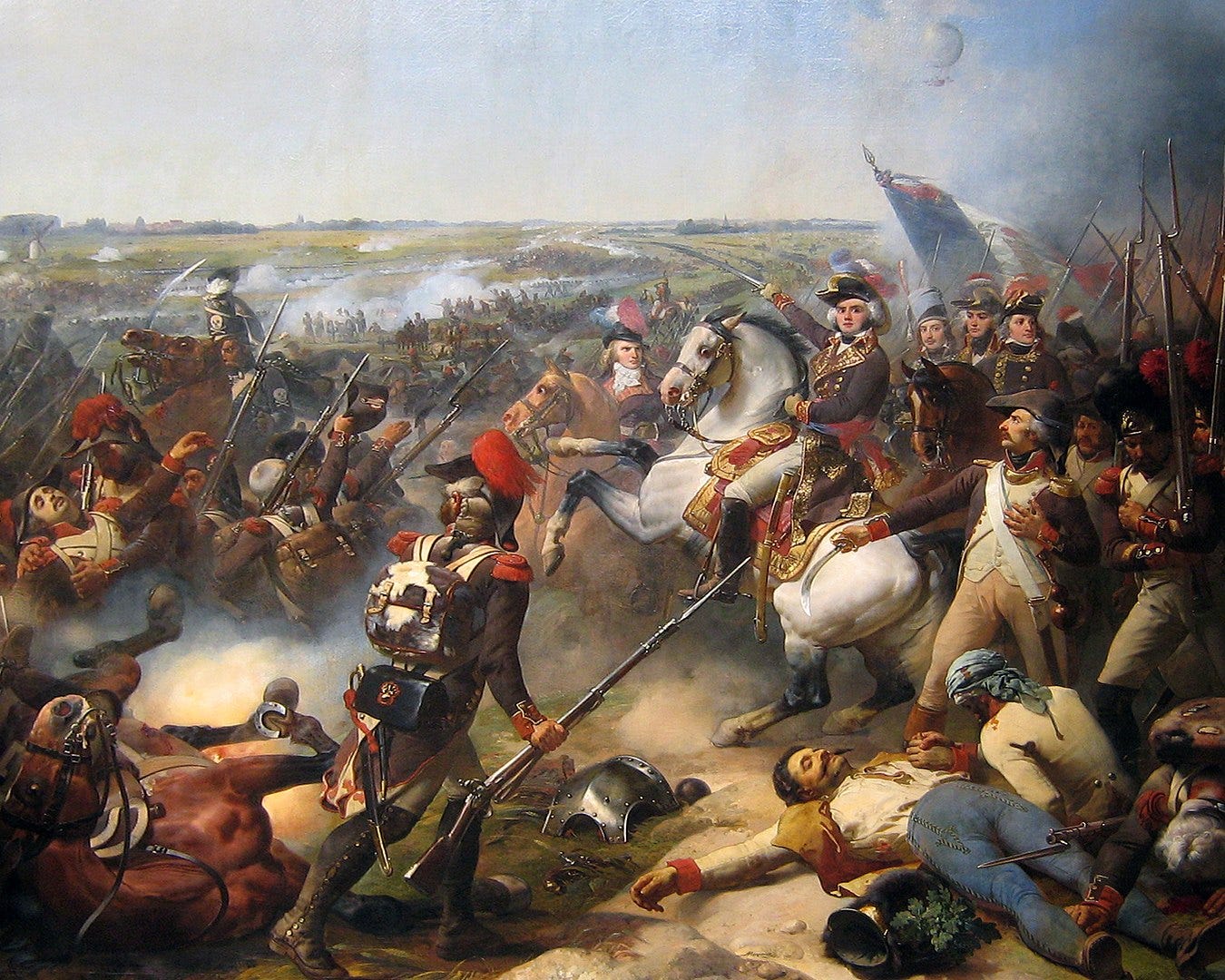
June 26, 1794: The French Republican army defeats the Coalition at the Battle of Fleurus, in the Austrian Netherlands (Belgium nowadays). The victory forced the Coalition to retreat and thereby opened the Netherlands to French forces. This marked the death knell for the Dutch Republic and set France on course to winning the War of the First Coalition. The battle is also notable in that it involved the first successful use of aircraft (a French reconnaissance balloon) in a military context.
MIDDLE EAST
LEBANON
Israeli, Lebanese, and US representatives signed a “framework agreement” in Washington on Friday that is supposed to…well, your guess is as good as mine. It’s not supposed to end the war in Lebanon or the Israeli military (IDF) occupation, and we know that because Israeli Prime Minister Benjamin Netanyahu said so. What we do know is that the agreement sets up a three-way structure called the “Military Coordination Group for Lebanon.” What that institution is supposed to do seems to be something of a mystery. There’s a promise of additional humanitarian and perhaps military aid for Lebanon. And the agreement sets up two “pilot zones” in Lebanon where the IDF will hand control over to the Lebanese army as a test to see if it can prevent Hezbollah from establishing a presence in those areas (to Israel’s satisfaction).
