

TODAY IN HISTORY
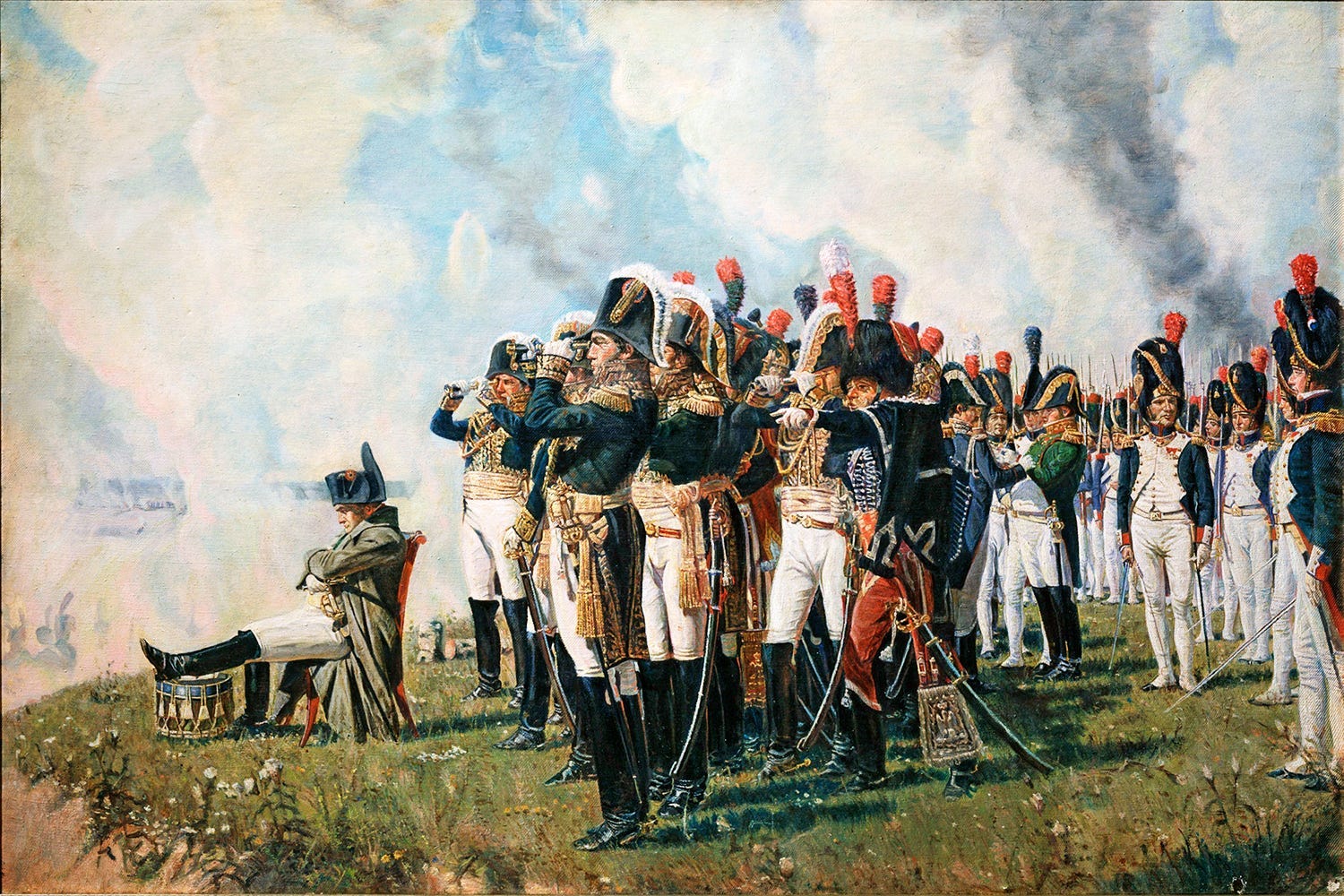
June 24, 1812: Napoleon leads his Grande Armée into Russia. Despite capturing Moscow in September, this was easily Napoleon’s greatest military catastrophe. The Russian army simply stayed out of Napoleon’s way until he was forced to withdraw, at which point his army ran smack into a Russian winter for which they were evidently unprepared. Estimates of the size of Napoleon’s army and thus of the scale of the catastrophe vary, but they range from around 450,000 men to around 685,000, with estimates of the number who returned from the expedition ranging from an optimistic 120,000 to as low as 70,000. The disaster was not the end of Napoleon’s empire, but it was a big step on the road toward its end.
June 24, 1932: A joint civilian-military junta led by the People’s Party forces Siamese King Prajadhipok to adopt constitutional reforms. The coup, known as the “Siamese Revolution,” is one of the seminal events in the history of modern Thailand, as it replaced the country’s centuries-old absolute monarchy with a constitutional monarchy. The legacy of the coup continues to be debated to the present day, with some arguing that the transition to constitutional monarchy would have happened anyway.
June 24, 1948: Soviet authorities blockade the western portion of Berlin, setting off one of the most serious crises of the early Cold War. Two days later, the US, UK, and others launched the Berlin Airlift to keep the city supplied. Over the next several months the Airlift operation dropped thousands of tons of supplies into West Berlin daily, rendering the Soviet blockade largely toothless. The Soviets lifted the blockade in May 1949, though the US and UK continued conducting airlifts through September ostensibly out of concern that the blockade could be reimposed. The blockade/airlift became a seminal event in the drawing up of Cold War lines in Europe.
MIDDLE EAST
TURKEY
According to Reuters, the Trump administration is moving forward with a plan to sell some $700 million worth of General Electric jet engines to Turkey for use in that country’s TAI Kaan fighter program. This is a small step forward in the US-Turkey relationship, which has frayed over the past several years but has improved a bit of late because Donald Trump and Turkish President Recep Tayyip Erdoğan share what I will charitably call “similar dispositions.” It is not what Erdoğan really wants, which is for the US to restore Turkey to the F-35 program (it was booted in 2019 after Ankara acquired the Russian-made S-400 air defense system). The sale may meet with some pushback in the US Congress but probably not enough to block it.
As far as the F-35 is concerned, US Vice President JD Vance claimed on Wednesday that the Trump administration has opened a “review” of the situation. Congress voted several years ago to bar Turkey from the program so this is not as simple as the administration simply deciding to let bygones be bygones. It will have to engage with a legal/legislative process if it wants to bring Turkey back into the fold.
