
TODAY IN HISTORY
June 15, 1215: King John of England signs Magna Carta at Runnymede, under pressure from a group of rebellious barons. The document included provisions protecting church prerogatives and establishing protection from illegal imprisonment, a right to a speedy trial, and limitations on taxation (for the barons, not in general, though it’s since been interpreted more broadly). John eventually petitioned Pope Innocent III to declare the document null, but King Henry III and regent William Marshal issued a revised Magna Carta in 1217 as part of the settlement to the First Barons’ War.
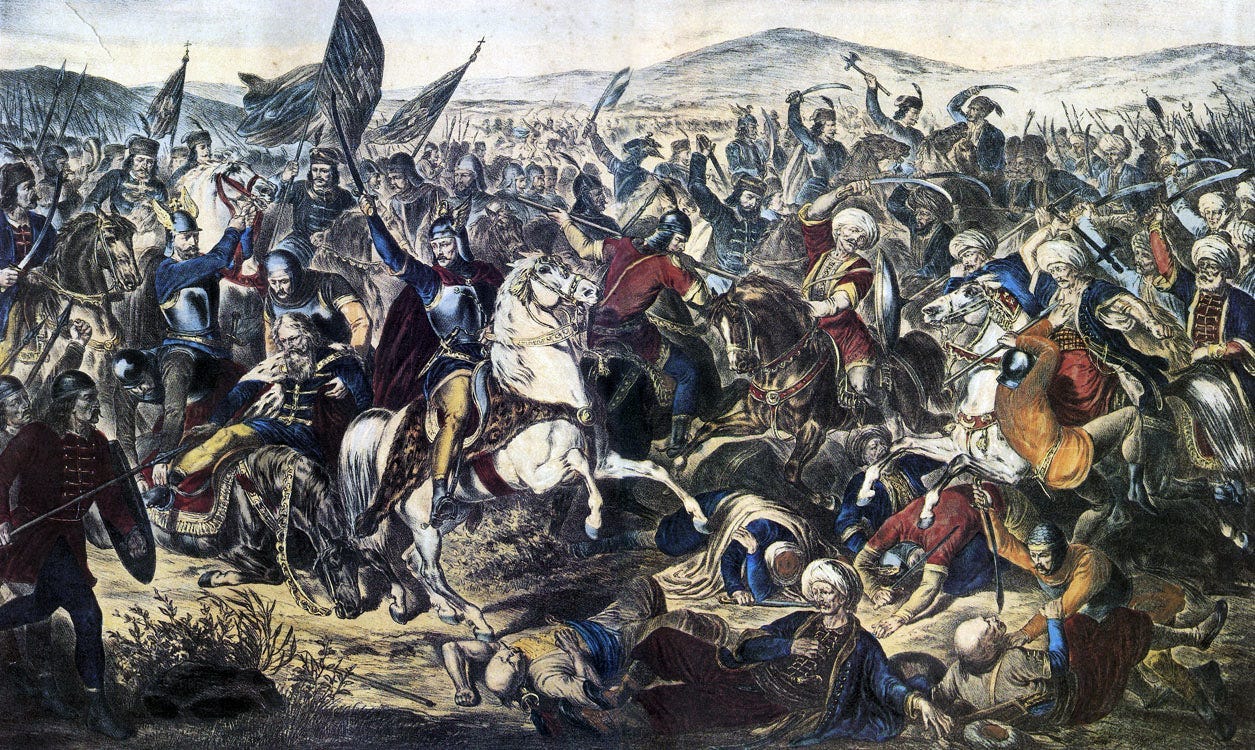
June 15, 1389: The Ottoman Empire defeats a Serbian army in the most famous of several historical battles of Kosovo. Though the Ottomans emerged victorious they suffered heavy losses—none heavier than Sultan Murad I himself, killed by a Serbian knight who pretended to defect in order to gain an audience with the Ottoman ruler. Serbian leader Lazar Hrebeljanović was also killed and son and successor, Stefan Lazarević, subsequently submitted to Ottoman vassalage. The battle had a profound effect on the development of a Serbian national and historical consciousness that has continued to reverberate to the present day.
MIDDLE EAST
SYRIA
Two Islamic State jihadists reportedly attacked the Syrian Interior Ministry security headquarters in the city of Raqqa on Monday, killing at least one security officer. Both of the militants were killed in the assault, one by ministry forces and the other by detonating his suicide device.
Syrian Telecom, meanwhile, reported damage to an undersea cable connecting the Syrian port city of Tartus to the Egyptian city of Alexandria. The impact on Syrian internet service is unclear but the company is calling this an “act of sabotage” and part of a “systematic sabotage campaign” against Syrian telecommunications infrastructure, so it at least seems convinced that this was a deliberate attack. There’s no indication as to responsibility. Suspicion will likely focus on Bashar al-Assad loyalists or IS.
While it got drowned out by other events over the weekend, it may be worth noting that Syrian President Ahmed al-Sharaa told reporters on Saturday that his government has no plan to invade Lebanon to go after Hezbollah. Donald Trump publicly suggested earlier this month that Syria could intervene in Lebanon, an empirically bad idea if there ever was one, and apparently US officials broached the idea with Sharaa’s government privately but were rebuffed. Perhaps it’s irrelevant now.
