

You’re reading the web version of Foreign Exchanges. If you’d like to get it delivered straight to your inbox, sign up today:
TODAY IN HISTORY
June 13, 1971: The New York Times begins publishing excerpts from “The Pentagon Papers,” portions of the Department of Defense’s history of US involvement in Vietnam from 1945 to 1968 leaked by RAND Corporation analyst Daniel Ellsberg. The documents revealed details about US activity in Indochina that were previously unknown to the American public and made it clear that four consecutive presidential administrations—Truman, Eisenhower, Kennedy, and Johnson—had lied consistently about the scope and nature of that activity.
June 13, 1983: The space probe Pioneer 10, launched in 1972, crosses the orbit of Neptune and becomes the first man-made object to pass the orbits of all the major planets of this solar system. It continued to transmit telemetry data until April 2002 and still sent weak signals back to Earth until January 23, 2003. It’s believed to be further from the sun at this point than any spacecraft save Voyager 1, though it will be surpassed by Voyager 2 sometime in the next few years.
June 14, 1325: A young Moroccan man named Abu Abdullah Muhammad ibn Battuta sets out from Tangier on the Hajj, a journey that typically took about 16 months round-trip. But Ibn Battuta spent the next 24 years traveling throughout the world, visiting Turkey, the Balkans, Central Asia, India, Southeast Asia, and China (maybe). After returning to Morocco briefly in 1349 he spent five years traveling through Spain and the Sahel. These journeys would make Ibn Battuta the most widely traveled pre-modern explorer—assuming he actually made all of them. Scholars have questioned the historicity of segments of his journey but even so his travelogue, The Rihlah, became an important account of the period that is still widely read today.
June 14, 1821: Badi VII surrenders Sudan’s Sennar Sultanate to Egyptian forces under the command of Ismail Pasha. Sudan would remain Egyptian until it gained independence in 1956, though to be fair after 1899 it was really governed more as a British colony than as part of Egypt.
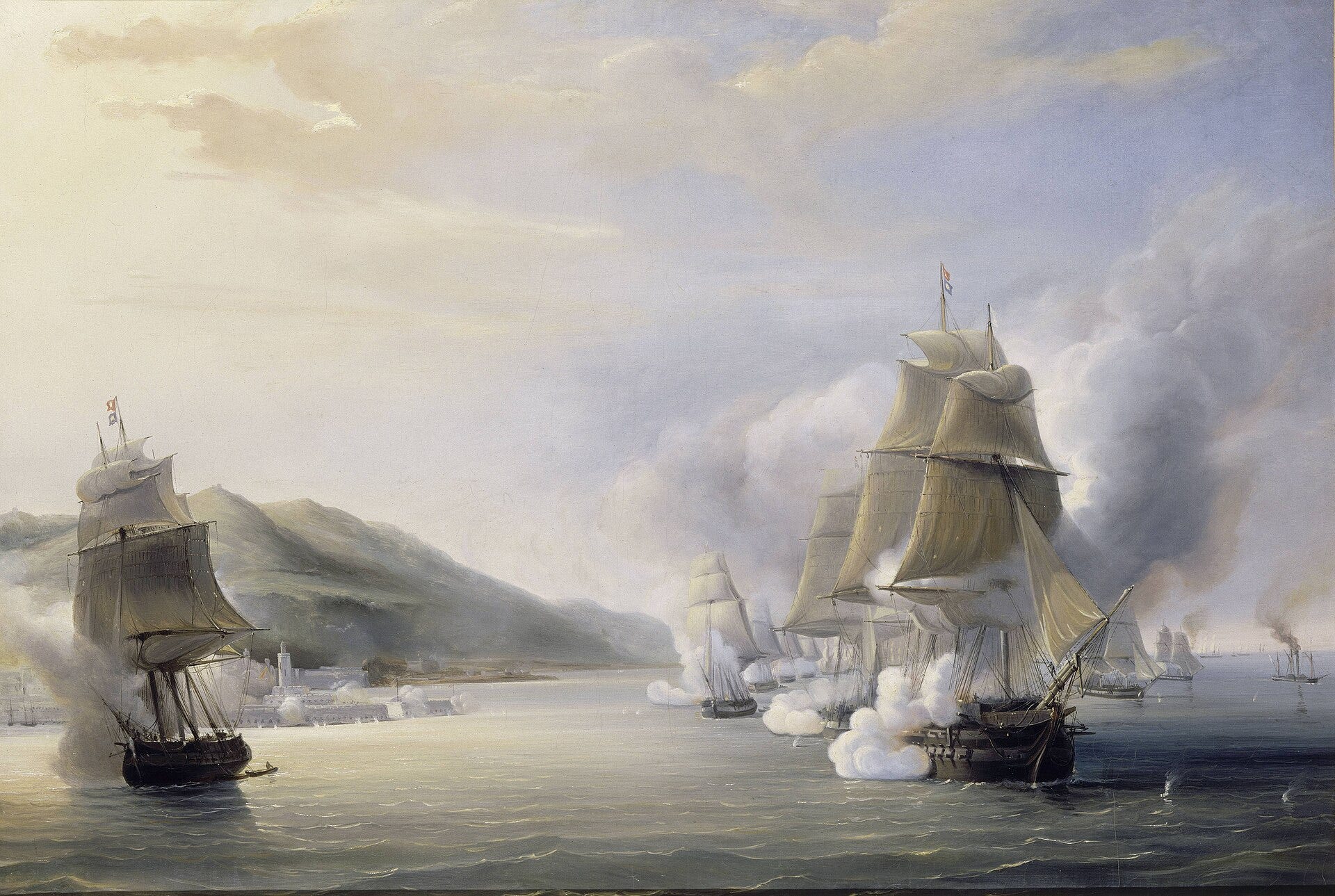
June 14, 1830: The French army lands at Sidi Fredj, beginning France’s invasion of Ottoman Algeria. Algiers fell on July 7 and France formally annexed the country, though it would take many years to conquer the rest of the country and longer for French colonial rule to really take hold. Algeria gained its independence in 1962.
MIDDLE EAST
LEBANON
NOTUS’s Akbar Shahid Ahmed wrote a piece on Friday that has proven to be prescient:
U.S. and Iranian officials on Friday said an understanding to conclude the U.S.-Israeli war on Iran is close. Whatever shape a deal takes, its greatest vulnerability is already clear: the situation in Lebanon.
Though American forces are not fighting in Lebanon, the U.S. is implicated in the conflict between Israel and Hezbollah, the Iran-backed Lebanese militia.
Hezbollah attacked Israel soon after the war with Iran began, and Israel has since bombed and invaded the country, spurring the displacement of more than 1 million Lebanese people. As Israel’s military and diplomatic patron, the U.S. is the only player that could halt Tel Aviv’s offensive.
So if you have’t already heard, the US-Iran “memorandum of understanding” that seemed to be materializing on Friday was thrown into doubt on Sunday because the Israeli military (IDF) once again attacked southern Beirut’s Dahieh suburb, killing at least three people. Israeli officials claimed that the attack was in response to Hezbollah firing projectiles toward northern Israel, but we’re left to take their word for it. Hezbollah says it attacked IDF units in southern Lebanon, and given that Israeli forces are operating on both sides of the border there may be a lot of room for interpretation as far as what really constitutes an attack on “northern Israel.”
If this story seems familiar it’s because the IDF bombed Dahieh one week ago while claiming a similar justification, drawing an Iranian retaliation and kicking off a week of heavy fighting between Iran and Israel and then Iran and the United States. Iranian officials suggested that another retaliation might be forthcoming but that no longer appears to be the case. As we’ll discuss below this attack does not seem to have impacted US-Iranian negotiations.
Prior to the Dahieh strike, the IDF attacked dozens of targets across southern and eastern Lebanon on Saturday and Sunday. I haven’t seen a full casualty count but one of those strikes apparently killed senior Hezbollah commander Ali Mussa Daqduq, who’d been involved in an attack that killed five US soldiers in Iraq in 2007. Even putting aside the Beirut attack that flurry of activity seems intended to convey the message that the Israelis won’t recognize any ceasefire elements that attempt to constrain their behavior, which gives Israeli Prime Minister Benjamin Netanyahu the ability to spoil a ceasefire that he doesn’t want—and over which he’s under domestic political pressure—by simply bombing Beirut. He can do this even after the US and Iran sign an MoU unless Donald Trump is prepared to constrain him.
ISRAEL-PALESTINE
The IDF killed at least six people in Gaza on Sunday, which means it’s now killed at least 983 people in the territory since the onset of the “ceasefire” in October and more than 73,000 since October 2023 according to health ministry figures. Israeli forces killed at least five people in Gaza on Saturday.
Elsewhere, an Al Jazeera “open-source investigation” finds that the IDF has “established a de facto military footprint across the Gaza Strip, southern Lebanon, and southern Syria covering approximately 1,000sq km” since the October 7 attacks. Official IDF maps understate the size of this occupation, particularly in Gaza and Lebanon. To some extent Netanyahu and other Israeli leaders may be compensating for the IDF’s failure to deal a decisive blow to either Hamas or Hezbollah by accumulating territory instead. Logistically, maintaining these extensive occupations could post long-term problems for the IDF but that remains to be seen.
IRAN
As I wrote above, it does not appear that the IDF’s Dahieh airstrike has interrupted the US-Iran peace process, as Pakistani Prime Minister Shehbaz Sharif took to social media on Monday morning (local time) to announce that a deal is in place, under which “both sides have declared the immediate and permanent termination of military operations on all fronts, including in Lebanon.” Donald Trump followed up, posting that “the deal with the Islamic Republic of Iran is now complete” and declaring both the reopening of the Strait of Hormuz and an end to the US naval blockade. “Let the oil flow!” he added for good measure. According to Sharif there will be a signing ceremony on Friday in Switzerland but representatives of each government may electronically sign the MoU before that.
(All of the above unfolded without any official word from Iran initially, but within a couple of hours Iranian Deputy Foreign Minister Kazem Gharibabadi did confirm the deal. I still have not seen any comment from the Israeli government, which seems particularly significant given Lebanon’s apparent inclusion in the ceasefire.)
Earlier in the day Trump did another one of his “I’m made at Bibi” interviews with Axios’s Barak Ravid, complaining that Netanyahu “has no fucking judgement. I let him know that.” In Trump’s telling the Dahieh strike took place “an hour before we [were] supposed to sign the deal,” but he insisted that it had only “delayed the signing by a few hours.” Apparently he was actually telling the truth. Go figure. I don’t know if this means there won’t be an Iranian retaliation against Israel or whether Trump had to offer anything to Tehran to salvage the MoU. Israel’s N12 outlet has been reporting that Trump offered the Iranians “relief…perhaps in the form of money or economic benefits” to maintain the ceasefire, but I haven’t seen any details beyond that.
Reuters reported earlier in the day on the details of the MoU as relayed by “a senior Iranian official.” Based on the source I’d take these with a grain of salt (and terms may have changed if Trump really did throw in any sweeteners after the Dahieh incident) but here are the basics:
Iran reopens Hormuz immediately and the US stands down its blockade, with a fully redeployment of forces to be completed within 30 days
Both countries will begin more detailed negotiations over a 60 day period, during which the US will not impose any new sanctions on Iran and will suspend oil sanctions for a set period of time
The US will also permit the release of $25 billion in frozen Iranian assets
If the two countries reach a “final agreement” all US and United Nations sanctions against Iran are to be lifted
The negotiations will involve a proposal for Iranian reconstruction in addition to nuclear issues
During the negotiations Iran will freeze its nuclear program
Iran can dispose of its highly enriched uranium internally, likely by diluting it under international supervision although the details will have to be worked out during the 60 day negotiating period
Again the sourcing here could be cause for doubt but if this is the gist of the MoU it is pretty heavily tilted toward Iran. Losing a war has consequences.
ASIA
CHINA
Last Monday the US Defense Department expanded its list of companies affiliated with the Chinese military to include several major firms, including the e-commerce/tech firm Alibaba, electric carmaker BYD, and the Baidu search engine. The Pentagon has maintained since 2021 a catalog of private Chinese firms allegedly linked to the People’s Liberation Army, a list that now includes a whopping 188 entities with Monday’s additions. All three firms listed above denied any ties to the PLA and the Chinese Foreign Ministry condemned their inclusion on the list. On Saturday the Chinese Commerce Ministry said that it “is strongly dissatisfied and firmly opposes” these latest designations. It accused the Pentagon of violating the “understanding” reached by Donald Trump and Xi Jinping when the former visited Beijing last month.
AFRICA
NIGERIA
Unspecified gunmen killed at least 17 farmers and wounded another 13 in northwestern Nigeria’s Zamfara state on Friday. This appears to have been the work of bandits, and a local official blamed the attack on the state government’s “refusal” to negotiate with the responsible gang.
SOMALIA
Drop Site’s Faisal Ali reports on recent developments in the relationship between Israel and Somaliland:
The embrace between Israel and Somaliland has deepened since the formal recognition at the end of last year. Israel has now established an intelligence presence in Somaliland, several officials including one from the Somaliland government and a senior Somali official told Drop Site, and news reports suggest that an Israeli military base is under discussion.
The base in question would allow Israel a military foothold on a crucial waterway near the Bab al-Mandab Strait—a maritime chokepoint comparable in importance to the Strait of Hormuz for exports from the Red Sea. Yemen’s Ansarallah already closed the Red Sea to Israeli ships, and has threatened to close the strait entirely in the context of the U.S.-Iran negotiations and Israel’s war in Lebanon.
Some analysts point to Berbera International Airport as a possible host to an expanded Israeli presence in the territory as part of an emerging alliance that would include Somaliland alongside Tel Aviv and Abu Dhabi. The United Arab Emirates has had an agreement since 2017 for a military base at Berbera International Airport that was linked to Emirati operations in the Yemeni civil war.
EUROPE
EUROPEAN UNION
The EU is about to open membership talks with the governments of Moldova and Ukraine:
The start of substantive negotiations, launched by senior EU officials and ministers from both countries in Luxembourg on Monday, will be a highly symbolic moment for the two countries that were both part of the former Soviet Union. It comes after Russia has intensified its bombardment of Ukrainian towns and cities, while sustaining huge losses for little territorial gain.
Ukraine and Moldova were quickly accepted as EU candidate countries in 2022, having filed applications days after Russia’s full-scale invasion. But despite a symbolic decision to open talks in June 2024, substantive negotiations were blocked by Hungary’s pro-Russian [prime minister], Viktor Orbán.
The election of a new Hungarian government in April paved the way for EU member states to agree unanimously last Friday to open “the first cluster”, the chapters of the EU rulebook covering rule of law and democracy. Launching this cluster opens the door to talks on other areas, such as the single market, the environment, economic and social policy.
RUSSIA
Ukrainian drone strikes killed at least three people in Russia over the weekend: one in the Krasnodar Krai region on Saturday, one in Oryol oblast overnight, and one in Bryansk oblast on Sunday. Another Ukrainian attack killed at least three people in Russia’s Tula oblast overnight Sunday into Monday. Also on Sunday, Donald Trump spoke separately by phone with Russian President Vladimir Putin and Ukrainian President Volodymyr Zelensky. It doesn’t sound like he made any significant headway in either call though both seem to have been pleasant enough.
ROMANIA
Romanian President Nicușor Dan nominated the National Liberal Party’s Adrian Veștea as prime minister on Sunday after his previous designee, Eugen Tomac, stepped aside. Dan is trying to find a successor to PM Ilie Bolojan, whose minority government lost a no-confidence vote last month. He nominated Tomac to head a “technocratic” administration earlier this month but that effort failed to generate enough parliamentary support. There may be more backing for another minority government under Veștea but it remains to be seen. Romania isn’t due to hold another general election until 2028.
AMERICAS
VENEZUELA
Donald Trump announced late on Friday that a joint US-Venezuelan operation had killed alleged Tren de Aragua gang leader Héctor Rusthenford Guerrero Flores, AKA “Niño Guerrero.” A US airstrike killed Guerrero during the operation, which took place in Venezuela’s Bolívar state. According to the AP, Venezuelan authorities have been attempting to crack down on illegal mining operations in Bolívar, most likely to clear the way for foreign (US, for example) firms to move in and exploit Venezuelan gold and other mineral resources.
UNITED STATES
Finally, a new UN report begins to assess the damage that the Trump administration’s humanitarian aid cuts have done to the global effort to prevent HIV/AIDS:
The number of people who received pre-exposure prophylaxis (PrEP) medication, used to prevent those at risk from contracting HIV, declined by a drastic 38 percent between 2024 and 2025, per initial data from 62 countries — which means more than a million fewer people took the drug. Funding for condoms has been cut in some cases by more than 90 percent, according to the report.
The drop-off comes after major cuts, pauses and disruptions to foreign aid by the United States under President Donald Trump, along with efforts to trim aid by other wealthy countries and domestic funding shortfalls in affected countries.
“Tenuous” progress in the global effort to end the AIDS epidemic by 2030 has continued: New HIV infections declined globally from 2.1 million in 2010 to 1.2 million in 2025, and AIDS-related deaths declined from 1.3 million in 2010 to 570,000 in 2025, the lowest in more than 30 years, the report found.
The number of people in treatment rose nearly 3 percent year on year. But nearly 9 million remain untreated, and cuts to HIV prevention and community support services could cause backsliding, UNAIDS warns.