

TODAY IN HISTORY
June 1, 1215: After a lengthy siege during which a substantial portion of its population is believed to have starved to death and after which many more were massacred (actual figures are hard to come by), the city of Zhongdu—known today as Beijing—surrenders to Genghis Khan’s invading Mongolian army. This was the Mongols’ second siege of Zhongdu, the ostensible capital of northern China’s Jin dynasty. After the initial siege the Jin retained control of the city but moved their court to Kaifeng for security, which was perceived by the Mongols as a provocation and thereby triggered the second siege. Because the Mongols turned their attentions west shortly after capturing Zhongdu, the Jin were able to survive at Kaifeng until it (and the dynasty as a whole) fell to the Mongols in 1233.
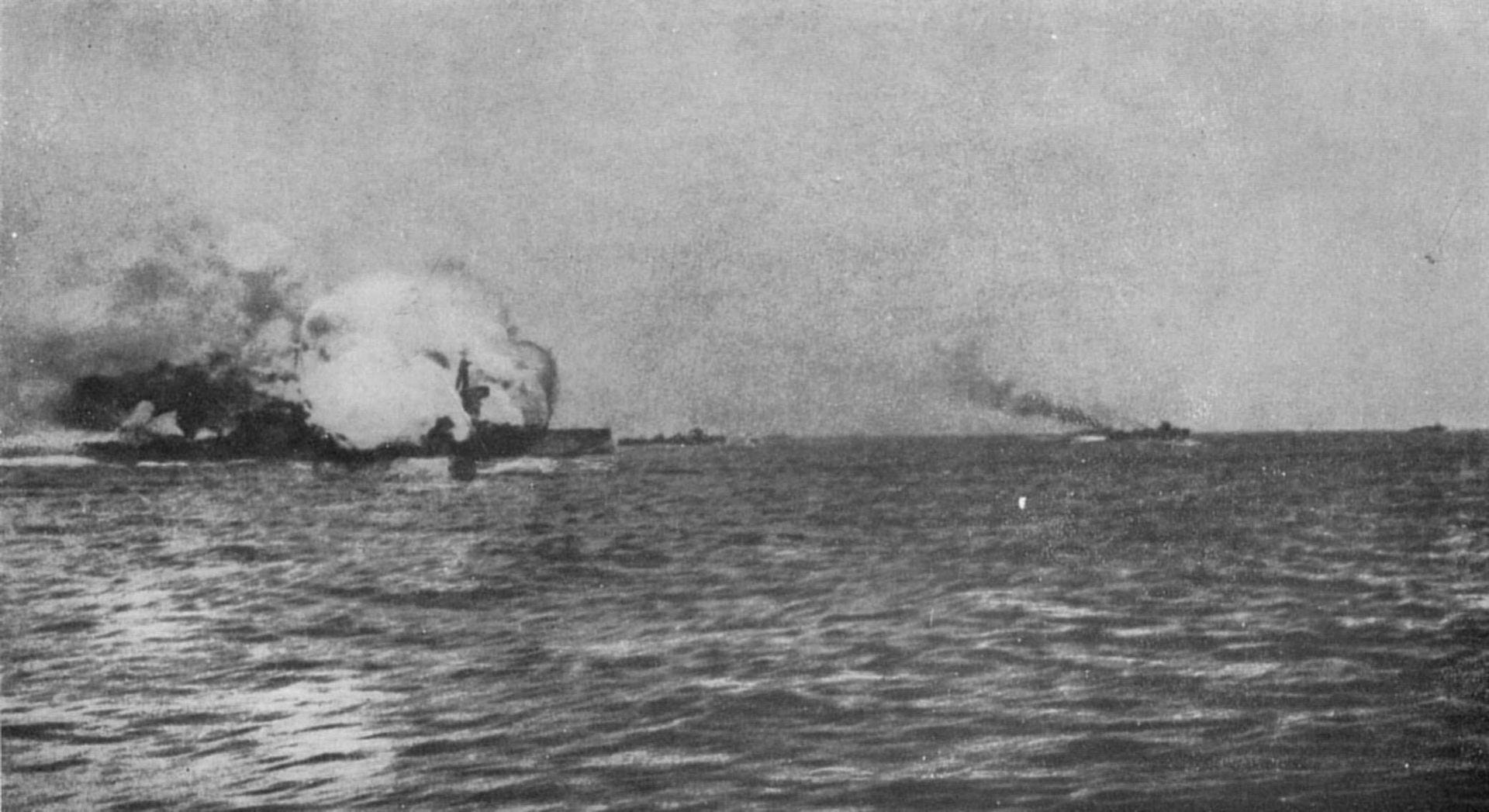
June 1, 1916: The Battle of Jutland, the largest naval battle of World War I and at least by some measures the largest in history to that point, ends in what I would say (there’s still disagreement on this point) was a fairly pyrrhic German victory. The Germans sank substantially more British ships and killed substantially more British personnel than vice versa, but these were losses that the British navy could sustain more easily than the Germans. The German government was able to claim victory in the immediate aftermath of the battle, but the British fleet maintained and arguably even increased its naval superiority for the remainder of the war, while keeping Germany’s High Seas Fleet largely out of the Atlantic Ocean. Put another way, the battle was a German tactical victory but a British strategic one. Of historical note, Jutland was the last major naval battle that featured battleships as the main participants before aircraft carriers displaced them as the primary combat ship for large naval powers.
INTERNATIONAL
The AP reports on the Iran war’s impact on the global fertilizer market, which carries short term food security risks but may bring longer term benefits as farmers transition from chemical to natural fertilizers:
The Gulf region produces 30% of globally traded chemical fertilizer, according to the International Food Policy Research Institute, and global prices have increased by 50%, according to the World Bank’s fertilizer price index.
“The clock is ticking very hard,” said Maximo Torero, chief economist at the U.N.’s Food and Agriculture Organization, as concerns grow about food security.
Experts say a shift away from chemical fertilizer could have wider benefits, as its production and usage create significant greenhouse gas emissions, the main driver of climate change.
Natural fertilizers, by contrast, can sequester carbon in the soil and create fewer problems like runoff that can pollute waterways.
“It’s good for the planet because you’re weaning food production off fossil fuels,” said Susan Chomba, member of the International Panel of Experts on Sustainable Food Systems, a think tank.
MIDDLE EAST
SYRIA
The Wall Street Journal reported on Monday that both US officials and satellite imagery show that Russia resupplied its Hmeimim airbase in northwestern Syria last month, an indication that it’s holding on to that facility at least for the time being. Moscow has been negotiating with the Syrian government over Hmeimim and its naval base at Tartus, both of which it leased from the Assad government, but as far as I know there’s been no announcement from either Russian or Syrian officials regarding the status of those talks. The revelation that a Russian cargo ship brought new supplies for the facility for the first time since the Assad government fell in December 2024 points toward the Russians sticking around.
