

You’re reading the web version of Foreign Exchanges. If you’d like to get it delivered straight to your inbox, sign up today:
TODAY IN HISTORY
July 9, 969: The Fatimid general Jawhar ibn Abdallah leads the communal Friday prayer in the Amr ibn al-As Mosque in Fustat in the name of the Fatimid Caliph al-Muʿizz li-Din Allah, putting the final symbolic touch on the Fatimid dynasty’s conquest of Egypt. The Fatimids had emerged in the North African region of Ifriqiya (roughly corresponding to modern Tunisia plus parts of eastern Algeria and western Libya) in 909 as a branch of the Ismaʿili Shiʿa line leading a predominantly Berber army. They made repeated attempts to take Egypt from the rival Abbasid Caliphate but were unsuccessful until the 960s, when the Abbasid polity had all but collapsed and the caliphs had fallen under the “protection” of the Iranian Buyid dynasty. The Fatimid caliphate eventually moved its capital from Ifriqiya to a new city that Jawhar began building near Fustat and eventually grew to encompass it: Cairo.
July 9, 1816: The United Provinces of the Rio de la Plata declares independence from Spain. As most of those provinces went on to form Argentina, this is commemorated as Argentine Independence Day.
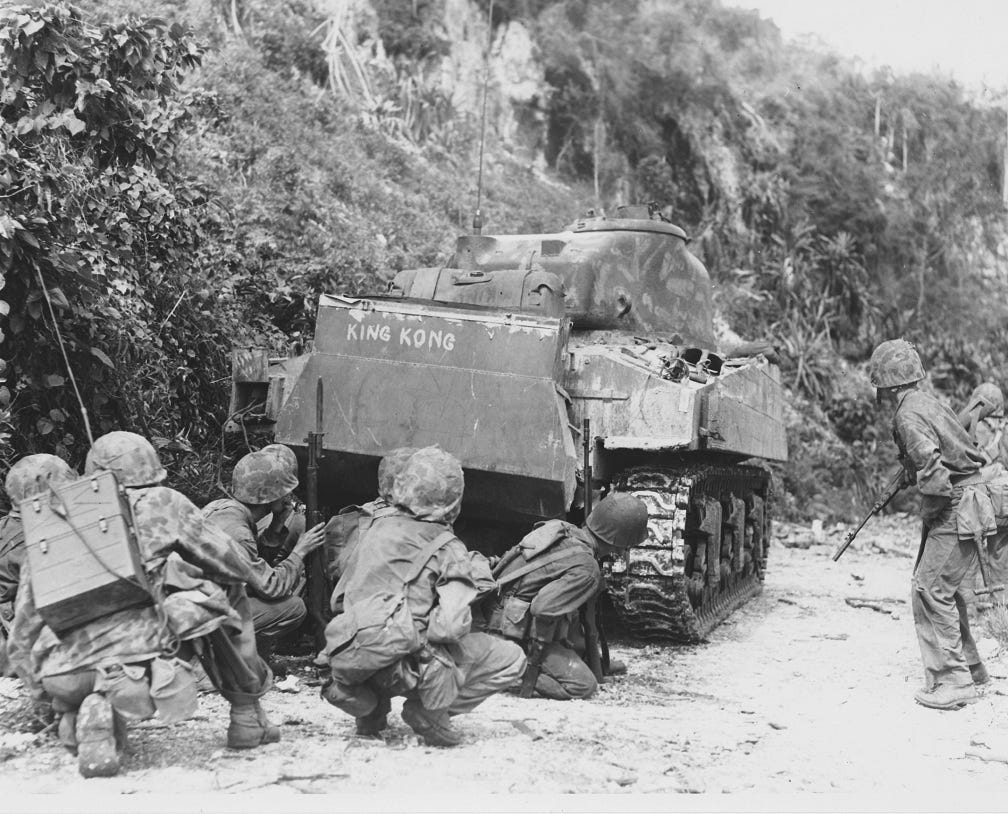
July 9, 1944: In one of the more decisive engagements of World War II’s Pacific Theater, the United States emerges victorious from the Battle of Saipan. Control of Saipan, the largest of the northern Mariana Islands, put the US military in position to begin B-29 bombing attacks against Japan itself. The island served as a staging point for the US reconquest of the Philippines later in 1944. The defeat also led to the resignation of Japanese Prime Minister Hideki Tōjō.
MIDDLE EAST
SYRIA
The Organization for the Prohibition of Chemical Weapons restored the Syrian government’s voting rights on Thursday. Damascus lost those rights in 2021 amid OPCW allegations that Bashar al-Assad’s government had not come clean about the full extent of its chemical weapons program. The organization is apparently much more pleased with the relationship it has with Syria’s current government.
Elsewhere, Syrian authorities say they’ve arrested the cell allegedly responsible for a recent spate of bombings in Damascus. A security official for the Damascus region, Ahmad Dalati, told state media that “preliminary investigations … have shown that the cell was affiliated with the [Islamic State] group.”
ISRAEL-PALESTINE
The Israeli military (IDF) killed at least six people in Gaza on Thursday in another round of “despite the ceasefire” attacks that demonstrate that there is no actual ceasefire. This week’s IDF attacks have killed at least two aid workers—one driver for the World Central Kitchen on Wednesday and an official with the Egyptian Relief Committee in Gaza, Mohammed al-Wahidi, on Tuesday. Wahidi’s public profile had risen in recent weeks as he was the driving force behind organizing public screenings of World Cup matches across the territory. It’s unclear whether the IDF targeted him intentionally though that certainly can’t be ruled out.
In the West Bank, the NGOs Peace Now and Kerem Navot issued a new report this week estimating that Israeli settlers now squat on at least 18 percent of the West Bank. Only about 40 percent of that territory is classified as “state land,” meaning that the rest of it has been stolen from Palestinian owners. The report makes it clear that this land theft is being carried out with the full support of the Israeli government and that the process is spreading from the Oslo Accords’ “Area C” (territory administered by the IDF) to Areas A and B (which are supposed to be under Palestinian administration).
IRAN
After another night of back-and-forth US and Iranian attacks the two sides appear closer to resuming their war than they’ve been at any time since adopting their ceasefire memorandum last month. As I write this there have been reports of more attacks on Iran but the US military is denying responsibility, which suggests the possibility that the IDF has decided to resume its involvement in this conflict. US attacks on Iran have left at least 14 people dead and 78 wounded so far this week, according to Iranian officials. Iranian attacks on commercial ships in the Strait of Hormuz have ground traffic in that waterway nearly to a halt, particularly through the Omani coastal channel whose use the Iranians find objectionable.
The scope of this latest exchange of hostilities has already expanded beyond previous rounds both in the size of the attacks and the targets. Early Thursday morning US aircraft hit civilian infrastructure in Iran’s Gulf of Oman port of Chabahar, which had not previously been targeted, and bombed two rail bridges in northeastern Iran on lines that cross into Central Asia. The US military had been planning widespread attacks on Iranian civilian infrastructure prior to the ceasefire and may be back on that plan albeit in a somewhat stepped down form. Axios’s Barak Ravid reported on Thursday that the Trump administration “is preparing for what could become a multi-day or even multi-week exchange of fire.”
ASIA
PAKISTAN
The Diplomat’s Umair Jamal reports that Pakistani officials are increasingly agitated about the status of the 1960 Indus Waters Treaty, which is supposed to ensure the flow of water from upstream Indian sources into the lower Indus River that runs through Pakistan. The Indian government suspended that treaty last year in response to a terrorist attack in Kashmir and doesn’t appear interested in reviving it. It has stopped sharing river data with the Pakistani government and is fast tracking infrastructure projects along its Indus tributaries that could divert water that had previously flowed to Pakistan.
Water is an existential issue so there is an obvious risk that this situation could escalate to war, and Pakistani authorities have been speaking about the issue in national security terms. But before the situation gets to that point the Pakistanis may attempt to bring China into this dispute. Since China sits further upstream in the Indus River system, it could take measures to prevent water from flowing to India, creating leverage for negotiating a three-way water sharing agreement that could at least partially restore the water rights that Pakistan lost when the Indian government suspended the IWT.
PHILIPPINES
As we’ve previously noted, the US military is changing the name of its “Indo-Pacific Command” (INDOPACOM) back to “Pacific Command” (PACOM), in what seems like both a strategic adjustment and a reflection of Donald Trump’s irritation at Indian Prime Minister Narendra Modi. Responsible Statecraft’s Sarang Shidore writes that the name change is only part of the story, which also includes the elevation of the Philippines to replace India in Washington’s main anti-China bloc:
As the Quad [the bloc involving the US, Australia, India, and Japan] falls from grace, the “Squad” is rising. The Squad — comprising the United States, Japan, Australia, and the Philippines — was formed in 2023. But over time, it is shaping up as a more potent successor. Unlike the Quad, all four Squad members are treaty allies, all are unambiguous about its role as a defense group, and all are better positioned around the geography that actually matters militarily.
The USPACOM rename makes explicit what the Squad’s rise had already signaled informally. As I have written previously, Manila is replacing New Delhi in Washington’s security calculus. This is not because the Philippines can ever match India’s much greater size and industrial capacity, but rather because Manila is a deeply embedded U.S. ally, and, crucially, sits at the very heart of the First Island Chain.
The clear casualty of this shift is the “Indo” in “Indo-Pacific,” i.e., India’s place as a strategic centerpiece. Even as India’s role has diminished in U.S. priorities, Washington appears to be taking a larger, regional role in South Asia.
The Quad’s “demotion” goes back to last year’s National Security Strategy, which anticipates greater reliance on Japan and the Philippines both as military partners and as bases for US forces. Trump’s irritation aside, Shidore contends that the Indian government never seemed entirely on board with the China containment plan and especially not in the Pacific, where New Delhi doesn’t have any compelling interest.
AFRICA
MALI
AFP is reporting that Azawad Liberation Front (FLA) and Jamaʿat Nusrat al-Islam wa’l-Muslimin (JNIM) jihadists attacked a convoy of Russian “African Corps” mercenaries in northern Mali on Thursday. The mercenaries were heading to relieve the town of Anéfis, which the FLA and JNIM apparently seized (or are close to seizing) after their joint offensive over the weekend. There doesn’t seem to be any indication as to the outcome of Thursday’s clash as yet.
DEMOCRATIC REPUBLIC OF THE CONGO
The DRC’s current Ebola outbreak is now the “fastest growing” on record, according to Africa Centers for Disease Control and Prevention official Wessam Mankoula. Authorities have now tallied 1759 confirmed cases of the illness along with over 600 deaths, figures that likely undercount the true extent of the spread—possibly by a wide margin, given suspicions that this outbreak was identified relatively late. The deadliest Ebola outbreak ever recorded, the 2014-2016 West Africa outbreak that ultimately involved at least 28,610 cases and at least 11,308 deaths, saw 994 confirmed cases in its first six weeks while this one saw 1596 confirmed cases over that same period. With the outbreak centered in the northeastern DRC’s Ituri province insecurity and remoteness (as well as a lack of funding) have hampered the response.
EUROPE
EUROPEAN UNION
The Wall Street Journal reported on Sunday about a meeting earlier this year that may have marked a new era in European frustration with the United States:
It was almost midnight in Brussels and the leaders of Europe were locked in their fifth hour of an emergency meeting with a single theme for discussion: how to manage a breakup with America.
The new year was only three weeks old and President Trump, after removing Venezuela’s autocratic strongman, had briefly threatened to seize Greenland from Denmark. Around a circular table in the European Council headquarters known as “The Space Egg,” heads of government were venting so emotionally about the 47th president that some of the nearly 30 leaders present would later call the session “therapy night.” There were no cameras or recordings and each of the presidents and prime ministers was told to come alone, no phones allowed, for a moment to speak candidly.
“We are drawing a line here,” began Emmanuel Macron, president of France, according to several leaders present and their most senior aides. For a year, America’s closest allies had tried to placate Trump with a mix of flattery and concessions on mutual-defense and trade issues, hoping to buy time. Now, French soldiers were in Greenland, alongside Danish special forces equipped for a shooting war with America. The French president repeated an argument he’d been pressing for years, with mounting urgency: that Europe’s overreliance on America was a security risk. “There is no going back,” he said.
One of the few EU leaders present at this session who defended Trump, Italian Prime Minister Giorgia Meloni, has recently been embroiled in a public spat with him so I suspect her feelings have changed. Anyway, the punchline to the story is that the figure who then emerged as the avatar of a US-Europe breakup was Canadian Prime Minister Mark Carney, who is notably not a European leader. It’s hard to take any of this seriously when all these people are doing is complaining behind Trump’s back.
RUSSIA
Take this with a grain of salt, but a new piece at The Insider purports to describe the contents of “a cache of documents containing previously undisclosed details about the growing military cooperation between Russia and China.” Those documents appear to describe a much closer relationship than either country has let on, fueled mostly by shared antipathy toward, and from, the US. In particular they outline a joint project to target the Starlink satellite network, which has become an essential component of the Ukrainian war effort both in terms of maintaining military communications and supporting drone strikes inside Russia. It describes a range of options to weaken the network up to and including attacks on Starlink systems, possibly limited to cyberattacks but the documents apparently don’t rule out military strikes on Starlink satellites in orbit. Like I said I would be cautious about reading too much into this given the source but the threat of space warfare is serious enough to at least be aware of the report.
UKRAINE
Volodymyr Zelensky told reporters on Thursday that the US and Ukrainian governments have agreed “politically” on a deal to give Ukraine a license to produce the PAC-3 missile for use in the Patriot air defense system, confirming a statement that Donald Trump made the previous day. He also said that he’s expecting a new shipment of the missiles in the near future. It will be months at least before Ukraine is capable of producing Patriot missiles at scale, and in the meantime the Ukrainian military has been trying to manage its current stockpile of those devices amid a worldwide shortage caused mainly by the Iran war. Zelensky also claimed that the US and Ukraine are in discussions on a “drone deal” that could see the US availing itself of advances that the Ukrainians have made in that field.
AMERICAS
UNITED STATES
Finally, Un-Diplomatic’s Van Jackson argues that the Iran war is here to stay, ceasefire or not, for one simple reason:
Still, there is a strategic rationale for all the bloodletting that any sane person would oppose but that serves both oligarchs and the national security state but essentially nobody else: America’s North Star in the Middle East remains Israel’s regional primacy and that means taking military measures to weaken Iran. If only we could have understood this from the start, we would have known that the Iran War was meant to be permanent. That what Trump branded a “ceasefire” was what Hegseth admitted was a strategic pause for “reloading.”
It’s not just that Trump was stupid enough to be conned into doing a war that Netanyahu failed to convince every president in the 21st century to do. It’s that unleashing ebbs and flows of bombing against Iran from now until forever prevents Iran from seriously challenging Israeli primacy in the Middle East; the inter-state version of the profoundly impoverished-yet-evil Israeli theory of “mowing grass.”
To be sure, there have been setbacks. Iran has proven itself more powerful than Washington jingoes imagined. In fact, the war has exposed how the global power projection that remains the Quixotic aim of American militarism is no longer technically possible. But that doesn’t matter if the larger point is perpetuating Epstein geopolitics or fulfilling the millenarian vision of white supremacists and Zionists.
As long as US politicians keep the American national security state tightly bound to the state of Israel, there will be no change to Washington’s investiture in Israeli primacy as a constituent part of American primacy. And as long as that primacy construct doesn’t change, the US will continue to face the “need” to keep Iran weak relative to an Israel that literally kills people to manipulate the balance of power in the Middle East and facilitate the Nazi-like idea of a “Greater Israel.”