

TODAY IN HISTORY
July 8, 1497: A Portuguese armada sets sail under the command of Vasco da Gama bound for India. Da Gama’s completion of the route around Africa was the first direct European oceanic contact with India and stands alongside Columbus’s “discovery” of the Americas, for better or worse, as one of the milestones of the Age of Exploration.
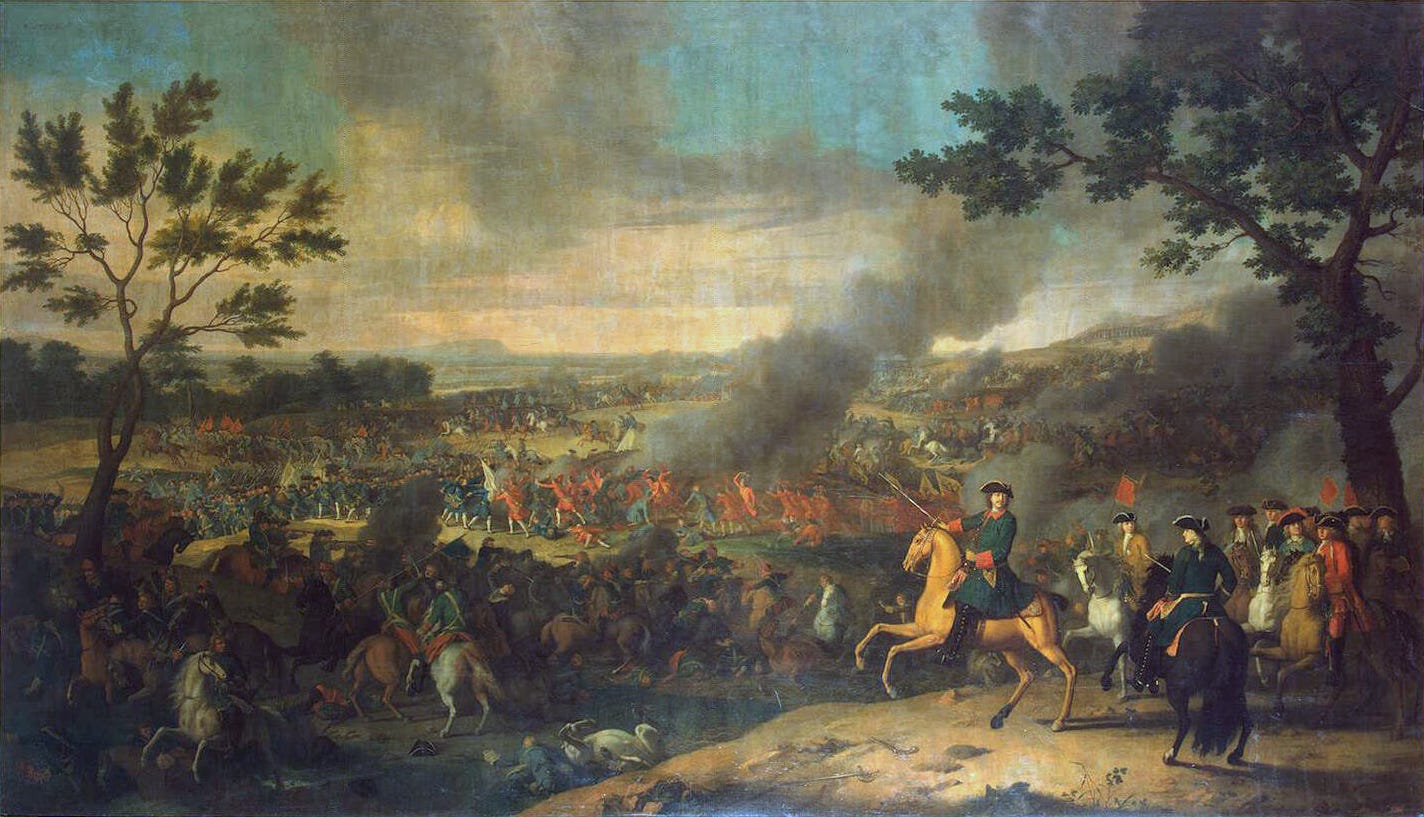
July 8, 1709: A Russian army under the command of Tsar Peter I defeats a Swedish army commanded by Count Carl Gustav Rehnskiöld at the Battle of Poltava. This was the largest engagement of the 1700-1721 Great Northern War, pitting some 75,000 Russian soldiers against a Swedish force numbering around 30,000. It also proved to be a turning point in that conflict, in which a Russian-led coalition challenged the Swedish Empire’s supremacy in northern Europe. After a very successful first six years of the war, Swedish King Charles XII made the fateful decision to invade Russia in 1707. The Swedish defeat at Poltava was the culmination of that invasion. Most of the Swedish army was forced to surrender, while Charles himself fled into the Ottoman Empire for protection. He spent several years there before eventually wearing out his welcome and being sent home.
July 8, 1853: A US naval expedition commanded by Commodore Matthew C. Perry arrives at Japan’s Edo (Tokyo) Bay. The “Perry Expedition” was intended to open diplomatic and commercial ties with several Indo-Pacific nations, but its main goal was to force the Japanese government to abandon its isolationism (at least with respect to the US). Perry’s threats to attack Edo had the desired effect and he was eventually permitted to carry out his main formal task, delivering a letter from US President Millard Fillmore to senior Japanese officials. He returned with a larger fleet in February 1854 and—again under threat of force—negotiated the Convention of Kanagawa, which opened the Japanese ports of Shimoda and Hakodate to US ships.
MIDDLE EAST
SYRIA
Donald Trump met with Syrian President Ahmed al-Sharaa on the sidelines of the NATO summit in Turkey on Wednesday, while US Secretary of State Marco Rubio announced that the US will remove Syria from its “state sponsors of terrorism” list. The only surprise in that announcement is that it’s taken so long. It’s been over a year and a half since Sharaa’s jihadist rebels ousted former Syrian leader Bashar al-Assad, the target of that terrorism designation, and it’s already been almost nine months since Trump hosted Sharaa at the White House—not something one generally does with sponsors of terrorism. The removal will become official in 45 days unless the US Congress intervenes, which seems unlikely. The designation includes significant restrictions on US individuals and entities doing business with the targeted country, so lifting it should be an economic boost for Syria.
