

You’re reading the web version of Foreign Exchanges. If you’d like to get it delivered straight to your inbox, sign up today:
PROGRAMMING NOTE: Substack has at long last made it possible to open the comments section to free as well as paid subscribers without opening it up to the general public. I’m going to try this out on some unlocked pieces (starting with this one) and see how it goes, reserving the right to pull the plug on it if it goes poorly.
TODAY IN HISTORY
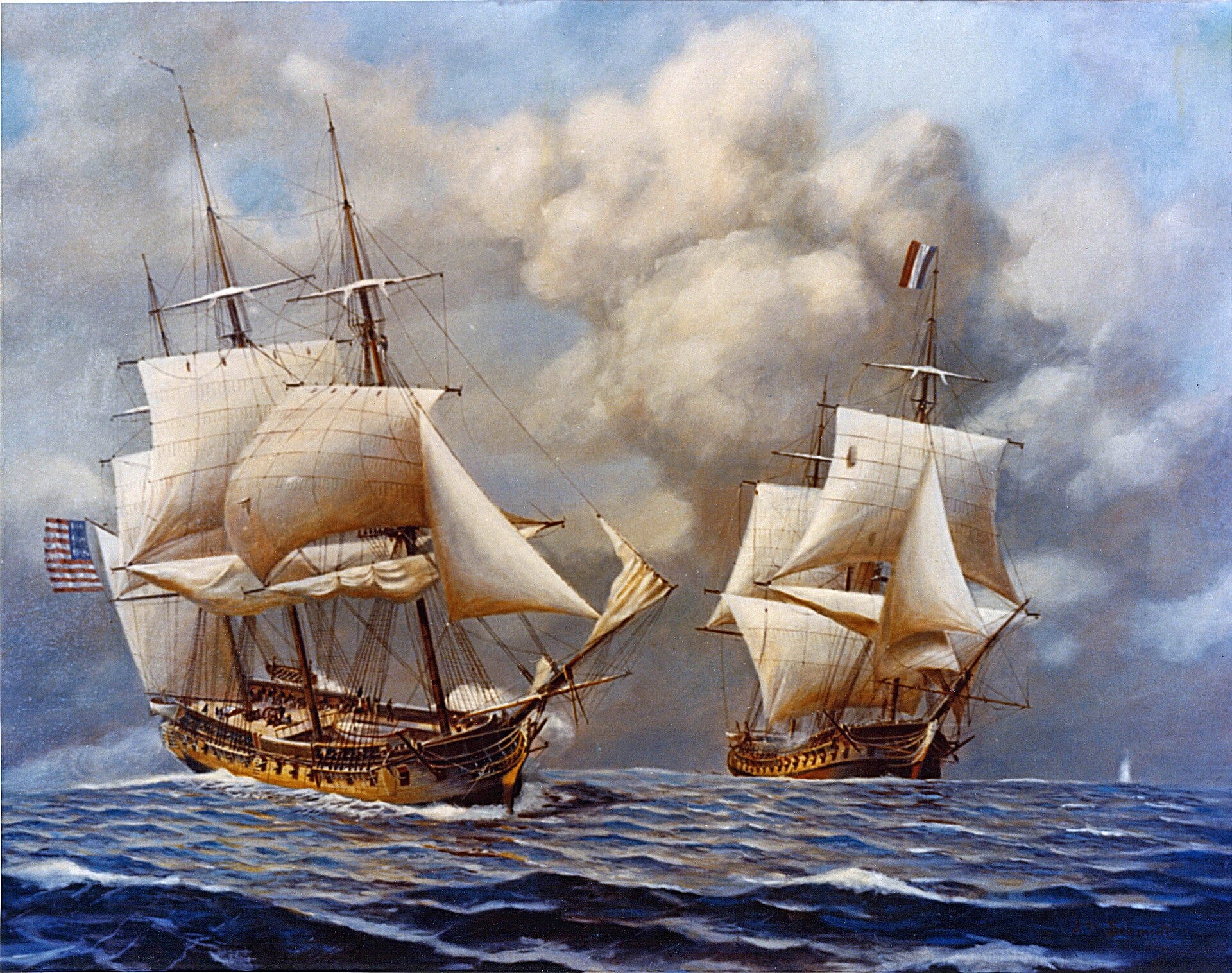
July 7, 1798: The United States Congress annuls the 1778 Treaty of Alliance between the US and France. The annulment is considered the opening act of the 1798-1800 “Quasi-War” between the two countries. Congressional opinion (and public opinion, for that matter) in the US turned decisively against France following the notorious “XYZ Affair,” in which a US diplomatic delegation to Paris (there to discuss the French Navy’s seizure of multiple US commercial ships over the previous two years) took offense at French Foreign Minister Charles Maurice de Talleyrand-Périgord’s insistence that they pay for the privilege of speaking with him. The conflict that ensued was never formally declared a war but did involve several clashes between US and French naval vessels and/or privateers. It finally ended with the Convention of 1800 and a formal statement of US neutrality.
July 7, 1892: Anti-Spanish independence advocates in the Philippines form the Katipunan, which means “association” and is short for a Tagalog name that I won’t try to reproduce but means “Supreme and Honorable Association of the Children of the Nation” in English. Originally a secret society, the Katipunan splintered off of the reformist La Liga Filipina and included Liga members who supported armed revolution against the Spanish colonial authorities. Its discovery by those colonial authorities in 1896 was one of the immediate triggers for the Philippine Revolution.
July 7, 1937: The Marco Polo Bridge Incident, a clash between Chinese and Japanese troops near Wanping, ends with the Chinese force holding the bridge but still obliged to make concessions to the superior Japanese force in order to end the confrontation. This relatively minor incident sparked the Second Sino-Japanese War, which continued into and throughout World War II.
July 7, 1991: The Brioni Agreement ends the Slovenian War of Independence. The agreement required Slovenia and Croatia to delay their independence bids for three months in exchange for the withdrawal of the Yugoslav army from both republics. In reality this marked the end of the Slovenian phase of Yugoslavia’s disintegration, while having no effect on the war in Croatia.
MIDDLE EAST
TURKEY
Donald Trump is in Turkey for this week’s NATO leaders’ summit in Ankara. More on that later, but notably Trump met his host, Turkish President Recep Tayyip Erdoğan, and told reporters that he’s “going to be taking the sanctions off.” He’s referring to sanctions imposed on Turkey through the 2017 “Countering America’s Adversaries Through Sanctions Act” (CAATSA). Under CAATSA, the US Congress blacklisted Turkey from participation in the F-35 program after Erdoğan purchased Russia’s S-400 air defense system in 2019.
Trump was noncommittal on the issue of actually selling F-35s to Turkey, though Erdoğan seemed to believe that they’d reached an agreement to move forward with the transaction. Those plans may run into some pushback in Congress, which would presumably have to undo the CAATSA sanctions to fulfill Trump’s pledge. Turkey’s reputation in Congress is not great and its frosty (at least rhetorically) relationship with Israel doesn’t play well in the US legislature (Israeli Prime Minister Benjamin Netanyahu is on record opposing the sale). Then there’s still the matter of the S-400, which the Pentagon fears could collect intelligence on the F-35 and transmit that information back to Moscow. Erdoğan may need to deploy that system to one of Turkey’s overseas military bases as a condition of any F-35 sale.
SYRIA
French President Emmanuel Macron decided to visit Syria on his way to Ankara, becoming the first Western leader to do so under the country’s current government. He was greeted by two bombings in Damascus—one apparently close to the hotel where he was staying—that left at least 18 people wounded. State media reported that both bombs exploded as security forces were disarming them, which may explain the relatively limited casualties. There’s been no claim of responsibility nor is there any indication whether Macron’s visit prompted the bombs. Another bombing in Damascus killed at least ten people on Friday and there are plenty of suspects, including Islamic State.
LEBANON
The Israeli military (IDF) killed four people in an airstrike near the southern Lebanese city of Nabatieh on Monday. None appear to have had any connection to Hezbollah or other militant groups, but according to Israeli officials they strayed too close to the IDF’s unlabeled “security zone.”
ISRAEL-PALESTINE
The IDF killed at least seven people in Gaza on Tuesday, including at least one child. Last week the Gaza Strip marked 1000 days since the October 7 2023 attacks—local officials said they’d tallied at least 73,066 people (at least 21,500 of them children) killed since then, with some 90 percent of the territory destroyed and the IDF occupying around 80 percent of its land.
On Monday Hamas announced that it is “dissolving” its government in Gaza to hand authority over to the National Committee for the Administration of Gaza, the “technocratic” body that’s supposed to run the territory on a day to day basis under Donald Trump’s “Board of Peace.” The Israeli government, which has prevented the committee from assuming its role to date, dismissed Hamas’s step as an empty gesture, coming as it did without any mention of the group’s disarmament. Hamas leaders may be trying to force some progress on the “ceasefire,” which has stalled as both the Israelis and the board (there’s not much meaningful difference between them) demand disarmament, with this unilateral step.
YEMEN
A clash between Houthi fighters and forces linked to the nominal Yemeni government left at least 16 of the latter dead in Yemen’s Hudaydah province over the weekend. According to one Yemeni officer who spoke to Al Jazeera it “was the deadliest Houthi attack in years,” though it doesn’t appear that they seized any significant new territory and the rationale behind the incident isn’t entirely clear. I mention it mostly because of the risk of a return to major combat, which has been more or less on ice since the government and the Houthis instituted a ceasefire in 2022.
IRAN
The Trump administration withdrew its waiver on Iranian oil sanctions on Tuesday, after no fewer than three commercial vessels came under attack in the Strait of Hormuz. All three were damaged and one, a Qatari liquefied natural gas tanker, caught fire (which is particularly dangerous for obvious reasons). The United Kingdom Maritime Trade Operations center raised its alert level for the waterway to “severe” following the attacks, while the Qatari government protested diplomatically.
One might have predicted that the waiver revocation would obviate any demand for another round of Persian Gulf airstrikes, given that it’s a more serious retaliation than another pointless military exchange. But that prediction would have been wrong, because later in the day the US military attacked Iranian targets. That initial assault is now over as I write this, but based on recent precedent we can expect at least a couple of tit-for-tat rounds (UPDATE: the first Iranian response is apparently incoming to Bahrain and Kuwait) and maybe something more intense than that. Longer term the ceasefire seems to be on borrowed time, given that the sanctions waiver was a key element of the ceasefire agreement. Only US and Iranian reluctance to return to full scale conflict may prevent things from escalating to that point, and it’s anybody’s guess just how reluctant either side really is at this point.
Elsewhere:
On that note, The Wall Street Journal reported last week that Trump “has weighed a return to all-out war” and has held discussions with US military officials toward that end. At that point he seemed satisfied enough with the periodic pointless military exchanges, though that could certainly change. He’s notably not particularly concerned with the “60 day” negotiating window that the ceasefire agreement was supposed to open, telling aides that he doesn’t care if negotiations run beyond what is supposed to be an August 18 deadline.
Millions of people turned out in Tehran on Monday for former Iranian Supreme Leader Ali Khamenei’s funeral procession. New Supreme Leader Mojataba Khamenei was not among them, likely because he’s still recovering from the injuries he suffered in the same airstrike that killed his father. In addition to bidding farewell to the deceased Khamenei the crowd was surely intended as a demonstration of the Iranian government’s continued public support. Khamenei’s body was taken to Qom on Tuesday and will pass through the Iraqi cities of Karbala and Najaf on Wednesday before being laid to rest in the eastern Iranian city of Mashhad (Khamenei’s hometown) on Thursday.
This may not be relevant at this point, but The New York Times reported last week that Iranian and Omani officials have held talks about establishing a fee structure for the Strait of Hormuz. In general it sounds like the Omanis are trying to talk their Iranian counterparts into adopting something much more modest than the profit-making toll (or “transit fee”) system they’ve talked about imposing. The Omani proposal involves the payment of “voluntary fees” for particular services, which is similar to a multilateral structure in place in the Strait of Malacca. It is unclear whether the Iranians are fully on board with that idea.
I don’t know that this is relevant either, but the NYT also reported last week that the Trump administration “believed that Israel might have been plotting to kill Iran’s top negotiators” while the US and Iran were negotiating a ceasefire back in April. As close allies do, I guess. It went so far as to ask regional countries to warn Iranian officials about the threat. There’s also apparently evidence that the IDF actually attempted to kill Iranian parliament speaker Mohammad Bagher Ghalibaf as his plane was returning from one round of talks in Pakistan. Two Israeli fighters entered Iranian airspace from Iraq, and Ghalibaf’s plane made an emergency landing in Mashhad in response. He then traveled back to Tehran overland.
ASIA
KAZAKHSTAN
You’ll all undoubtedly be pleased to learn that the Kazakh Constitutional Court ruled on Tuesday that President Kassym-Jomart Tokayev can run for another term in the country’s 2029 election. He’d theoretically been term limited, but the court decided that the constitutional changes that voters adopted back in March reset his term count to zero. Tokayev has not to my knowledge actually said that he’s intending to run again, though one assumes he’ll give the idea some serious thought.
PAKISTAN
Unspecified attackers killed at least nine police officers in an attack in Pakistan’s Baluchistan province on Tuesday. According to provincial officials the attackers also abducted eight other officers, but security forces successfully rescued them while killing 15 of the militants in subsequent operations. Those officials are claiming that the Pakistani Taliban was responsible, though so far there’s been no claim of responsibility by it or any other group.
INDONESIA
Speaking of the Strait of Malacca, Indonesian President Prabowo Subianto declared on Monday that he and Singaporean Prime Minister Lawrence Wong had reaffirmed their commitment to that waterway’s “openness” at their annual “Leaders’ Retreat” in Jakarta. They may not have even bothered mentioning the issue were it not for the Hormuz situation—Indonesian Finance Minister Purbaya Yudhi Sadewa raised the idea of a transit fee or toll back in April, amid US-Iran ceasefire negotiations, but the Indonesian government backed away from that very quickly and it’s been suggested that Purbaya was just kidding.
AFRICA
SUDAN
The NGO Save the Children is reporting that over 11,000 people have fled the besieged city of El Obeid in Sudan’s North Kordofan state over the past two weeks. That’s a small portion of the 500,000-plus who will be in grave danger if the Rapid Support Forces militant group succeeds in taking the city, and who are currently suffering through an acute humanitarian crisis due to the siege. International organizations and outside parties (including the US government) have been warning of an “imminent” RSF assault for several weeks but it has yet to materialize.
Elsewhere, The New Arab reported several days ago that the Sudanese military (SAF) and allied militia forces (possibly more the latter than the former) are advancing on the capital of West Darfur state, Geneina. This has reportedly been enabled by the redeployment of large numbers of RSF personnel from Darfur to Kordofan to support a potential El Obeid operation. “Military sources” are claiming that the West Darfur forces are requesting additional military support to make an attempt on Geneina.
LIBYA
Reuters reported on Monday that the Pakistani government has been “quietly” mediating in Libya, where it’s hoping to do for that country’s rival governments what it has (maybe) done for the US and Iran. “Two Pakistani sources” claimed that this mediation effort began late last year, so it actually predates the US-Iran project. It’s apparently linked with Pakistan’s mutual defense pact with Saudi Arabia, which is also hoping to broker a settlement and thereby boost its position in Libya, and Pakistan is also getting support from the Qatari and Turkish governments. It’s uncertain whether the Pakistanis are working with other interested parties like the US, Egypt, and the UAE.
BURKINA FASO
According to The New Humanitarian, authorities in Burkina Faso are preventing civilians from fleeing besieged towns for appearances’ sake:
For years, insurgent groups linked to al-Qaeda and the so-called Islamic State have surrounded towns across [Burkina Faso], particularly those with military bases or hosting pro-government volunteer groups, cutting off most supplies.
Yet more than a dozen civilians and aid workers told The New Humanitarian that, in some of these places, soldiers are also preventing people from leaving, hoping to maintain an appearance that their fight against the rebels is succeeding.
“For a long time, we were only aware of the blockade imposed by [jihadists],” said a resident of the besieged city of Djibo. “But for a while now, the military has also been turning back people fleeing areas with serious security challenges.”
The person, who is in their 30s, said they attempted to leave Djibo on a military convoy – the main route out given the city is surrounded – but a soldier refused. “He said I had to be prepared to face death just as the soldiers do every day,” they said.
MALI
This weekend saw another apparently coordinated offensive involving the rebel Azawad Liberation Front (FLA) and the jihadist group Jamaʿat Nusrat al-Islam wa’l-Muslimin (JNIM), similar to the joint operation those groups carried out in late April. They launched attacks on five locations across Mali, mostly in the north but also including the town of Sévaré in central Mali’s Mopti region and the town of Kéniéroba in southern Mali’s Koulikoro region. I haven’t yet seen anything definitive in terms of the outcome(s) of these attacks.
SOUTH SUDAN
Fighting appears to be on the rise again in South Sudan’s Jonglei state, after rebel forces attacked a village in Akobo county on Sunday and killed a county commissioner. Several soldiers were apparently also killed though officials haven’t put a number on that figure as far as I know.
EUROPE
NATO
As I mentioned above, NATO is holding its annual leaders’ summit in Ankara this week, and expectations are that the event will be dominated by Donald Trump’s ongoing temper tantrum over the alliance’s relatively minimal involvement in the Iran war. Ironically NATO’s European members have taken other steps to try to curry favor with Trump, particularly in terms of increasing military spending, but that probably won’t matter given his level of irritation. Hell, Trump is back to demanding US ownership of Greenland so intra-alliance relations really seem to have taken several steps backwards in recent weeks. It’s also unclear whether those member states will be able to ramp up spending quickly and comprehensively enough to compensate for a pending US military drawdown.
UKRAINE
Russia’s overnight bombardment left at least 22 people dead in and around Kyiv on Monday. The Russians reportedly fired 29 ballistic missiles and all of them made it to their targets, which points toward the Ukrainian military once again running low on air defense interceptors—Patriot missiles, mostly. It’s also indicative of an intensifying Russian assault on the Ukrainian capital, after another bombardment late last week killed at least 31 people. Ukrainian forces have been maintaining their focus on Crimea and reportedly struck at least eight Russian “shadow fleet” tankers carrying fuel to the peninsula over the past two days. They also apparently struck an oil refinery in the Russian city of Omsk on Monday, which if true (and I stress if) would mark their longest-range strike inside Russia to date at around 2500 kilometers from the Ukrainian border.
MOLDOVA
Moldova’s government collapsed on Friday when Prime Minister Alexandru Munteanu resigned, claiming that he “could no longer carry out [his] mandate in accordance with [his] principles and convictions.” He did not explain, and President Maia Sandu has denied allegations that she was interfering in his anti-corruption efforts. Sandu named Munteanu’s former deputy, Eugeniu Osmochescu, as interim PM on Tuesday. The rest of the cabinet will remain in place in a caretaker capacity until Sandu nominates a new permanent PM candidate.
AMERICAS
PERU
Peruvian presidential runner up Roberto Sánchez conceded to President-elect Keiko Fujimori on Monday, ending any lingering suspense about the outcome of that contest. Fujimori won a very narrow victory in last month’s runoff and Sánchez has been alleging fraud especially in the expatriate vote, which broke heavily in Fujimori’s direction.
COLOMBIA
Colombian President-elect Abelardo de la Espriella announced on Tuesday that he’s suspending the transition process with outgoing President Gustavo Petro’s administration. The previous day Petro reiterated that he believes that de la Espriella’s victory in last month’s runoff was fraudulent, though he has yet to produce anything conclusive by way of evidence to back up that claim. De la Espriella accused Petro of laying the groundwork for a coup to prevent his accession.
CUBA
The Cuban power grid suffered another nationwide blackout on Monday, the third time that’s happened on the island this year and the eighth since 2024, owing to aging infrastructure and more recently to the US fuel blockade. As of Tuesday afternoon authorities were trying to maintain power for vital services but had made little progress restoring it more broadly.
UNITED STATES
Finally, in the wake of last month’s devastating earthquakes that left nearly 3700 (and still counting) Venezuelans dead, Just Security’s Francisco Rodríguez and George Lopez call for an end to US sanctions:
The U.S. rollback of the maximum pressure sanctions against the Venezuelan government has been slow, inadequate, and has failed to facilitate the participation by foreign investors and banks needed to revitalize the economy. For example, the country’s central bank remains under sanctions, operating under a limited license that restricts its capacity to adequately conduct the foreign exchange operations necessary for the economy to recover. Washington has also failed to address fundamental flaws that endure in Caracas’ management of its oil industry.
Tragically, the earthquakes now confront the Trump administration with the responsibility it took on last January: to repair an economy that U.S. sanctions helped damage. The single most important move that the administration could take would be to lift all remaining economic sanctions on the country. It could do so while maintaining where appropriate the personal sanctions on regime officials who have played a part in corruption or human rights violations. Evidence shows that limited waivers are insufficient to deal with major emergencies, as humanitarian organizations often face insurmountable obstacles to carry out relief activities in sanctioned environments.
Even if the United States does not lift all its sanctions on Venezuela, there is much that it could do to improve earthquake response efforts. For example, the U.S. Treasury Department could extend the license for earthquake relief issued June 25 to cover reconstruction activities for at least two years, instead of the four-month period for which it was issued. A few months of relief is not a serious response to an emergency of this scale.