

You’re reading the web version of Foreign Exchanges. If you’d like to get it delivered straight to your inbox, sign up today:
TODAY IN HISTORY
July 16, 1212: An allied Iberian Christian army under Castilian King Alfonso VIII defeats a substantially larger Almohad army under Caliph Muhammad al-Nasir at the Battle of Las Navas de Tolosa in what is today southern Spain. The battle is mostly notable for what happened in its immediate aftermath. Muhammad al-Nasir died the following year and his successor, Yusuf II, died without an heir in 1224 which sent the Almohad dynasty into a tailspin from which it never recovered. Forced to focus on internal struggles in North Africa, the Almohads were unable to counter the now onrushing Christians, who captured the key Andalusian cities of Córdoba and Seville by mid-century.
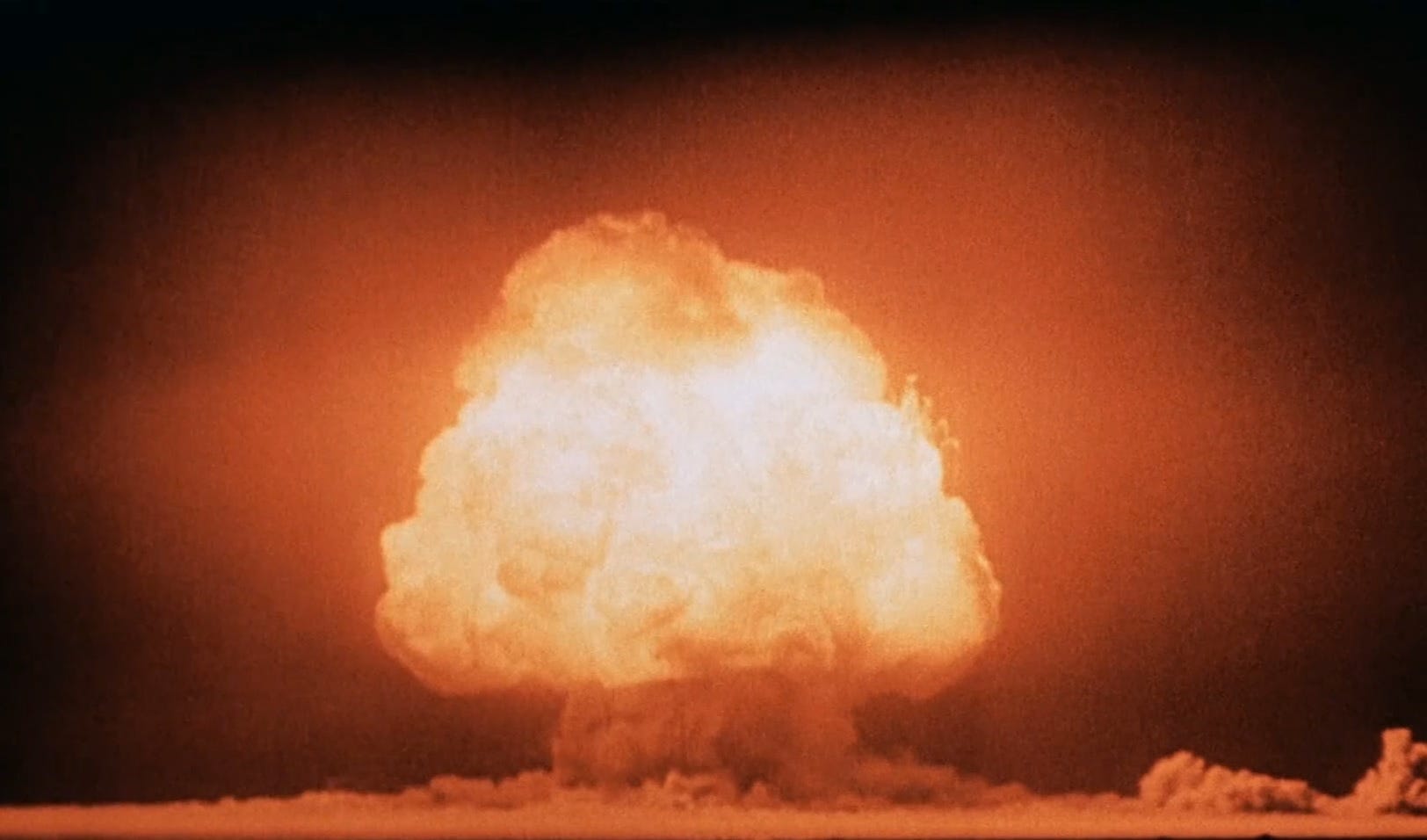
July 16, 1945: The United States conducts the first successful detonation of an atomic weapon at Alamogordo Bombing and Gunnery Range in New Mexico, code named “Trinity.” The 25 kiloton test, one of several such tests conducted as part of the “Manhattan Project,” involved an implosion-type plutonium device dubbed “the Gadget,” which became the model for the “Fat Man” device later dropped on the Japanese city of Nagasaki. The 15 kiloton “Little Boy” bomb dropped on Hiroshima was a gun-type fission uranium device, using a technology that the US military did not test prior to its use.
July 16, 1979: Iraqi President Ahmed Hassan al-Bakr cites health reasons in stepping down from his post. Bakr does seem to have been a relatively frail guy and he did die in 1982, but at this point his main health consideration was probably “my vice president is going to murder me if I don’t resign.” His resignation allowed that vice president, Saddam Hussein—who was already Iraq’s de facto ruler anyway—to make it official by replacing him as president. I’m fuzzy on what happened after that but I’m sure it all worked out great.
MIDDLE EAST
ISRAEL-PALESTINE
The Israeli military (IDF) killed at least five people in Gaza on Thursday, maintaining its commitment to the “ceasefire” in the “you cease, we fire” sense of the term. Meanwhile, The Guardian reports on the rapidly shrinking scope of the “Board of Peace’s” much-delayed rebuilding plan:
The Gaza recovery plan being pursued by Donald Trump’s Board of Peace (BoP) has shrunk dramatically from an ambitious blueprint for the reconstruction of the whole territory to a small pilot project in the south of the strip.
Even the envisaged pilot scheme – involving a temporary camp for a tiny fraction of Gaza’s 2 million displaced people, with a Palestinian administration, police and a small international security force – is not expected to take shape before the end of the year.
Incremental steps have been announced in recent weeks. A few Moroccan and Kosovan officers have arrived in Israel where they are intended to be the kernel of an International Stabilization Force (ISF), tasked with protecting the pilot camp. A logistical base for this future force to store vehicles, equipment and other material is nearing completion at the Kerem Shalom crossing between Israel and Gaza.
However, preparatory work on the pilot camp near the southern Gaza of city of Rafah has not begun, nor has construction of the camp’s ISF support base. Satellite images of the area show disturbed earth but no new structures. Substantial progress is not expected before Israel holds elections on 27 October, which could bring down Benjamin Netanyahu’s far-right coalition government.
There is some hope that a new Israeli government might actually try abiding by the “ceasefire” and seeing how that goes, but that seems like a long shot at best given the overall tenor of Israeli politics.
YEMEN
Ansarullah leader Abdul Malik al-Houthi threatened more attacks on Saudi Arabia on Thursday. The two sides traded airport attacks earlier this week, prompting fears of a revival of their conflict. Houthi officials have suggested that they could carry out additional attacks on Saudi airports and one told Drop Site’s Iona Craig that the group may try to close the Bab el-Mandab strait, which connects the Red Sea to the Gulf of Aden, to Saudi ship traffic.
Speaking of that strait, the resumption of the US-Iran war has raised related fears that Yemen could become a bigger part of that conflict, with Reuters reporting on Thursday that Tehran wants the Houthis “to stand ready to close the Red Sea oil route if the United States strikes Iranian power infrastructure.” The threat to shut down Bab el-Mandab is one of the most potent cards the Iranians have left to play.
IRAN
The US military appears to be giving up the pretense that its strikes on Iran are simply intended to prevent it from attacking commercial ships in the Strait of Hormuz, as Thursday’s targeting package included sites near Tehran and in parts of northern and eastern Iran in addition to strikes in the south. Iranian officials say that US strikes over the past several days have killed at least 35 people and wounded over 300 more. They’re continuing to strike at US military targets in the Gulf and in Jordan but are now threatening their own escalation against “regional infrastructure” if the US follows through on Donald Trump’s threats to start targeting civilian infrastructure in Iran (which US forces may already be doing at a piecemeal level). That’s in addition to the Houthi threat against Bab el-Mandab, outlined above.
On Wednesday the Iranian government released Dena Karari, a US-Iranian dual national whom Iranian authorities arrested back in late 2024 on espionage charges. Donald Trump took to social media to trumpet her release. It is unclear why Iranian authorities released her at this particular moment and given how events proceeded on Thursday it doesn’t seem like there was any sort of quid pro quo with the Trump administration (or at least not one that has manifested yet).
ASIA
PAKISTAN
As the lines appear to be blurring between the conflict in Yemen and the Iran war (see above), the Pakistani government may find itself in an uncomfortable position in fairly short order. Pakistani officials have invested substantial time and effort trying to mediate between Iran and the US, and while they haven’t been terribly successful they seem interested in establishing a reputation as conflict resolvers (Pakistan’s own conflicts with India and Afghanistan notwithstanding). But Pakistan and Saudi Arabia signed a mutual defense agreement last year, which means that if the Saudis restart their war with the Houthis they could insist on Pakistani involvement. Islamabad was already concerned about Iranian attacks on Saudi Arabia triggering the defense agreement but is reportedly more concerned about the potential Houthi angle.
MYANMAR
Continuing with what’s been a running theme in the newsletter this week, the normalization of Myanmar’s ruling junta, Thai Foreign Minister Sihasak Phuangketkeow told reporters on Wednesday that the Thai government is ready “to serve as a facilitator” for peace talks between the junta and Myanmar’s multiple rebel factions. It’s not clear which of those factions are interested in negotiating but Association of Southeast Asian Nations envoys, including Sihasak, met with representatives of six groups earlier this week including the Karen National Union and the Karenni National Progressive Party.
AFRICA
SUDAN
The UK government blacklisted 11 individuals and entities accused of supporting the combatants in Sudan’s civil war on Thursday. These included a UAE-based financier for the Rapid Support Forces militant group as well as individuals accused of aiding both the RSF and the Sudanese military in acquiring weapons and of providing other logistical support.
DEMOCRATIC REPUBLIC OF THE CONGO
The World Health Organization continues to sound alarms about the rapid spread of the DRC’s Ebola outbreak:
The World Health Organization (WHO) has warned that Ebola is spreading in the Democratic Republic of Congo more quickly than in any previous outbreak.
WHO chief Tedros Adhanom Ghebreyesus told reporters on Thursday that the Ebola outbreak in the DRC in 2018-2020 “took more than 10 months to reach 2,000 confirmed cases”. But this time, it took only two months for there to be over 2,000 confirmed cases.
“It is now the third-largest Ebola outbreak on record,” Tedros said. “In the past month, it has expanded faster than any previous outbreak.”
The number of confirmed Ebola cases in the DRC increased to 2,124 on Thursday, according to government data. The country’s public health institute said in its latest report that 51 new cases were detected on Wednesday in the eastern provinces of Ituri and North Kivu.
The DRC reported 62 new cases on Thursday, increasing its total number of confirmed infections to 2,073, though the WHO has said the true tally could be at least double that.
On a more positive note, Uganda’s last known Ebola patient was discharged from hospital on Thursday. If no new Ugandan cases are confirmed for the next 42 days the WHO can declare the country Ebola-free.
EUROPE
UKRAINE
Russian and Ukrainian strikes killed a total of at least 18 people overnight and through Thursday. At least two were killed in the Ukrainian port city of Odesa, which the Russian military has been attacking heavily over the past couple of weeks in what The Financial Times says is an effort to disrupt Ukraine’s Black Sea grain trade. This is presumably a tit for tat response to Ukrainian attacks that have been affecting Russian grain shipments in the neighboring Sea of Azov.
Volodymyr Zelensky’s decision to can Ukrainian Defense Minister Mykhailo Fedorov is not being well received publicly. Hundreds of people reportedly protested the move in Kyiv on Thursday. It would appear that personal animosity between Fedorov and Ukrainian military commander Oleksandr Syrsky were the reason for the former’s ouster, with Fedorov telling reporters that Syrsky had opposed his plans for reforming Ukrainian armed forces. The public explanation at least is that Fedorov’s focus on asymmetrically attacking Russia via drone strikes and cyber warfare clashed with Syrsky’s focus on direct combat and territorial gains/losses.
UNITED KINGDOM
Presumptive UK prime minister Andy Burnham will succeed outgoing PM Keir Starmer as leader of the UK Labour Party on Friday, after securing an uncontested accession earlier this week. This is the final step before he replaces Starmer as PM, which should happen on Monday.
AMERICAS
BRAZIL
The Trump administration announced on Wednesday that it will impose 25 percent tariffs on most, but not all, Brazilian products effective July 22. It had first hinted about this measure last month, citing alleged “unfair” trade practices by the Brazilian government (even though the US runs a trade surplus with Brazil) and allegedly weak anti-corruption standards. In reality this is Donald Trump offering an in-kind contribution to Flávio Bolsonaro’s presidential campaign, but it may backfire. Bolsonaro is of course blaming incumbent Luiz Inácio Lula da Silva for mishandling relations with the US and thereby causing the tariffs, but Lula is countering by accusing Bolsonaro of colluding with Trump to punish Brazil in order to benefit his own campaign. Polling suggests that more Brazilian voters are blaming Bolsonaro for the tariffs than are blaming Lula.
NICARAGUA
The Nicaraguan government severed diplomatic relations with its Italian counterpart on Thursday over a grievance that goes all the way back to 1978. Nicaragua is home to Alessio Casimirri, a former member of the leftist “Red Brigades” militant group who was convicted in Italian court in the 1978 kidnapping and murder of former Prime Minister Aldo Moro. He fled to Nicaragua in 1983 and gained citizenship a few years later, while denying any involvement in the Moro incident. The Italian government has been pursuing his extradition ever since, and Italian Foreign Minister Antonio Tajani made a comment about the case on Wednesday that was apparently offensive enough to Nicaraguan officials to trigger the diplomatic break.
Nicaragua has no extradition treaty with Italy, and while authorities there tried to strip Casimirri of his citizenship in the 1990s they were blocked in court. Since Nicaraguan law prohibits the extradition of citizens to other countries legally there doesn’t seem to be a way to satisfy Italy’s demand.
UNITED STATES
Finally, the Trump administration kicked off its global McCarthyism campaign on Thursday, though The Washington Post reports that some of its rhetoric may have fallen on deaf ears:
Secretary of State Marco Rubio hosted representatives from more than 65 countries at the State Department on Thursday, hoping to rally global support against what he said was the resurgence of far-left political terrorism, such as the antifa movement.
The Trump administration offered an all-star cast for the event, with Rubio joined by other key administration officials including FBI Director Kash Patel and Treasury Secretary Scott Bessent. President Donald Trump’s deputy chief of staff, Stephen Miller, spoke immediately after Rubio and offered an apocalyptic view of leftist ideology.
“Left-wing terrorism always ends in bloodshed, misery and suffering,” said Miller, painting a scene of “deformed” individuals who would turn Western society into a “gulag” if left to their own devices.
After the conference ended, the State Department announced visa restrictions that it said would block the “entry of foreign nationals who finance, recruit, incite, or otherwise enable terrorist, violent, and criminal Far-Left Terrorist networks.” The department did not immediately respond to a request for more information.
The Trump administration’s push to convince officials of the dangers posed by far-left terrorism had been met with skepticism by some allies, who had said that their own security officials did not assess the threat with the same level of severity as right-wing or Islamist terrorism.