

You’re reading the web version of Foreign Exchanges. If you’d like to get it delivered straight to your inbox, sign up today:
TODAY IN HISTORY
January 20, 1265: A parliament called by rebel baron Simon de Montfort, Earl of Leicester, meets in the Palace of Westminster under the nominal auspices of English King Henry III (who was at this point being held by Montfort’s forces). In hopes of broadening the support for his war against the royalists, who were now led by Henry’s son Edward (the future Edward I), Montfort summoned not only nobles, knights, and clergy but also burgesses, marking his as the first parliament in English history with a pretense toward general representation. As such it is sometimes regarded as the forerunner of the modern House of Commons, though Edward’s 1295 “Model Parliament” also lays claim to that status.
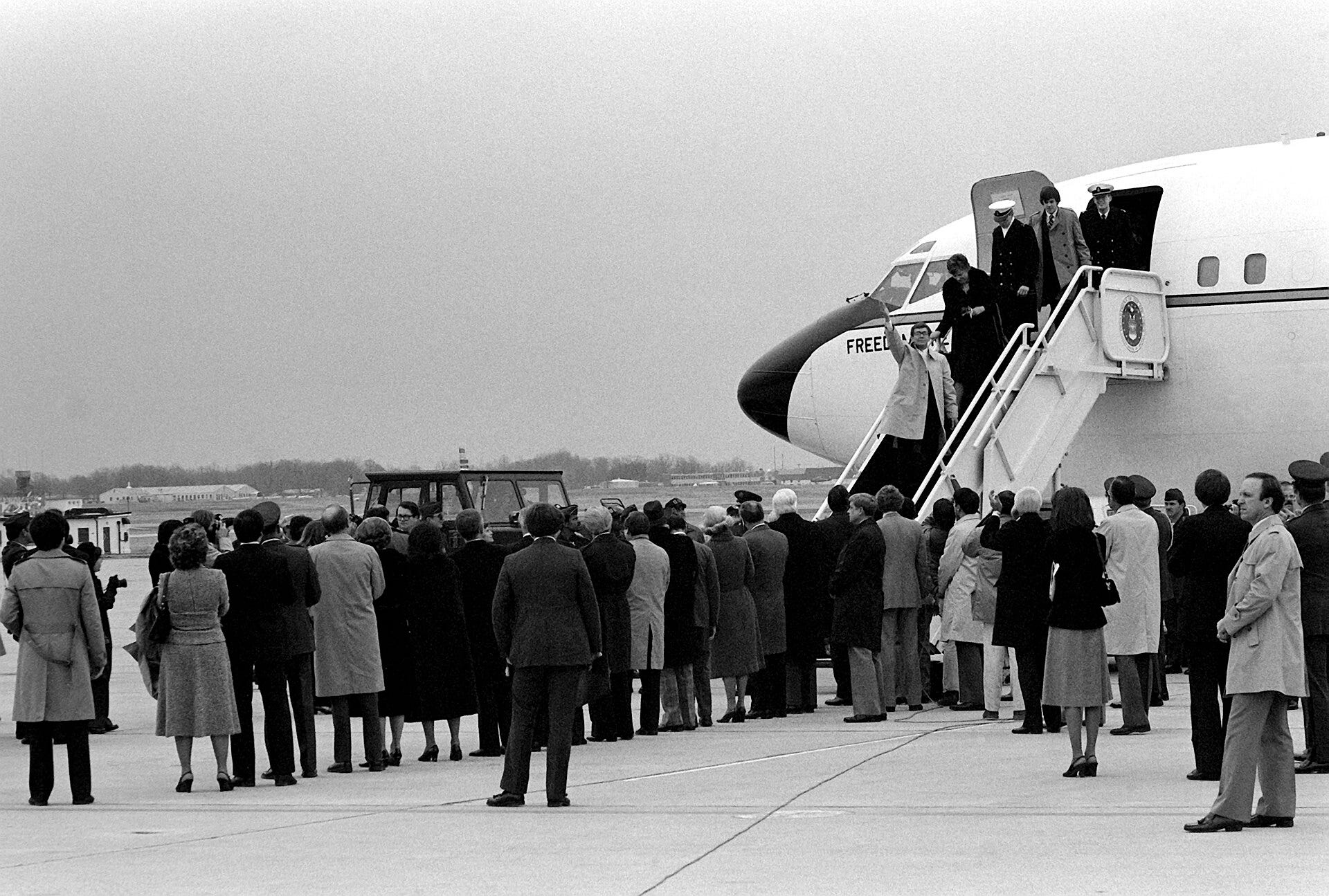
January 20, 1981: The Iranian government celebrates Ronald Reagan’s inauguration by ending the 444 day Iran Hostage Crisis with the release of 52 US hostages. The release was the result of months of negotiations between the Iranians and the Carter administration, which produced the Algiers Accords, but Reagan got most of the credit for cowing the Iranians. The timing of the release has fed “October Surprise” conspiracy theories about secret talks between the Iranians and the Reagan campaign but may simply have been a final insult to Carter, who was largely reviled in Iran due to his perceived support for the ousted Mohammad Reza Shah Pahlavi.
January 20, 2001: The nonviolent Second EDSA Revolution ends with the resignation of Philippine President Joseph Estrada and the accession of Vice President Gloria Arroyo to the presidency (not, it should be noted, in that order). The Philippine Senate was holding an impeachment trial for Estrada over charges of corruption. On January 16 it voted narrowly to suppress the contents of an envelope that would allegedly have proven the allegations, sparking protests at the EDSA Shrine in Manila. By January 19 the Philippine military and national police had abandoned Estrada and joined the protesters, and that was pretty much that. The following day Arroyo took the oath of office at the shrine and Estrada subsequently issued a statement announcing that, while he questioned the legality of Arroyo’s accession, he would leave office. Estrada was eventually convicted on corruption charges in 2007. Arroyo pardoned him.
MIDDLE EAST
SYRIA
With the caveat that anything I write here may be overtaken by events before anybody actually reads it, the Syrian government and the Syrian Democratic Forces group have agreed on a four-day ceasefire in northeastern Syria that was due to take effect at 8 PM local time on Tuesday. Assuming it holds, what happens next is unclear. A Kurdish official named Elham Ahmad told the AP that one reason SDF leader Mazloum Abdi’s meeting with Syrian President Ahmed al-Sharaa broke down on Monday was because Abdi had asked for a five day “grace period” to implement the conditions of the ceasefire that they were supposed to sign, and Sharaa refused. A four day ceasefire starting Tuesday would wind up as the equivalent of Abdi’s five day grace period. Maybe that’s just a coincidence, but probably not.
Reviewing the terms of this latest ceasefire, Al-Monitor’s Amberin Zaman seems to think that it’s a “sweetened” version of what was on the table on Monday, in that Damascus has promised that its security forces would not enter the city centers in Hasakah and Qamishli and would stay out of “Kurdish villages.” The language around incorporating the SDF’s political and military arms into the Syrian state also seems vaguer than in Monday’s failed ceasefire, which was unambiguously written to reflect Damascus’s position. Zaman reported on Monday that Donald Trump had pressured Sharaa to end the fighting so maybe those changes are the result. Nevertheless, US envoy Tom Barrack made it pretty clear on Tuesday that the SDF should not expect any assistance from the US if this conflict continues, so the group still finds itself with little choice but to accede to most of Sharaa’s demands.
The new short term ceasefire came after the SDF withdrew from the massive prison camp it’s been operating at al-Hol, where it’s been holding thousands of Islamic State fighters and thousands of their family members. It’s unknown how many people may have escaped from that facility after the SDF redeployed its forces from the camp to more critical sites. It’s also still unknown how many IS fighters escaped amid Monday’s fighting, though US and Syrian officials have said that they believe some 200 escaped the SDF’s Shaddadi facility in Hasakah province. The Syrians say they’ve recaptured around 130 of them.
ISRAEL-PALESTINE
There are a few items of note:
The Israeli military (IDF) dropped leaflets on Monday ordering residents of the town of Bani Suheila in Gaza’s Khan Younis region to evacuate. This is the first such order the IDF has issued since the “ceasefire” went into effect in October. I have not seen any attempt at explaining the order so this would appear to be another Israeli move to expand the “yellow line,” which marks the extent of its Gaza occupation, beyond where it was originally stipulated.
Along similar lines, a new Forensic Architecture analysis for Drop Site concludes that the IDF “is razing a strategic area” of southern Gaza’s Rafah region in preparation for relocating a large number of people there. Israeli officials have previously discussed building “humanitarian cities” in Rafah that could house the territory’s civilian population. While these sites could offer some advantages to those Gaza residents who relocate to them—better housing and infrastructure, better access to humanitarian assistance, safety from daily IDF airstrikes, etc.—the way they’re being built raises serious concerns, both in terms of the destruction involved in preparing the sites and the extent to which these “cities” are going to function more as concentration camps.
According to Reuters, “several European countries” may abandon the US “Civil-Military Coordination Center” that’s supposed to be monitoring the ceasefire and the humanitarian situation in Gaza. Given that there really isn’t a ceasefire and that the humanitarian situation, while improved, is not where it should be by this point under the ceasefire agreement, the governments of these countries are apparently questioning their participation. Anonymous “Western diplomats” are calling the coordination center “directionless” and “a disaster.”
The Israeli government destroyed the former headquarters of the United Nations Relief and Works Agency in occupied East Jerusalem on Tuesday. The Knesset passed a law in 2024 outlawing UNRWA’s operations within Israel, which in this rendering includes East Jerusalem, and turning its properties over to state control. The plan is to build a 1400 unit settlement on the site.
SAUDI ARABIA
The governor of Yemen’s Hadhramaut province is accusing the UAE and its Southern Transitional Council proxy of operating a secret prison near the provincial capital, Mukalla, a charge Emirati officials have dismissed as “misinformation.” Accusations of secret UAE-run prisons/torture sites in Yemen go back years and seem pretty credible, but what’s interesting here is that the accusation is coming from the Yemeni government which means it’s effectively coming from Saudi Arabia. It is thus another salvo in the Saudi-UAE conflict, which The New Arab’s Giorgio Cafiero suggests is setting up to be the new regional status quo:
The Zayed University professor [Khalid Almezaini] expects this conflict between Riyadh and Abu Dhabi to persist for a “long time” even if there is public reconciliation between the Saudi and Emirati leaderships with symbolic gestures of Gulf Arab unity exchanged, because “the structural mistrust and competition will continue quietly beneath the surface”.
As Dr Almezaini explained, “the incident marks a recalibration of the bilateral relationship - one that will not return to the cooperative façade of previous years.”
Rising levels of tension between Saudi Arabia and the UAE are a result of Riyadh perceiving more than a policy disagreement with Abu Dhabi. At this point, Saudi Arabia sees the UAE’s foreign policy as nothing short of a “national security threat,” Dr Mira al-Hussein, fellow at the Alwaleed Centre at the University of Edinburgh, told TNA.
“Saudi felt encircled by UAE’s projects in Yemen, the Red Sea rim, and the Horn of Africa, especially that these projects intersect with Israeli interests, serving the Abrahamic alliance, at the expense of the Saudi’s security and geopolitical interests,” she explained.
IRAN
The Wall Street Journal is reporting that Donald Trump “is still pressing aides for what he terms ‘decisive’ military options” against Iran, even though the protests that were providing him with his justification for such an action have basically ended. In the meantime, the US military is deploying assets to the Middle East in case Trump decides to move forward with one of those options, including additional aircraft, air defense units, and the USS Abraham Lincoln carrier strike group. It is unclear at this point what he would be hoping to achieve.
Reuters is citing “an Iranian official” who says that authorities have confirmed the deaths of “at least 5000 people” amid the anti-government protests that broke out late last month and continued for a bit over two weeks before tapering off. That includes some 500 Iranian security personnel, whose deaths this person attributed to “terrorists and armed rioters.” NGOs like the US-based Human Rights Activist News Agency (HRANA) have confirmed more than 3000 dead but are still working through the reports they’ve received. HRANA itself says it’s confirmed 3308 deaths but still has more than 4300 cases to review.
The Financial Times has published a very thorough recounting of the roots and development of this latest round of protests by journalist and commentator Azadeh Moaveni. In particular she conveys the growing sense of desperation on the part of Iranians who have seen their economy crushed between sanctions from abroad and corruption and mismanagement at home, which manifested in things like the intensity of this unrest and the apparent support protesters showed for would-be crown prince Reza Pahlavi (who stands more as a generic symbol of opposition to the current government than a coherent alternative to it). I recommend giving it a read if you’re interested and able.
ASIA
MYANMAR
Malaysian Foreign Minister Mohamad Hasan revealed in parliament on Tuesday that the Association of Southeast Asian Nations (ASEAN), which Malaysia chaired last year, has not sent an observation team to Myanmar’s ongoing parliamentary election and therefore will not “endorse” its results. The Myanmar military’s cut-out, the Union Solidarity and Development Party, has all but won that contest after only two of its scheduled three phases and needless to say there’s a good deal of speculation that the voting hasn’t entirely been on the up and up. Myanmar’s military government is hoping that recasting itself as an elected civilian administration will win it international backing, but that may be difficult to achieve if even its regional bloc won’t ratify the outcome.
CAMBODIA
The Cambodian human rights organization LICADHO is accusing the Thai military of having “razed and cleared” a “significant number of homes and structures” in Cambodia’s Banteay Meanchey province despite the ceasefire the two countries reached last month to end their latest border conflict. Cambodian officials have said that Thai soldiers are still occupying territory on the Cambodian side of the border in that province, a claim the Thai military denies citing its own claims on those areas. These demolitions took place in territory whose ownership is disputed between the two countries.
AFRICA
SUDAN
The Sudan Tribune reported on Sunday that there’s been heavy fighting between the Sudanese military and the Rapid Support Forces militant group along the border between Sudan’s Khartoum and North Kordofan states. If the military intends to open a new offensive in Kordofan it will need to do so via the roads from Khartoum state, so the RSF is looking to cut those routes off and then isolate and seize North Kordofan’s capital, the city of El-Obeid.
TOGO
Togolese authorities have arrested the leader of Burkina Faso’s former military government, Paul-Henri Damiba, and say that they have extradited him back home where he will presumably stand trial. Damiba seized power at the head of a junta in early 2022, but was unable to consolidate control and was ousted in a second coup later that year. Burkina Faso’s current junta accused him earlier this month of plotting the assassination of its leader, Ibrahim Traoré. Togolese officials say they were responding to a January 12 extradition request from their Burkinabè counterparts.
NIGER
An apparent jihadist attack left at least 31 civilians dead in southwestern Niger’s Tillabéri region on Sunday. Tillabéri has been plagued by violence from both Islamic State and al-Qaeda affiliated groups for several years now, and the Armed Conflict Location and Event Data NGO determined that it was the deadliest region in the entire central Sahel last year.
NIGERIA
Militants ambushed a security unit in northwestern Nigeria’s Zamfara state on Monday, killing five soldiers and one police officer. There’s no indication who was responsible for the attack but it may have simply been one of the region’s many criminal groups. Banditry is a frequent issue in northwestern Nigeria.
SOUTH SUDAN
South Sudanese President Salva Kiir fired Interior Minister Angelina Teny on Tuesday. What makes this significant apart from the staff turnover is that Teny’s husband is Vice President Riek Machar, the leader of the Sudan People’s Liberation Movement-in Opposition party, who remains under arrest and whose military wing is currently on the offensive in South Sudan’s Jonglei state. With the 2018 peace deal that Kiir and Machar signed to end the country’s civil war already essentially in tatters, Teny’s sacking is likely going to worsen that crisis.
SOMALIA
The Somali and Qatari governments signed a defense cooperation agreement on Monday. I don’t normally mention these sorts of things in the newsletter because they’re relatively commonplace, but this one comes just about a week after the Somali government announced the cancellation of all of its deals with the UAE. Turning around and cutting a defense deal with a Gulf rival sends a pretty unmistakeable message, and that’s in addition to the defense arrangement it’s reportedly exploring with Egypt and Saudi Arabia. Emirati officials have questioned the Somali government’s right to cancel those deals but they’ve also reportedly been withdrawing military assets from Somalia.
EUROPE
EUROPEAN UNION
The BBC reported on Tuesday that the European Parliament is planning to suspend ratification of the trade deal that the US and EU struck back in July. Unsurprisingly Donald Trump’s threat to impose tariffs on several EU member states over Greenland has rocked the approval process. Tariffs that the trade deal would supersede are scheduled to take effect next month unless the EU issues some sort of extension or the parliament reverses course and goes ahead with ratification. The likelihood of that latter scenario may be diminishing, as Trump has now taken to revealing private text messages he’s received from European leaders and that certainly isn’t going to help repair transatlantic relations.
UKRAINE
The Russian military is continuing to batter Ukraine’s power infrastructure, with overnight strikes leaving more than 1 million people without electricity in Kyiv alone, in addition to killing at least one person in the capital region and three more in Zaporizhzhia oblast. Russian attacks have left more than 87 percent of the population of Chernihiv oblast powerless as well. Of particular concern, recent strikes have targeted Ukrainian nuclear power infrastructure, including substations and power lines supporting power plant safety features. The heavily contaminated Chernobyl facility lost power for a time on Tuesday morning but has since been reconnected to the Ukrainian grid.
UNITED KINGDOM
Apparently his failure to win a Nobel Peace Prize is not the only reason why Donald Trump seems ready to start a war over Greenland. He took to social media on Tuesday morning to claim that the UK government’s agreement to relinquish the Chagos Islands to Mauritius last year somehow proves that he’s right to seize the Arctic island from Denmark. He said that London “is currently planning to give away the Island of Diego Garcia,” which is home to the US military’s very large Diego Garcia base, which he argued “is an act of GREAT STUPIDITY, and is another in a very long line of National Security reasons why Greenland has to be acquired.” That is factually untrue, since the UK-Mauritian agreement stipulates that Diego Garcia must be leased to the UK for at least the next 99 years. But what really takes this into the realm of batshit ranting is that Trump approved that deal before the UK agreed to it.
AMERICAS
CANADA
Canadian Prime Minister Mark Carney delivered a speech at the World Economic Forum in Davos on Tuesday that is getting a fair amount of attention:
Since entering Canadian politics last year, Carney has repeatedly warned that the world was not going to return to a pre‑Trump normal.
He re‑affirmed that message on Tuesday, in a speech that did not name Trump but offered an analysis of the president’s impact on global affairs.
“We are in the midst of a rupture, not a transition,” Carney said.
He noted that Canada had benefited from the old “rules‑based international order,” including from “American hegemony” that “helped provide public goods: open sea lanes, a stable financial system, collective security, and support for frameworks for resolving disputes.”
A new reality has set in, Carney said.
“Call it what it is: a system of intensifying great power rivalry where the most powerful pursue their interests using economic integration as coercion.”
Carney called on “middle powers” to work together to counter that coercion.
It’s not surprising that somebody in the North Atlantic world is starting to speak and act like the United States has become an adversary to the rest of that bloc, but it is somewhat surprising that it’s the PM of Canada, a country that is more vulnerable than other members of that group to US retaliation. Last week Carney cut a new trade deal with China and he is working on deals with several other countries as he’s aiming to double Canada’s non-US export trade over the next decade. Van Jackson digs deeper into the implications of Carney’s speech over at his newsletter.
UNITED STATES
Finally, though it appears to be unrelated to the Greenland situation, US-European relations may also be impacted by the Trump administration’s plans, as reported by The Washington Post, to pare down US involvement in NATO:
The impending move will affect about 200 military personnel and diminish U.S. involvement in nearly 30 NATO organizations, including its Centers of Excellence, which seek to train NATO forces on various areas of warfare, [“multiple officials familiar with the matter”] said. They spoke on the condition of anonymity to detail the U.S. administration’s plans.
Rather than withdraw all at once, the Pentagon intends not to replace personnel as their postings end, a process that could take years, according to two U.S. officials familiar with the matter. U.S. participation in the centers isn’t ending altogether, the people said.
Among the advisory groups facing cuts are those dedicated to the alliance’s energy security and naval warfare, according to three officials.
The Pentagon will also reduce its involvement in official NATO organizations dedicated to special operations and intelligence, two officials said, though one noted that some of those U.S. functions will be shifted elsewhere within the alliance, limiting the move’s impact.