
TODAY IN HISTORY
January 16, 929: Abd al-Rahman III declares that his Emirate of Córdoba will henceforth be the Caliphate of Córdoba. This promotion in title did nothing to materially change the conditions of Umayyad rule in Andalus, but it did upgrade Abd al-Rahman’s international stature on par with the Abbasid Caliph in Baghdad and (especially) the Fatimid Caliph in North Africa. The Umayyads were concerned about the possibility of a Fatimid invasion and wanted to meet the enemy on equal terms so to speak.
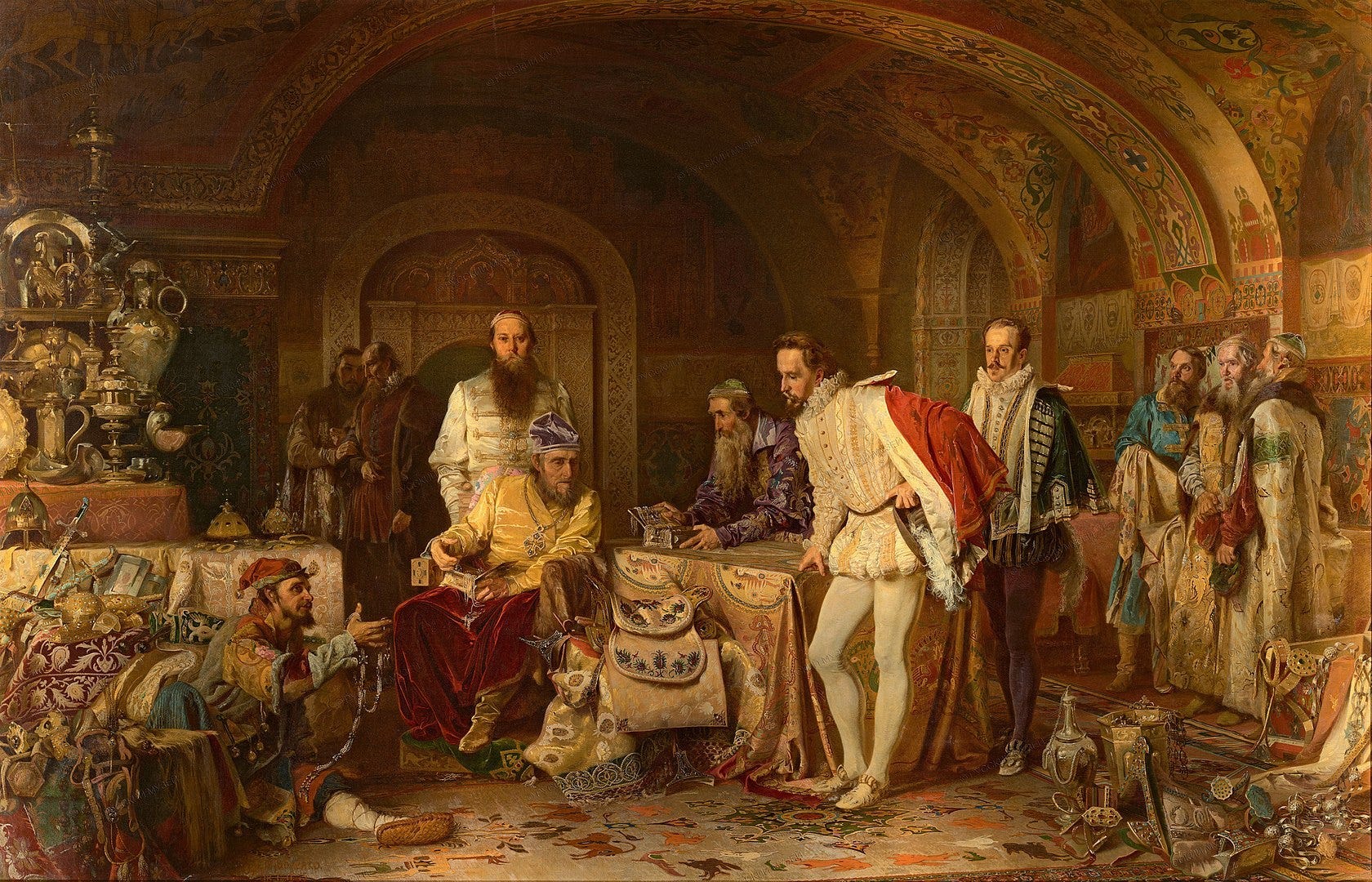
January 16, 1547: Grand Duke Ivan IV of Moscow, also known as “Ivan the Terrible,” has himself crowned Tsar of Russia. He wasn’t the first to use the title “tsar,” as his grandfather Ivan III had done so at least informally, but like Abd al-Rahman III’s decision to make himself caliph this formal promotion raised Ivan’s international stature to put him on par with, for example, Mongol khans and the Ottoman sultan. Ivan’s coronation is a milestone in Russia’s transition from principality to empire.
January 16, 1979: Mohammad Reza Shah Pahlavi flees Iran for Egypt at the height of the Iranian Revolution. Realizing that his position was untenable in the face of massive public opposition, the shah cut a deal with opposition leader Shahpour Bakhtiar of the National Front to establish a civilian transitional government and then skedaddled out of town. Unfortunately for Bakhtiar, whose intent was to end the revolution peacefully, the deal tainted him as an agent of the shah in the eyes of the Iranian public, and so his government had no legitimacy from the start.
MIDDLE EAST
SYRIA
This is a quickly changing story so I’m going to do the best I can to keep up, but Al Jazeera reported on Friday evening that Syrian forces had begun shelling SDF positions in and around the town of Deir Hafer in eastern Aleppo province. This came after SDF leader Mazloum Abdi announced that his fighters would be withdrawing east of the Euphrates as Syrian authorities have been demanding. It’s no longer clear whether the Syrian government will be satisfied with that (see below) and there’s some possibility that the Syrian army isn’t just aiming to push the SDF out of Aleppo province but instead has bigger plans.
Reuters reported late Thursday that the Syrian military is “poised” to begin a major offensive targeting “towns in the north and east held by Kurdish fighters.” The scope seems beyond recent clashes between it and the Syrian Democratic Forces group in Aleppo city and what looks like a looming confrontation in eastern Aleppo province. Syrian officials are currently demanding that the SDF withdraw its fighters east of the Euphrates River, but the operation Reuters is talking about could go beyond that and may involve multiple army divisions advancing into autonomous/SDF-controlled northeastern Syria, also known as “Rojava.” It would be intended to pressure the SDF to agree to integrate its forces into the Syrian security establishment on Damascus’s terms. Syrian forces would have Turkish support in such an operation but what form that would take (maybe just rhetorical) is unclear.
It’s also unclear where the US stands on this. US envoy Tom Barrack has reportedly been working to mediate a resolution to this situation but the Trump administration has also at least tacitly backed the Syrian government’s operations against SDF in Aleppo over the past couple of weeks. Nevertheless, a report in The Wall Street Journal on Friday indicated that the administration is opposed to a broader operation against the SDF and has even threatened to sanction the Syrian government in response. The red line for Washington seems to be whether the offensive is restricted to Aleppo province, which the US could countenace, or crosses the river into northeastern Syria.
On the carrot side of the equation, Syrian President Ahmed al-Sharaa issued a decree on Friday that promises protections for Kurdish culture and language and refers to Syrian Kurds as “an integral and authentic part of the Syrian people.” The status of Kurds in Syria is one of the SDF’s animating principles so this decree is partially aimed at encouraging the group to be more accommodating in integration talks. But it also appears to be aimed at Iraqi Kurdish leader Masoud Barzani, with whom Sharaa spoke last week. That “integral and authentic” language is very similar to the message he apparently delivered to Barzani, who represents another pole in pan-Kurdish politics to the SDF and the Kurdistan Workers’ Party and whose support could help Sharaa undermine the SDF (if that’s the direction he chooses to go).
