

You’re reading the web version of Foreign Exchanges. If you’d like to get it delivered straight to your inbox, sign up today and get 40% off on your first year:
TODAY IN HISTORY
August 14, 1480: The Ottoman army executes 800 men in the just-conquered southern Italian city of Otranto, ostensibly because they refused to convert to Islam. The “Martyrs of Otranto,” as they’ve become known, are regarded as the patron saints of the modern town and the Catholic Church celebrates their feast day on August 14.
August 14, 1947: At midnight, the Indian Independence Act of 1947 goes into effect, ending the British Raj and creating the independent states of India and Pakistan. This territory included the future state of Bangladesh, though at this time it was part of Pakistan. This date is commemorated as Pakistani Independence Day while August 15 is commemorated as Independence Day in India. Initially both countries commemorated August 15, but the Pakistanis later shifted to August 14, ostensibly because British Viceroy Louis Mountbatten held Pakistan’s independence ceremony on that date so that he could attend a similar ceremony in India the following day.
August 15, 718: An Arab siege of Constantinople ends unsuccessfully after the besiegers run out of food. The Arabs had been unable to fully surround the city, allowing it to continue receiving supplies, and by this point they had been battered by disease and defeated in a major battle against the Bulgars.
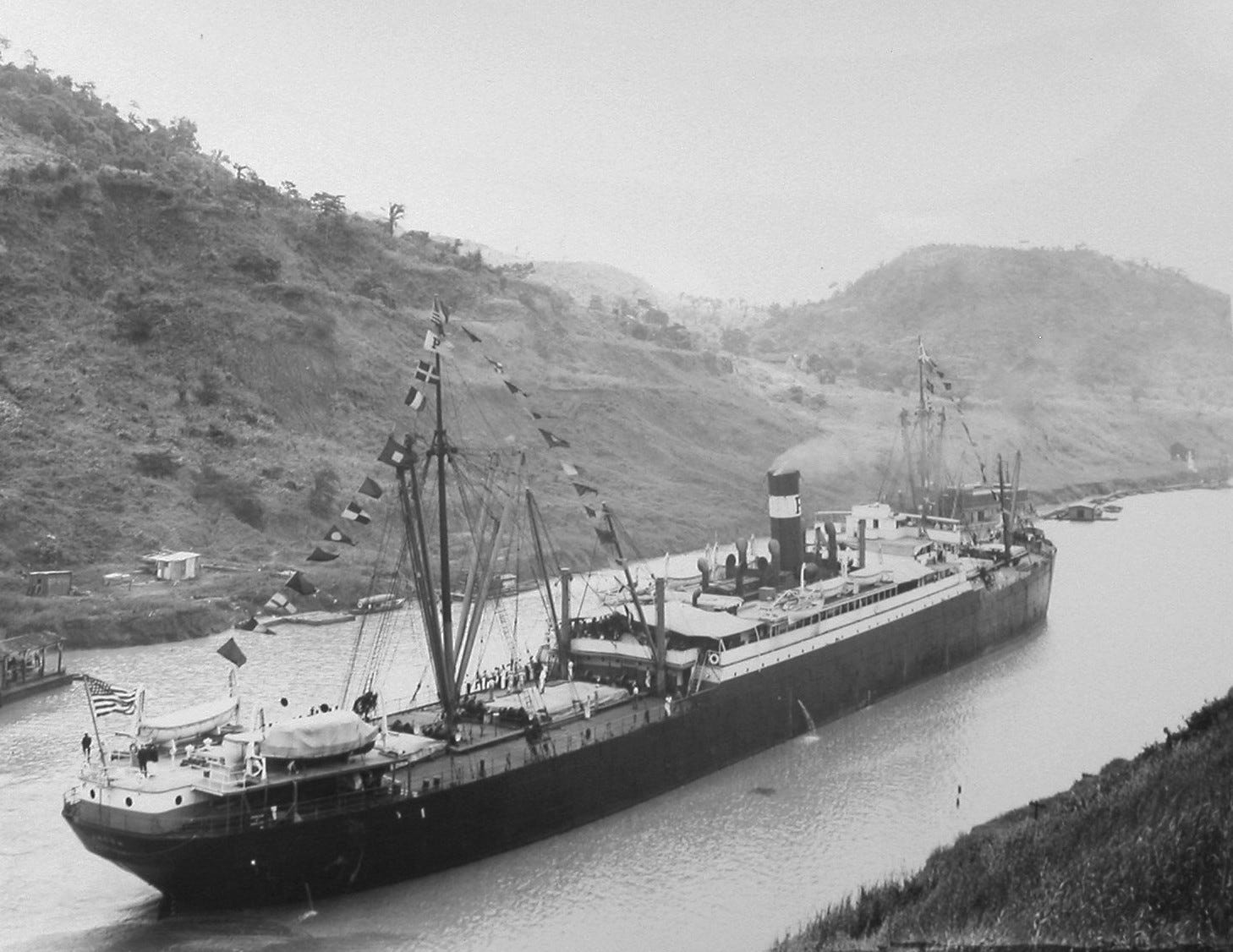
August 15, 1914: The Panama Canal formally opens with the passage of a US commercial vessel, the SS Ancon. After the US took over the canal project from France in 1904 the project cost some $500 million to complete. It also cost the lives of some 5600 workers, a frighteningly high figure that is nevertheless much improved from the 22,000 workers who died on the job during the initial French effort in the 1880s. Today, under normal circumstances, some 14,000 vessels transit the canal per year, accounting for some $270 billion worth of cargo.
August 15, 1945: The Imperial Japanese government surrenders, effectively bringing World War II to a close in the Pacific Theater and overall. This is one of two dates marked as Victory Over Japan Day (“V-J Day”) in the West—the UK commemorates the surrender on August 15, while the US commemorates it on September 2, when Japanese officials signed the formal instrument of surrender on board the USS Missouri. August 15 is also commemorated as “National Liberation Day” in both Koreas, and it carries double significance in the south in that it also marks the formation of the first South Korean government on August 15, 1948.
August 15, 2021: The Afghan Taliban enters Kabul, marking the final collapse of the US-backed Afghan government and its military. The Taliban’s return to power was the final failure of the nearly 20 year US war in and occupation of Afghanistan that began in the wake of the September 11, 2001 al-Qaeda attacks in the US. A haphazard evacuation of Kabul was already underway when the Taliban arrived and would continue until the last US transport plane left Kabul Airport on August 30.
August 16, 1946: On what’s known as “Direct Action Day,” the All-India Muslim League organizes widespread protests calling for the creation of a separate Muslim state upon Britain’s departure from India. Those protests turned violent in several places, particularly in British Bengal (whose territory included modern Bangladesh and India’s West Bengal state), and that violence generally broke down along religious lines. Over about three days more than 4000 people were killed and 100,000 displaced just in Kolkata, and heavy violence continued until British authorities moved additional forces into Bengal on August 21. Debate over who bears more responsibility for this incident continues to the present day.
August 16, 1972: A rogue element within the Moroccan military attempts a coup against King Hassan II by attacking his airplane. The midair assassination attempt killed eight people but was thwarted by the king himself, who jumped on the radio and shouted “The tyrant is dead,” thereby causing the attacking aircraft to break off. Mohamed Oufkir, Moroccan defense minister and the ringleader of the coup plot, was later found dead from multiple gunshot wounds. Moroccan authorities said he’d committed suicide.
MIDDLE EAST
LEBANON
The Israeli military (IDF) killed at least 11 people in southern Lebanon on Saturday, making it one of the deadliest days in the country since the Israeli and Lebanese governments agreed to a new US-sponsored peace proposal back in June. Israeli officials said that they were retaliating for a Hezbollah attack, though the three (at least) children who were among the dead would suggest otherwise.
ISRAEL-PALESTINE
Trump administration envoy Jared Kushner and “Board of Peace” representative Nikolay Mladenov are in Egypt trying to salvage the “peace process” in Gaza. On Sunday they reportedly met with representatives from mediators Egypt, Qatar, and Turkey as well as Hamas leader Khalil al-Hayya. They will meet with the main obstacle to the process, Israeli Prime Minister Benjamin Netanyahu, on Monday. Netanyahu’s government can’t even countenance an actual ceasefire (the IDF killed at least one person in Gaza on Sunday), let alone anything more impactful than that.
The Israeli siege of the West Bank village of Qusra (Jasper Nathaniel has a good overview of the situation) is now entering its second week with no end in sight, mainly because the IDF won’t impose one. It’s too busy hanging out with the besiegers. The situation may be about to get worse, as Israeli Defense Minister Israel Katz is reportedly preparing to hand law enforcement responsibility in the West Bank from the IDF to civilian police. Leaving aside the relative merits of the IDF vs. Israeli police—both are agents of occupation—this is an unmistakeable step toward outright annexation. That said, it’s unclear how much different outright annexation would be from this:
YEMEN
Yemeni authorities have shut down operations at the country’s Mokha seaport in the wake of multiple Ansarullah/Houthi attacks, including one on Friday that killed at least four people and another overnight Saturday to Sunday that killed at least four more. Ansarullah also reportedly attacked Marib city while four of the group’s fighters were killed, at least three of them in drone strikes in Taiz province.
Elsewhere, the Saudi government rolled out its grand Red Sea naval coalition on Friday with 13 other countries having signed up: Bahrain, Bangladesh, Comoros, Djibouti, Egypt, Jordan, Kuwait, Pakistan, Qatar, Somalia, Sudan, Turkey, and Yemen. According to the Saudi Defense Ministry 15 countries have signed the joint statement supporting the coalition so that leaves two that have not yet agreed to participate in it for whatever reason. It’s unclear how this group is supposed to function or whether it will have any effect on Houthi activity. There’s no indication that it will get up to any sort of direct action to either protect commercial ships or confront Houthi attacks.
IRAN
Traffic through the Strait of Hormuz essentially hit zero on Friday after two UAE tankers were attacked the previous day. These reports are based on maritime tracking data so they don’t necessarily account for ships that turn off their transponders in an attempt to sneak past this or that blockade, but there’s no reason to believe that any more than a handful of vessels are doing that on any given day. Amid the stalemate, US Treasury Secretary Scott Bessent said in an interview on Friday that the Trump administration intends to impose economic measures against Iran “like have never been seen in the history of economic isolation on a country.” I’m not keeping track but this is not the first time Bessent has said something like this over the past six months and, well, the results speak for themselves. The administration is under political pressure to appear to be Doing Something as high prices caused by a historically unpopular war are looming over the forthcoming midterm election.
In other items:
The political pressure apparently hasn’t gotten to Donald Trump himself, who said at a rally on Friday that Americans will just have to suck it up and learn to love paying higher prices for fuel and most other things. Sounds like a winning campaign message! Trump also declared his intention to make the Strait of Hormuz “a territory of the United States,” so, and I’m just offering a suggestion here, it may be time for another cognitive test.
The Iranian government is accusing its Qatari counterpart of secretly holding three captured Iranian pilots prisoner. The Qatari government is denying the allegation, saying that it does have the remains of one Iranian pilot apparently shot down during a March airstrike but has not been able to arrange their repatriation with Tehran. Iranian officials are also demanding that the Kuwaiti government release four Iranians who were detained in Kuwaiti waters after their “maritime patrol” allegedly went off course. Kuwaiti authorities aren’t buying the off course story and say the four were intending to commit “hostile actions.”
The New York Times connects the squalid conditions aboard the aircraft carrier USS Abraham Lincoln to Iranian attacks on the US Navy’s Fifth Fleet headquarters in Bahrain in the first few days of the Iran war. Those attacks forced the Navy to shift its logistics support for the Lincoln and other vessels in the Gulf of Oman to its base on the island of Diego Garcia, some 2200 miles away. This made resupply more difficult and, maybe more importantly, forced the Lincoln to remain at sea because there was no nearby base where it could dock and the people on board could come ashore for a breather.
According to Trump, the Lincoln’s nearly nine month deployment has been “not nearly long enough.” Like his messaging on gas prices I’m sure this will go over really well with all concerned.
The Washington Post reported (you can read an Anadolu summary for paywall purposes) on Saturday that “frustration with Washington is growing in the Persian Gulf region” according to “Arab and Western officials.” I guess the Gulf Arab monarchies haven’t appreciated Trump writing a check that they’ve had to cash. Trump’s erratic/flailing attempts to end the war that he and Benjamin Netanyahu started and in which the Gulf states have paid a much heavier price than either the US or Israel have not done much to improve the mood. Questions about the advisability of hosting US military bases are growing, though any change in policy on that front could take some time to manifest.
Axios reported on Sunday that the administration has since May been communicating with Iran’s Islamic Revolutionary Guard Corps leadership through Iraqi Kurdistan Regional Government President Nechirvan Barzani. He served as a conduit between the US and IRGC commander Ahmad Vahidi, bypassing Iranian negotiators at a time when the administration wasn’t sure whether those negotiators were actually speaking for the authorities in Tehran. As far as I can tell Vahidi insisted that they were, punching a hole in the administration’s claims that internal disagreements among Iranian leadership have been the main reason why negotiations have failed.
ASIA
AFGHANISTAN
World Politics Review’s Abdullah Badakhsh reports that the Afghan government’s otherwise successful crackdown on opium production is destroying the country’s farmers:
The cash crop’s sudden disappearance has wreaked havoc on farmers. A year after the ban, in 2023, agricultural income fell more than 92 percent, from an estimated $1.36 billion to $110 million, according to a U.N. survey.
“Afghanistan’s people need urgent humanitarian assistance to meet their most immediate needs, to absorb the shock of lost income and to save lives,” Ghada Waly, the executive director of the U.N. drugs and crime office, said at the time. “Afghanistan is in dire need of strong investment in sustainable livelihoods, to provide Afghan farmers with opportunities away from opium.”
Afghan officials insist that they’re trying to provide other outlets for impoverished farmers. But the only opportunity that really seems to be on offer is the chance to become a mine worker, and a) those jobs still seem scarce and b) the jobs that do exist don’t seem to pay very well. On a related note, perhaps, Afghan Foreign Minister Amir Khan Muttaqi gave an interview to The New York Times on Friday in which he called on the United States to “reopen its embassy, maintain a diplomatic presence and invest” in the Afghan economy. There is little chance of any of this happening (even under the Trump administration, which would otherwise presumably like to get access to Afghanistan’s mineral resources) but it is interesting to see such a high profile pitch to the US from the Taliban-led government.
SOUTH KOREA
Donald Trump hopped on social media on Sunday to declare that he’s ordered the US military “to substantially reduce” this week’s forthcoming joint exercises with its South Korean counterpart. His reasoning (I use the term loosely) has two components. First, Trump said that he recently asked South Korean President Lee Jae Myung to help “denuclearize” Iran, and Lee “said, ‘No thanks!’” How dare he. On top of that, Trump argued that the exercises “send a signal that is totally inappropriate and hostile” to the government of North Korea, which he would like to avoid since Pyongyang “has been unthreatening and respectful” during the first half of his second term. It remains to be seen how reduced the exercises will be.
AFRICA
MALI
A new United Nations report suggests that the Jamaʿat Nusrat al-Islam wa’l-Muslimin (JNIM) jihadist group’s recent resurgence in Mali and elsewhere in West Africa has been financed by a $50 million ransom payment that the group received late last year. The nature of the payment is unclear but “three regional sources” are claiming that it came from the United Arab Emirates. One Emirati national was released in exchange for the ransom, along with two other unknown hostages. JNIM passed some of the money on to al-Qaeda’s “core leadership” as well as to the group’s Yemeni branch, but kept most of it to fund its own operations.
NIGER
Kevin Rideout, a US missionary who was abducted by jihadists in the Nigerien capital, Niamey, back in October, has been released and appears to be OK, all things considered. Very little information has been revealed yet regarding his time in captivity or the circumstances of his release, though previous reporting had suggested that he was being held at one point in Mali by JNIM. Rideout may have been ransomed, though Reuters reported on Friday that a source connected to Libyan warlord Khalifa Haftar was claiming that Haftar’s “Libyan National Army” was involved in “a military operation in Mali” to rescue him. That part may be a tall tale, but four other sources did claim that the LNA helped to secure Rideout’s release and then escorted him out of Mali to Libya.
ZAMBIA
Zambian voters went to the polls on Thursday for a general election whose vote counting has already been disrupted amid reports of violence and the “theft of ballot papers.” Authorities suspended the counting process briefly in response to these incidents but resumed it on Friday. President Hakainde Hichilema is running for a second term and his main challenger, Brian Mundubile of the National Reconciliation Party for Unity and Prosperity, is now questioning the legitimacy of the results in the wake of the suspension. He’s arguing that it “raises legitimate fears” about the potential “for interference with manipulation of results.”
EUROPE
Al Jazeera reports on the extent of “drought conditions” across the continent:
Drought conditions have worsened across Central and Western Europe since the start of the summer with southern England, northern Italy and parts of Central Europe among the hardest-hit areas, according to the Global Drought Observatory.
About half of Europe’s land area is experiencing drought with 9 percent reaching the alert level, including southern Germany, Hungary, Romania, Austria, the Czech Republic and Slovakia, according to the Combined Drought Indicator for mid-July.
On Wednesday, the European Commission’s Joint Research Centre said the Loire, Po, Rhine and Danube rivers had reached record-low levels after continued hotter and drier conditions.
Al Jazeera’s Open Source Unit analysed satellite imagery showing signs of worsening drought, including retreating water in major rivers, declining soil moisture and the yellowing of green spaces in several cities.
UKRAINE
Drone and missile strikes killed at least 19 people in Russia and Ukraine on Sunday: eight in Russia, seven in Ukraine, and four in Russian-occupied Ukraine. These attacks included one of the most extensive Ukrainian bombardments of Moscow to date. On Friday, the UN reported that Ukraine suffered 437 civilians killed and 2610 wounded in July. That’s an increase in civilian casualties of some 30 percent over June and some 70 percent compared with July 2025. Most of those casualties are the product of long-range strikes well behind the front line in eastern Ukraine.
Elsewhere, the Russian military claimed on Saturday that its forces have captured 19 Ukrainian villages in the summer campaign season. The Ukrainian government claimed a few days ago that its forces had retaken some 745 square kilometers of territory in southeastern Ukraine over the course of this year. As always these claims cannot be independently verified under the circumstances. And to I assume no great surprise the Russian Foreign Ministry shot down the notion of a Black Sea ceasefire on Friday. The Ukrainians had reportedly suggested a ceasefire in order to facilitate grain shipments. Recent attacks by both sides in the Black Sea region have curtailed those shipments and global grain prices are starting to rise as a result.
AMERICAS
UNITED STATES
Finally, while there are certainly weightier things happening in the world, I feel like nothing sums up the state of American Empire in 2026 better than this:
The U.S. Navy is considering a major redesign of its new aircraft carriers to better match President Donald Trump’s preferred aesthetic for the warships, according to seven current and former U.S. officials familiar with the matter.
The service is evaluating the feasibility of moving the multistory tower that acts as the carrier’s command center farther forward, toward the middle of the ship, to resemble older vessels, the officials said. The review, which has not been previously reported, is in response to Trump’s concerns about the “look” of the new Ford-class ships, where the tower is near the rear, these people said.
The timing and extent of the Navy’s evaluation is unclear, with current and former officials cautioning that the service was concerned that such a change would require significant time and money. Like others, they spoke on the condition of anonymity to discuss a sensitive situation.
Moving that command center, known as the “island,” would be the second major design change prompted by the president, who on Thursday issued a national security memorandum directing the Navy to develop a plan to revert to older steam-powered catapults on future carriers. The systems help launch jets off the ships’ flight decks.
Trump’s preference, current and former officials said, is for the new aircraft carriers to look more like those that were in service during World War II.
Ford-class aircraft carriers already cost $22 billion per ship and moving the island, which at best would make no functional difference and at worst would be very detrimental, would likely add to that already extravagant price tag. Trump may be on somewhat safer ground on the catapult issue, as he is not the only critic of the complicated, expensive, and maybe prone to malfunctioning electromagnetic catapult system that these vessels use. But overall this is just nostalgia—nostalgia for a time when Trump’s brain still worked, nostalgia for a time when the US military actually won wars, and indeed nostalgia for the last Good War the United States ever fought. And at this point what positive message do the Empire and its cheerleaders have to offer beyond nostalgia?