

TODAY IN HISTORY
April 24, 1547: Habsburg/Holy Roman Emperor Charles V’s army virtually annihilates a smaller force led by Protestant princes John Frederick I of Saxony and Philip I of Hesse at the Battle of Mühlberg in Saxony. The battle, and particularly the capture of John Frederick, marked the effective end of the 1546-1547 Schmalkaldic War and the first iteration of the Schmalkaldic League, an alliance of Protestant German nobles. It did not, of course, mark the end of Protestantism. A second Schmalkaldic War in 1552 went worse for the Habsburgs and resulted in the Peace of Passau and, in 1555, the Peace of Augsburg and its famous principle of cuius regio, eius religio (“whose realm, their religion”).
April 24, 1915: Ottoman authorities arrest a group of around 250 Armenian intellectuals in Istanbul in what has come to be known as “Red Sunday.” They were forcibly deported to other parts of the empire and most were ultimately killed. The incident is considered a kind of “decapitation strike” against the empire’s Armenian community and is regarded as the first major event of the Armenian Genocide. April 24 is commemorated as Armenian Genocide Remembrance Day within Armenia and by diaspora Armenians, as well as in countries that have recognized the genocide.
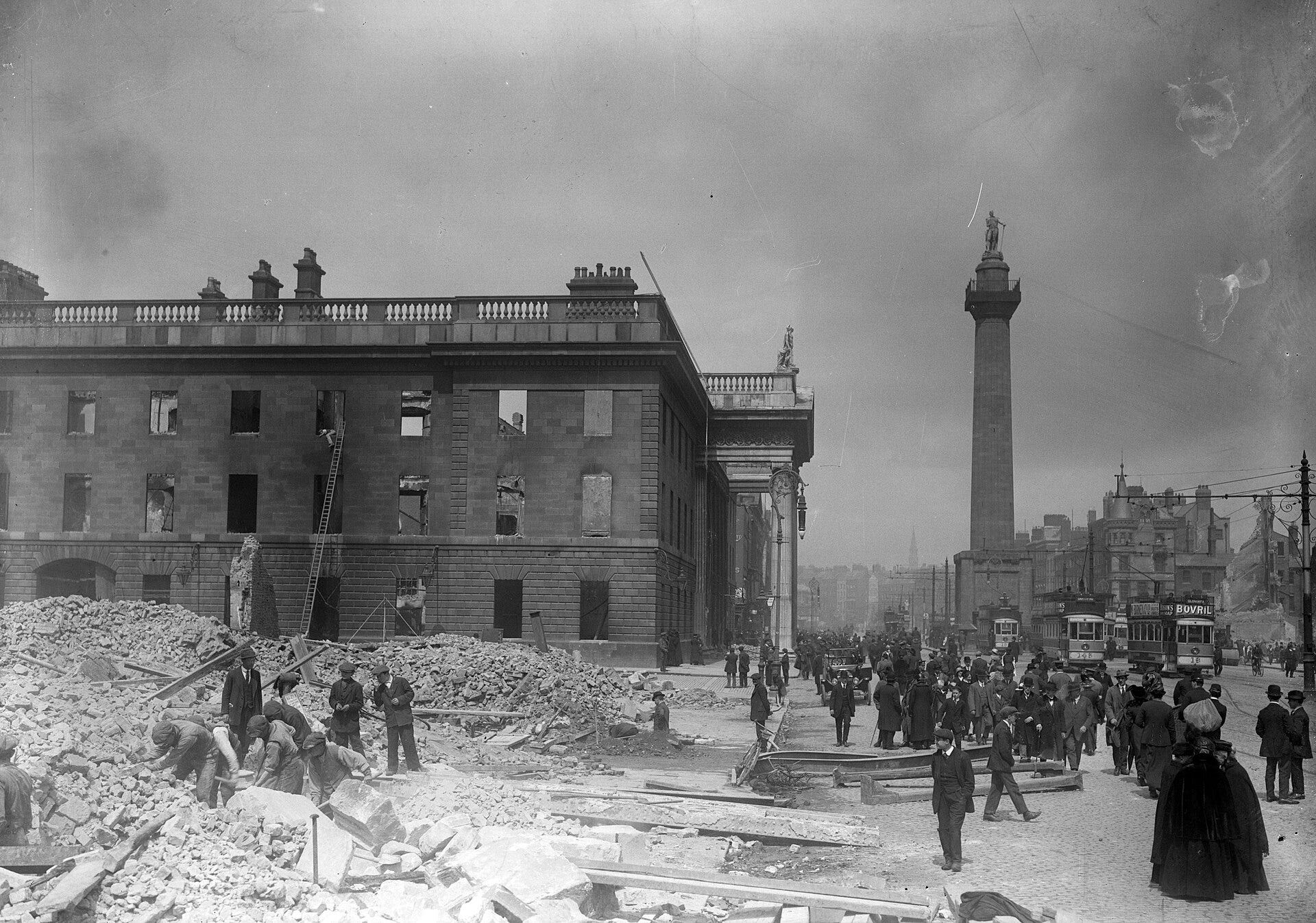
April 24, 1916: Some 1200 Irish republicans, including members of the Irish Volunteers and the Irish Citizen Army, commemorate Easter Monday by seizing a number of key positions in Dublin and declaring the advent of an independent “Irish republic.” The “Easter Rising,” as it’s known, was suppressed within six days by UK security forces, but the atrocities they committed during and after that suppression fueled greater levels of anti-UK sentiment among the Irish population. The Rising is now regarded as one of the major milestones of the “Irish revolutionary period,” as that period’s first serious armed conflict.
MIDDLE EAST
SYRIA
The New Arab’s Mohamad Karkas reports that the Israeli military (IDF) is, without much international attention, continuing to brutalize southern Syria:
Local sources told The New Arab that a huge explosion rocked several areas in Quneitra province.
They said it originated from the destroyed city of Quneitra, where an Israeli military base is located, and resulted from demolition operations targeting buildings inside the city.
The sources explained that these explosions are part of a series of systematic demolition operations by Israel that the area has witnessed for some time.
This incident is an extension of similar events witnessed in the destroyed city of Quneitra in previous periods.
Israeli occupation forces carried out explosions and destruction that affected many buildings, including parts of al-Hassan bin al-Haytham Secondary School, the old Golan hospital, and the historic al-Andalus cinema.
These sites hold both historical and service value.
