

If you’re interested in history and foreign affairs, Foreign Exchanges is the newsletter for you! Sign up for free today for regular updates on international news and US foreign policy, delivered straight to your email inbox, or subscribe and unlock the full FX experience:
September 26, 1799: A Republican French army under André Masséna outflanks and defeats a Russian-Austrian force at the Second Battle of Zürich. The French victory recovered what Masséna had lost in his defeat at the First Battle of Zürich in June and led to Russia’s decision to quit the Second Coalition. Shortly afterward Napoleon returned to Paris from Egypt and made himself First Consul, and the French Revolutionary Wars began to go in a whole new direction.
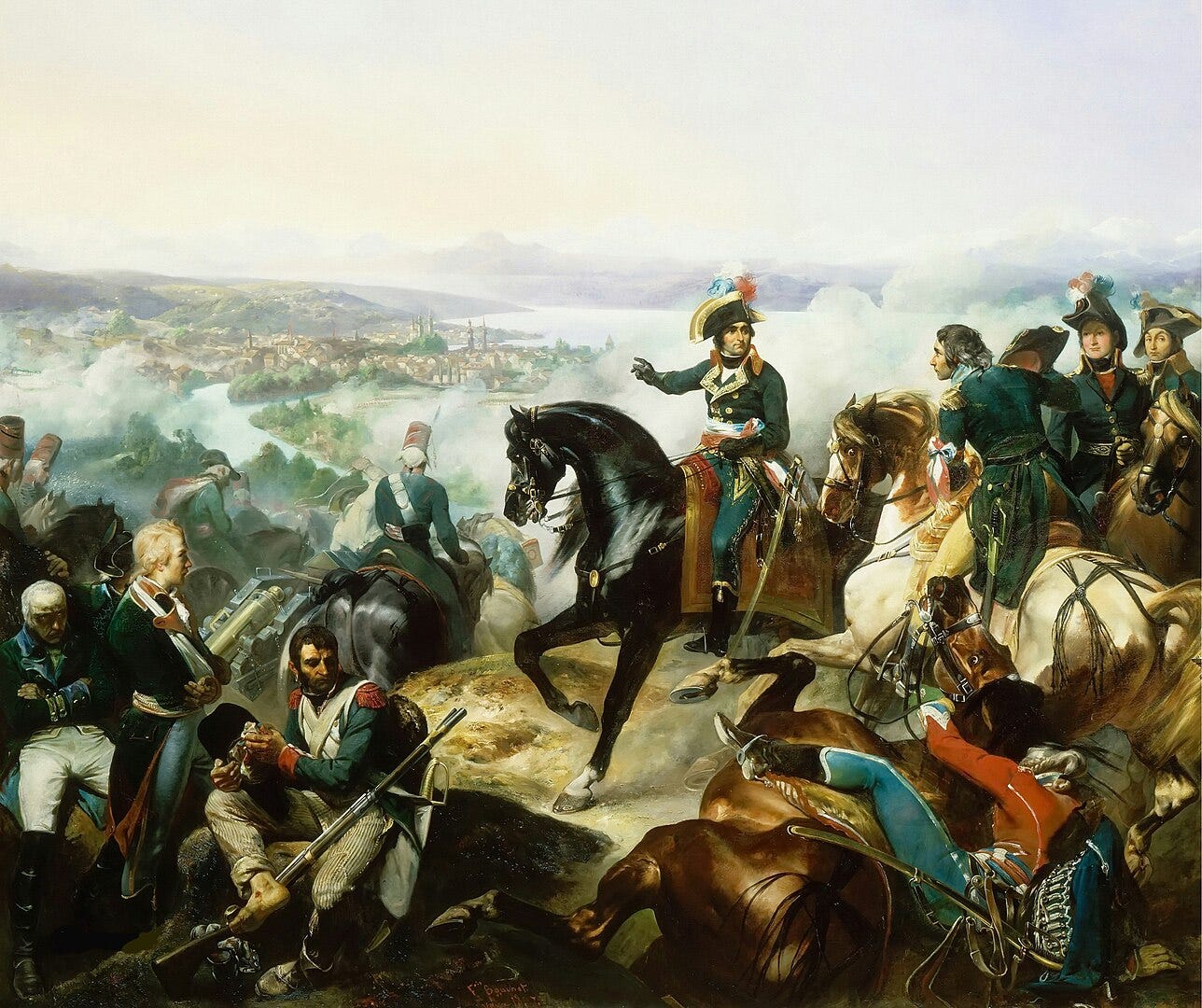
September 26, 1983: The Soviet Union’s early warning network determines that the United States has launched one intercontinental ballistic missile and recommends retaliating, but an air force lieutenant colonel named Stanislav Petrov, under the assumption that the US would not launch a nuclear first strike with a single weapon, decides that it must be malfunctioning. He made a similar determination when the system later showed four more US missiles in fight, and turned out to be correct—Soviet satellites were somehow misreading sunlight reflecting off of high altitude clouds as missiles. Petrov’s decision not to rely on the warning system probably single-handedly prevented World War III.
September 27, 1669: The Ottoman siege of Candia (modern Heraklion), finally ends after more than 21 years with the city, and all of Crete, in Ottoman hands. The siege was the centerpiece of the 1645-1669 Cretan War, the fifth of seven wars between the Ottoman Empire and the Republic of Venice. Its conquest of Crete brought the Ottoman Empire to its greatest territorial extent, though it was a fleeting moment as by the end of the 17th century the empire would begin shrinking.
September 27, 1822: French orientalist Jean-François Champollion (d. 1832) publishes the first results of his translation of the Rosetta Stone, the first true breakthrough in the effort by European scholars to decipher Egyptian hieroglyphics. Two years later he published Précis du système hiéroglyphique des anciens Égyptiens, which cemented his reputation as the “Father of Egyptology.”
September 28, 1538: The Ottoman navy defeats a Christian “Holy League” fleet in a battle near Preveza, on the western Greek coast. After the first day of fighting favored the Ottomans, Holy League commander Andrea Doria—a Genoese admiral—opted to retreat rather than continue the engagement. The battle was a crucial element in the Ottoman victory in its 1537-1540 war against Venice.
September 28, 1961: A group of Syrian military officers carries out a coup that pulls Syria out of the United Arab Republic, the political union that Syria and Egypt had formed in 1958. In addition to ending the UAR, the coup kicked off about 18 months of political chaos in Syria that finally ended (well, sort of ended) with the March 1963 coup that brought the Baath Party to power.
September 29, 1227: Pope Gregory IX excommunicates Holy Roman Emperor Frederick II for repeatedly breaking promises to go on Crusade. Frederick, who had already engineered his own succession as “King of Jerusalem,” subsequently did go on Crusade, for which Gregory excommunicated him again since he was now acting without permission. Frederick nevertheless led the Sixth Crusade, with the Church advising people not to join him because he was an excommunicate, and wound up negotiating a very tenuous handover of the city of Jerusalem.
September 29, 1883: King Ferdinand VII of Spain shuffles off this mortal coil at the tender age of 48. Ferdinand has the distinction of being regarded as one of the worst rulers in Spanish history, which is a pretty high bar to clear so congrats to him. His death can be and frequently is regarded as the final end of the Spanish-American Wars of Independence, as the ensuing succession crisis plunged Spain into the Carlist Wars and foreclosed on any possibility of the mother country attempting to regain her former colonial holdings.
September 30, 737: Fighters from the Turkic Türgesh confederation defeat an Umayyad army at what’s known as the “Battle of the Baggage” in what is now northern Afghanistan. The Umayyads recovered and wound up killing the Türgesh ruler, Suluk, in battle the following year, but the disruption caused by their defeat may have contributed to the emergence of rebel challengers to the caliphate within the wider Khurasan region. One of those, in the late 740s, eventually ousted the Umayyad dynasty in favor of the Abbasids.
September 30, 1938: The leaders of Britain, France, Italy, and Nazi Germany sign the Munich Agreement, giving the Nazis control of Czechoslovakia’s predominantly German Sudetenland region. Depending on your worldview you may regard British Prime Minister Neville Chamberlain’s actions here as either the most vile act of appeasement in human history, a necessary evil (that Chamberlain may still have handled badly) given that Britain was in no shape for a war in 1938, or the germ of a plan Chamberlain had to ally with Hitler against the Soviet Union. You decide.
October 1, 331 BCE: This is the generally accepted date for the Battle of Gaugamela, in which Alexander the Great’s Greek-Macedonian army decisively defeated a larger Persian army and almost instantly gained control over the western half of the Persian Achaemenid Empire. Persian Emperor Darius fled east hoping to recruit a new army, but he was murdered by his cousin Bessus, who proclaimed himself the new emperor. His reign was short-lived, and Alexander had conquered the whole empire by 329.
October 1, 1827: An imperial Russian army defeats the Qajars at Yerevan during the 1826-1828 Russo-Persian War. The Russians followed up by capturing Tabriz, the largest northern Iranian city, at which point the Qajars surrendered. Under the terms of the ensuing treaty, they gave both the Erivan Khanate and the Nakhichevan Khanate to the Russians. This essentially created the modern nations of Armenia and Azerbaijan, respectively, and ended centuries of Persian domination in the southern Caucasus—which would henceforth be dominated by Russia instead.
October 1, 1918: Britain’s Egyptian Expeditionary Force captures Damascus, effectively bringing World War I to an end in the Middle East.
October 2, 1187: Jerusalem’s garrison, led by Balian of Ibelin, surrenders to Saladin after a brief siege. The garrison’s ability to hold out for even a short time was somewhat remarkable given that Saladin had annihilated Jerusalem’s army a few months prior. Despite ultimately giving up the city, Balian is regarded as having prevented a sack of the city and having forced Saladin to offer somewhat more lenient surrender terms than he might have otherwise.
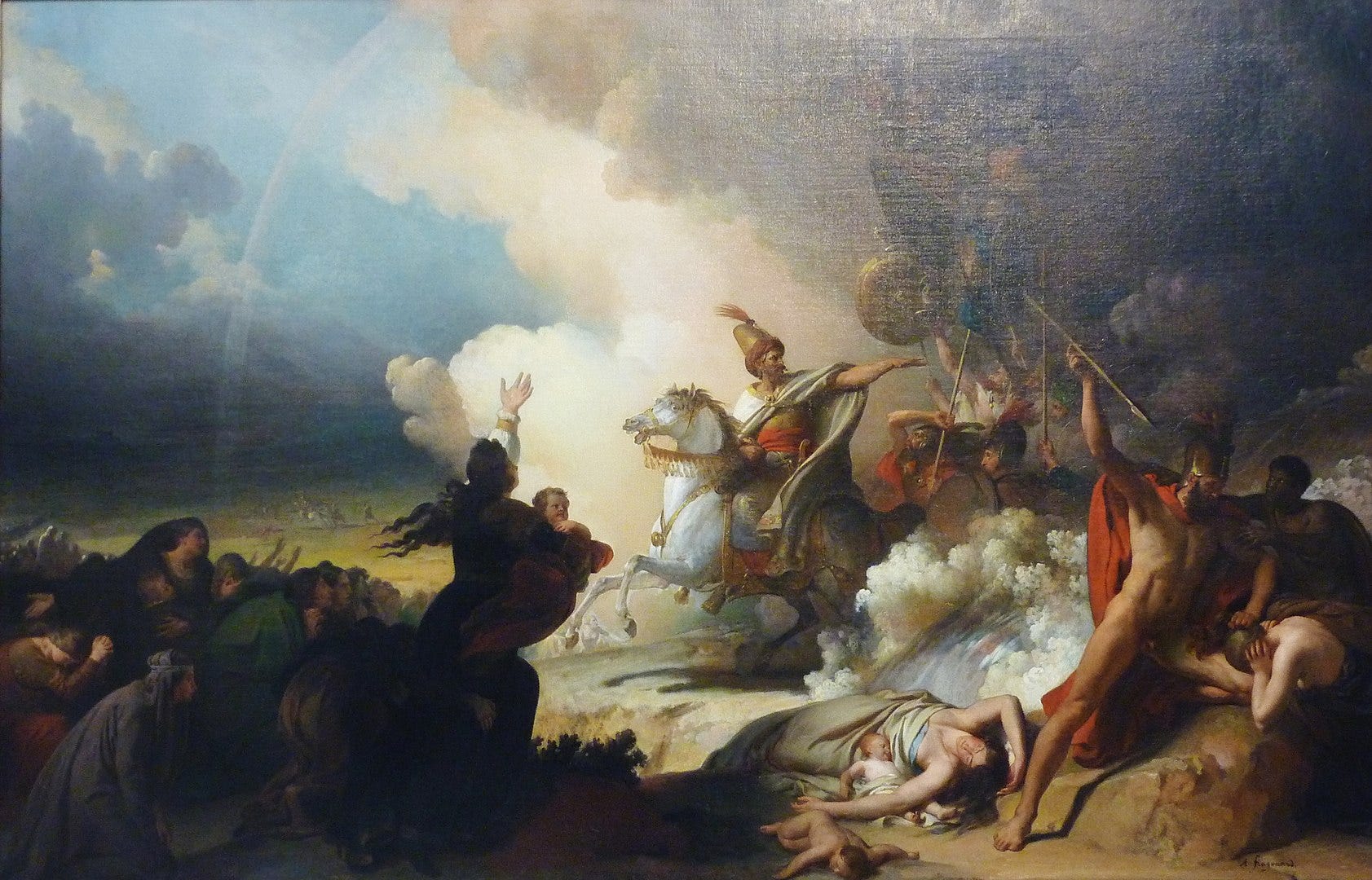
October 2, 1944: The Warsaw Uprising ends with the Polish resistance defeated. Estimates vary, but over the two month conflict the Nazis killed upwards of 200,000 civilians and expelled hundreds of thousands more from the city. Somewhere in the neighborhood of 15,000 Polish resistance fighters were also killed against at least 2000 German soldiers (with several thousand more MIA).