

If you’re interested in history and foreign affairs, Foreign Exchanges is the newsletter for you! Sign up for free today for regular updates on international news and US foreign policy, delivered straight to your email inbox, or subscribe and unlock the full FX experience:
This is just a reminder that I will be away from FX for the next couple of weeks as I get my daughter off to college and take a bit of a breather. We will be back to our regular schedule ob October 1. Thanks for reading!
September 14, 1829: The Treaty of Adrianople ends the Ottoman-Russian War of 1828-1829. The Ottomans ceded control over the eastern shore of the Black Sea and the mouth of the Danube River, re-guaranteed Serbia’s autonomy, allowed Moldavia and Wallachia to become Russian protectorates, and paid a large indemnity to the Russians.
September 14, 1960: At a meeting in Baghdad, the governments of Iran, Iraq, Kuwait, Saudi Arabia, and Venezuela agree to form the Organization of Petroleum Exporting Countries. Everything has gone really well ever since. Also on this date, with CIA help, Congolese Army Colonel Mobutu Sese Seko seized power in a coup in Kinshasa. That worked out really well too.
September 15, 1821: The Captaincy-General of Guatemala—encompassing the modern states of Costa Rica, El Salvador, Guatemala, Honduras, and Nicaragua—declares its independence from Spain. The date is commemorated as independence day in all five of those countries.
September 15, 1894: The Imperial Japanese Army captures the city of Pyongyang from Qing Dynasty China in one of the earliest engagements of the First Sino-Japanese War. China opted to abandon Korea to the Japanese, and when the war ended with a Japanese victory the Korean peninsula came under Japan’s regional sphere of influence.
September 16, 1955: A group of senior military officers begins an uprising they call the “Revolución Libertadora” against Argentine President Juan Perón in the city of Córdoba, Argentina. The coup would end with Perón’s resignation on September 21 and the junta assuming power on September 23.
September 16, 1970: The Black September conflict begins in Jordan, as King Hussein declares martial law and orders the Jordanian army to quash unruly Palestine Liberation Organization militants across the country. Although the main conflict ended several days later, after Egyptian President Gamal Abdel Nasser orchestrated a ceasefire, fighting between Jordanian security forces and the PLO continued through the following summer. That’s when Hussein finally expelled the group’s leadership from Jordan and they decamped to Lebanon.
September 17, 1176: Byzantine Emperor Manuel I leads an army into battle against the Seljuk Turks at Myriokephalon. Well, technically, he led his army into a Seljuk trap and thus a catastrophic defeat. The loss cost the Byzantines what proved to be their final opportunity to regain control of Anatolia—the Crusader conquest of Constantinople in 1204 would slam the door on those hopes entirely.
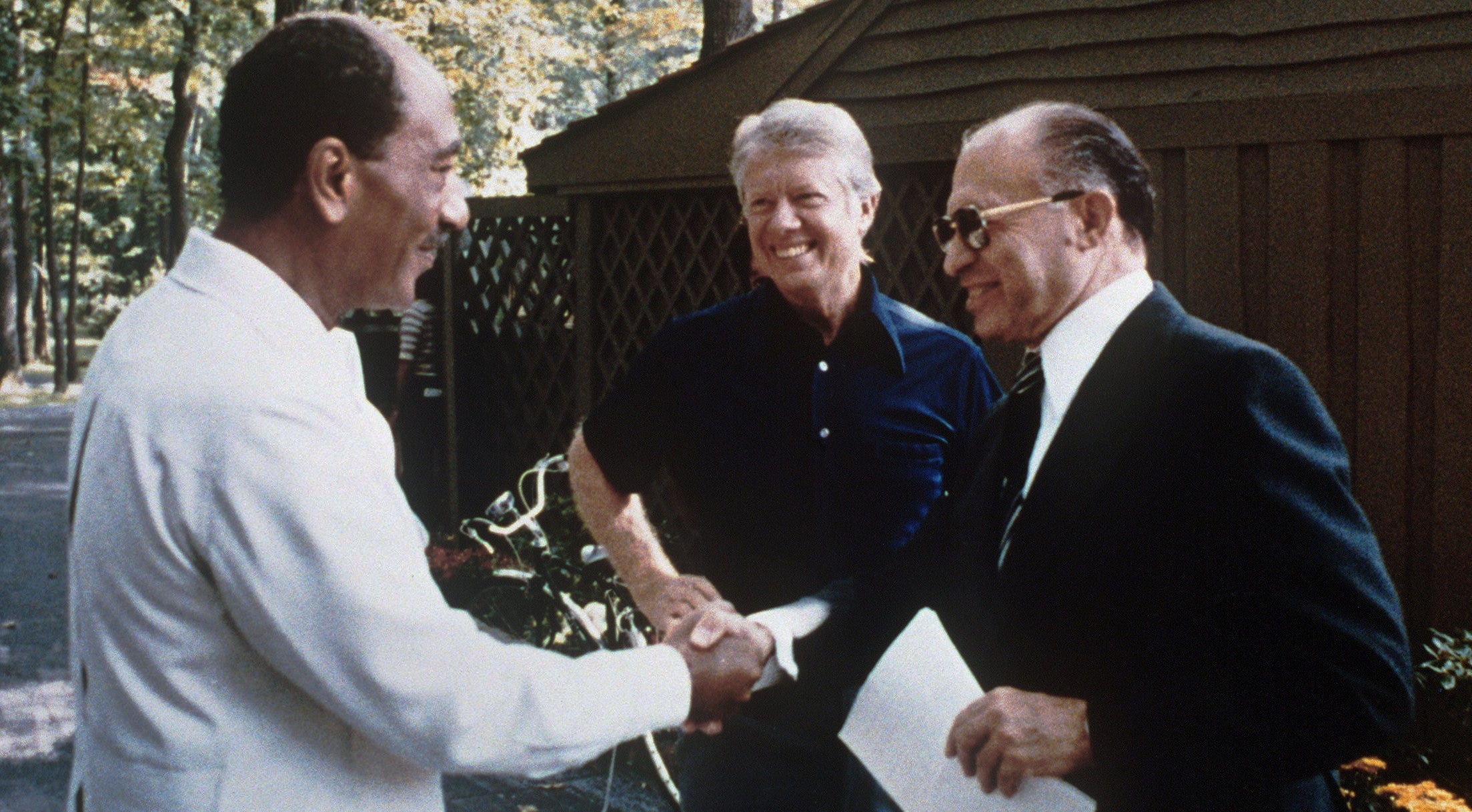
September 17, 1978: Egyptian President Anwar Sadat and Israeli Prime Minister Menachem Begin sign the Camp David Accords under the auspices of US President Jimmy Carter. The accords nodded in the direction of Middle East peace but mainly focused on a bilateral treaty between Egypt and Israel, the former becoming the first Arab state to recognize the latter.
September 17, 1982: Lebanese Christian militias, with the support of the Israeli military, massacre hundreds of Palestinians in the Sabra neighborhood in western Beirut and the nearby Shatila refugee camp. Arguably the worst and most infamous of the myriad atrocities committed during the 1975-1990 Lebanese Civil War, the massacre was declared an act of genocide by the United Nations General Assembly.
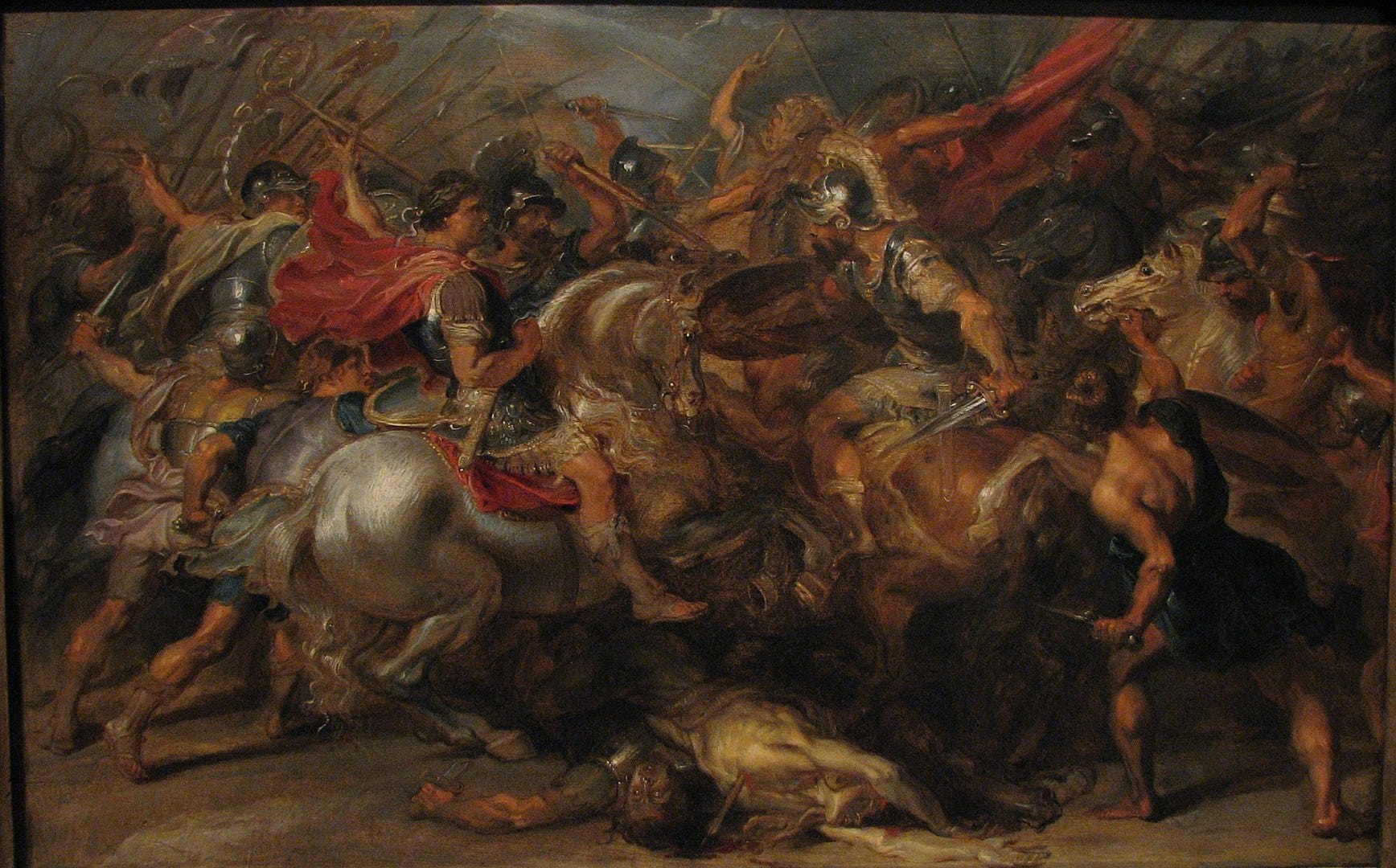
September 18, 324: In a battle near the city of Chrysopolis in Anatolia, the armies of Roman emperors Constantine and Licinius meet in what proves to be the final battle of the Roman Tetrarchy multiple civil wars. Constantine, who had already handed Licinius serious defeats at the Battle of Adrianople and the naval Battle of the Hellespont in July, routed Licinius’s forces with an all-out frontal attack. Licinius fled to Nicomedia and then appealed to his wife Constantia, Constantine’s half-sister, to intercede on his behalf. After initially agreeing to spare him, Constantine had Licinius executed in 325. In winning at Chrysopolis, Constantine made himself the first sole emperor of Rome since Diocletian elevated Maximian to the status of Augustus in the west in 286. It was also after this battle that he decided to build a new capital on the site of a town called Byzantium, which he refounded as Konstantinoupolis or Constantinople.
September 18, 1810: The Government Assembly of the Kingdom of Chile, or the “First Government Junta,” takes power in the colony by pledging allegiance to the deposed King Ferdinand VII of Spain and rejecting Napoleon’s imposition of his brother, Joseph, on the Spanish throne, thus kicking off the Chilean War of Independence. Though it was supposed to be temporary, the junta continued fighting after Ferdinand’s restoration and didn’t stop fighting until Chile became an independent nation in the 1820s. Commemorated as Chilean Independence Day.
September 18, 1947: The National Security Act goes into effect, drastically reshaping the US national security bureaucracy. The previously cabinet level Department of War (renamed the Department of the Army) and Department of the Navy were subsumed into a new Department of Defense. The US Air Force was split from the Army into its own military branch, also under the new Defense Department. Outside the Pentagon, the act created the National Security Council within the White House and the Central Intelligence Agency, the first US peacetime intelligence agency. And we all lived happily ever after.
September 19, 634: The siege of Damascus ends with the Arabs conquering the city, one of the most important in the Byzantine Empire at the time. One of the first major victories of the Arabs’ 7th century conquests, primary sources say that the siege ended when the Arab commander, Khalid ibn al-Walid, took advantage of a celebration inside the city to exploit an undefended portion of the wall. To that point the siege had more or less stalemated as the Arabs lacked proper siege machinery. It’s suggested that Khalid was tipped off by a Monophysite Damascene priest, which if true highlights the sectarian problem that the Byzantines faced throughout the Levant and Egypt.
September 19, 1356: An English-Gascon army under Edward, the Black Prince, defeats a substantially larger French army under King John II at the Battle of Poitiers. John’s initial assaults broke on a strong English defensive line, and his final attempt was routed after the appearance of a small English cavalry unit. The battle ended with John a captive of the English army. Edward brought him to London where protracted, fitful negotiations with English King Edward III—sandwiched around England’s (largely unsuccessful) Reims campaign in northern France in 1359—eventually produced the Treaty of Brétigny in 1360. That pact ceded about a third of modern France to the English along with a very large ransom for John’s return, in return for which King Edward gave up his claim on the French throne. The treaty was meant to be decisive and indeed ended the “Edwardian” phase of the Hundred Years’ War, but fighting resumed (the “Caroline” phase) in 1369.
September 19, 1893: New Zealand Governor David Boyle, Earl of Glasgow, gives royal assent to a bill instituting women’s suffrage. This made New Zealand the first country in the world to recognize women’s right to vote in national parliamentary elections. This was the result of a concerted campaign that began in the late 1860s, inspired by similar movements in the UK and US though while it began later than those movements it achieved success substantially faster than they did. New Zealand’s November 1893 election was the first in which women exercised the right to vote in parliamentary races and also saw Elizabeth Yates elected mayor of the town of Onehunga. She was the first woman elected mayor anywhere in the British Empire.