

If you’re interested in history and foreign affairs, Foreign Exchanges is the newsletter for you! Sign up for free today for regular updates on international news and US foreign policy, delivered straight to your email inbox, or subscribe and unlock the full FX experience:
Happy Memorial Day to those who are celebrating! I took a short break for the holiday but we’ll be back to our regular schedule tomorrow. Thanks for reading!
May 22, 853: A Byzantine army/fleet attacks and sacks the Egyptian port city of Damietta. Emperor Michael III was attempting to weaken the Emirate of Crete, the target of several unsuccessful Byzantine offensives since Arab forces took the island in the 820s, by cutting off its Egyptian support. Damietta was an easy target as Arab naval forces in Egypt were primarily tasked with patrolling the Nile rather than defending the Mediterranean coast, and so the Byzantine forces had little trouble taking and looting the city. Their three day occupation didn’t have much in the way of long-term repercussions but it stands as a rare Byzantine military victory over the Abbasids in this period that set the stage for the much more successful “Macedonian Dynasty” that would succeed Michael.
May 22, 1990: The Yemen Arab Republic (North Yemen) and the People’s Democratic Republic of Yemen (South Yemen) are united as the Republic of Yemen. After the formation of a unified government that tended to favor northern Yemen, southern Yemen attempted to secede in 1994, touching off a short (May-July) Yemeni civil war. A lingering southern secessionist movement has once again become prominent amid the current Yemeni conflict.
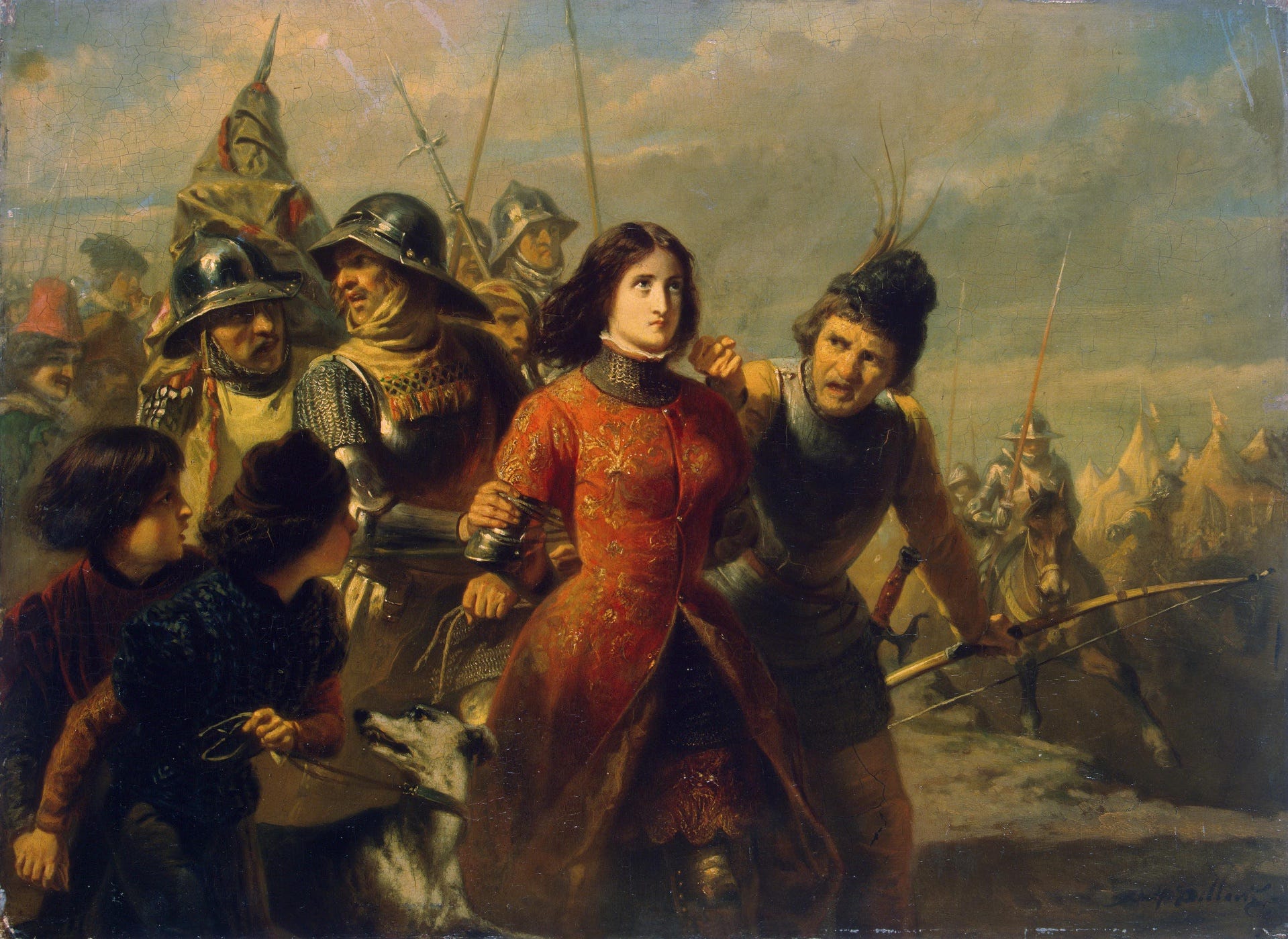
May 23, 1430: In the early days of their siege of the town of Compiègne, Burgundian forces drive off a sortie by the French garrison and in the process capture none other than Joan of Arc, the heroine of the siege of Orléans. The Burgundians turned Joan over to their English allies in exchange for a substantial ransom, and English authorities quickly put her on trial for blasphemy. Among Joan’s alleged crimes were claiming to have received direct communications from God and wearing “masculine” clothing, which seems inevitable if you’re going to ride into battle but I digress. The verdict was never in doubt, with England intending to discredit French King Charles VII’s claim on the throne by associating him with a “convicted” heretic. Joan was executed on May 30, 1431. As far as the siege was concerned, it ended in November 1430 with a French victory that was not terribly decisive as far as the wider Hundred Years’ War was concerned.
May 23, 1618: Two Catholic Bohemian nobles, Jaroslav Bořita of Martinice and Vilém Slavata of Chlum, are thrown out of the top floor window of the Bohemian Chancellery in Prague by a group of Protestant nobles angered over the religious policies of the Bohemian king, the future Holy Roman Emperor Ferdinand II. Both somehow survived the 70 foot drop, but this “Defenestration of Prague” (one of three such incidents but the one most people likely mean when they talk about the Defenestration of Prague) helped trigger the Thirty Years’ War.
May 24, 1667: King Louis XIV of France orders his army to invade the Spanish Netherlands, kicking off a conflict known as the War of Devolution. The name comes from Louis’ contention that sovereignty over the Spanish Netherlands and Franche-Comté had passed (“devolved,” get it?) to him because of his marriage to Spanish royal Maria Theresa. She and Louis had agreed to renounce her inheritance in return for a hefty dowry payment from the Habsburgs, but that dowry never materialized and so Louis argued that the renunciation was null and void. The war was largely concluded on French terms and ended with the May 1668 Treaty of Aix-la-Chapelle (not to be confused with the more famous 1748 treaty by the same name), under which Louis agreed to quit the Spanish Netherlands and Franche-Comté but retained possession of several key northern frontier towns. Those towns proved to be footholds for subsequent French forays into the region.
May 24, 1991: The military arm of the Eritrean People’s Liberation Front enters the city of Asmara, securing (as it turns out) Eritrea’s independence from Ethiopia and thus marking the end of the Eritrean War of Independence. May 24 is commemorated in Eritrea annually as Independence Day.
May 25, 1521: The Diet of Worms, an assembly called by Holy Roman Emperor Charles V in response to the growing “Protestant” reform movement led by Martin Luther, culminates with the Edict of Worms. In that proclamation, Charles declared Luther “a notorious heretic” and promised that “those who will help in his capture will be rewarded generously for their good work.” Frederick III, Elector of Saxony, then “kidnapped” Luther and stashed him in Wartburg Castle for his own safety. Luther remained at Wartburg until the following March, writing and translating the New Testament into German while his reform movement escalated into a schism and Protestantism began to separate from the Catholic Church.
May 25, 1981: Leaders from Bahrain, Kuwait, Oman, Qatar, Saudi Arabia, and the United Arab Emirates sign the Gulf Cooperation Council charter in Abu Dhabi, formally marking the birth of that organization.