

This column is free to everyone. To receive more in depth analysis of US foreign policy and international affairs, sign up for Foreign Exchanges’ email list today! And please consider subscribing to support the newsletter and help it continue to grow:
“You join the cult of Hercules to the cult of Mammon,
and illuminating the road of easy conquest,
Liberty raises its torch in New York”—Rubén Dario, “To Roosevelt,” 1904
The US bombing of Caracas on January 3 that provided cover for the special forces operation that abducted Venezuelan President Nicolás Maduro and his partner Cilia Flores left at least 100 people dead. US bombs destroyed residential homes in and near the capital city and medical warehouses in La Guaira port. Jonatan Marrolla, a resident of La Guaira state, told Reuters that “it’s sheer luck they didn’t kill my kids.” The apartment where his neighbor Angel Alvarez lived also suffered serious damage. “We’re alive by a miracle,” the young street vendor said.
Add these deaths to the dozens of extrajudicial executions in the Caribbean and Eastern Pacific ordered by Donald Trump since mid-2025, along with the establishment of a naval blockade that seeks to further strangle the people of Venezuela—victims of nearly a decade of intensified economic war that has resulted in tens of thousands of excess deaths and an economic contraction “three times the severity” of the US Great Depression. We could say that all of this is illegal under international law. But then again, international law suffered its final blow in Gaza, massacred by the Israeli military and US-European weaponry, money, and diplomatic cover. We are left with, as Trump recently told The New York Times, his “morality” to curb or restrain his power. The type of morality expressed in the open genocidal threats and policies enacted by political leaders against entire peoples and countries in western Asia and the Americas. The type of morality that underscores what I have referred to elsewhere as the “Palestine-Mexico Border:” a line of demarcation between those allowed to live and those who deserve to die.
Trump’s attack on Venezuela is what Yankee isolationism looks like, past and present: the openly naked and violent re-assertion of US imperial power in the Americas—empire coming home to its laboratory—when faced with intractable political, economic, and military challenges elsewhere. As Pete Hegeseth said last year while in Panama, “to put America first, we will put the Americas first.”
The Donroe Doctrine and a Return to Past Practice
The Monroe Doctrine, or its farcical reiteration as the “Donroe Doctrine,” is unabashedly and embarrassingly back—perhaps, most absurdly, reactivated in its current form by a president allegedly angered by Maduro’s dance moves and his failure to win the Nobel Peace Prize.
In South America, at least, the Monroe Doctrine has returned to an origin point. When Great Britain tried to bully Venezuela in 1895 over a decades-long border dispute with then-British Guiana, it assumed that its neocolonial economic hold over much of South America remained intact. Venezuela had spent the previous decades petitioning the United States for help, citing the original anti (European) colonial spirit of the 1823 doctrine—at least as read by Latin Americans. Unlike his predecessors, President Grover Cleveland did intervene and forced Great Britain to submit to arbitration under a US boundary commission. The commission’s findings, Cleveland insisted, would be enforced “by every means.”
When the commission released its recommendations in 1899, Britain got the better end. Venezuela continued to challenge the border and this dispute over the Essequibo region remains alive and well today. But the US had managed to stare down an imperial peer and forced it to accept a doctrine that, as British Prime Minister Lord Salisbury had argued, was not a legitimate part of international law. A few years later, Venezuela would once again provide the US an opportunity to assert its hemispheric hegemonic status when several European countries blockaded the South American country to collect unpaid debts and damage claims stemming from civil conflicts. In 1903, Theodore Roosevelt convinced (or forced under threat of US naval intervention as he later claimed) the Europeans and Venezuelans to settle via arbitration and prevent violent territorial annexation.
A year later, Roosevelt used this issue (among others)—the consequences of Latin American non-repayment of debts—to justify his corollary to the Monroe Doctrine. The US gave itself unilateral international police power over the Americas.
Over the next three decades, the US invaded Latin America more than thirty times. Constant military interventions to make the region hospitable and profitable for international capitalism and geopolitically secure for US “national security,” defined in hemispheric terms, characterized an era that some politicians and academics continue to label as “isolationist.” Yet in practice, such isolationism looked like violent and brazen racketeering that joined US coercive diplomacy and Wall Street bankers to the military might of the Navy and Marines, especially in Central America and the Caribbean. Gunboats and constant counterinsurgent “small wars” waged by the Marines enabled the seizing of nations’ customhouses and duties collection to pay off Wall Street banks. It then permitted this sort of imperial banking to essentially colonize—as historian Peter James Hudson argues—the so-called “American Mediterranean.”
This project also required the backing of the “dictatorship of the flies” as Chilean poet Pablo Neruda called them: authoritarian local leaders who ensured the smooth accumulation of profits by companies like United Fruit and Anaconda Copper. Local “National Guards” trained by the US worked to violently keep in line workers and peasants harboring thoughts of labor rights, social justice or national sovereignty. And the Marines remained on standby, ready to intervene if local movements had the temerity to think about recuperating resources and sovereignty that somehow belonged to the US. (Shades of Trump recently alleging that Venezuelans stole their own oil and land from the United States.) This was US military intervention for the sake of protecting US financial and commercial interests.
Reflecting on his active participation in this so-called isolationism, a prominent US Marine came to the realization that during his decades of military service throughout Latin America and China he had been “a High Class muscle-man for Big Business, for Wall Street and the Bankers.” “In short,” Major General Smedley Butler concluded in the early 1930s, “I was a racketeer, a gangster for capitalism.” Unlike Al Capone, the “swell racket” that Butler had worked for “operated on three continents.”
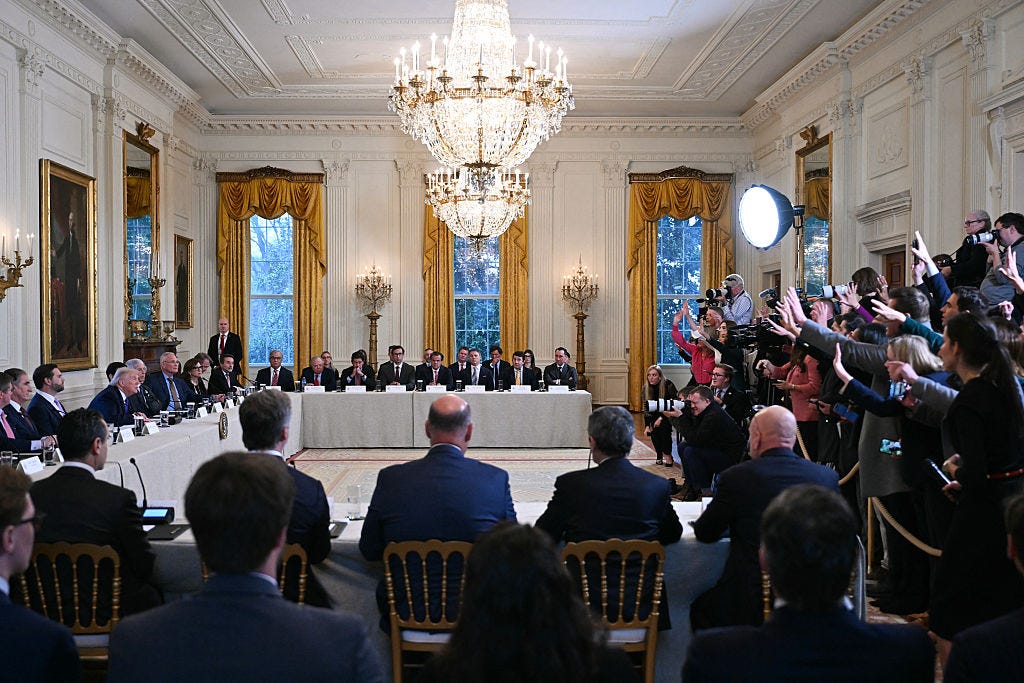
This era is back, as brazen and as clear as ever. Trump and his collaborators are quite clear in their imperialist, gangster intentions and methods. Instead of secret White House meetings and covert energy task forces headed by Dick Cheney, we are treated to public meetings between Trump and oil executives as they openly plot to plunder and divide the Venezuelan spoils. Yet imperial hubris can be self-destructive; just because the president of the US claims that he “runs” Venezuela does not make it a material and political reality on the ground.
The era that Trump now embodies never fully went away, but over the course of the 1930s and the Cold War Latin American resistance to the constant overt violation of national sovereignty forced the US to adopt more subtle (and seemingly cheaper) methods of exercising imperial power. Actual military invasions have remained largely exceptional, limited to the Dominican Republic in the mid-1960s, Grenada in late 1983, and Panama in 1989. More common was a combination of CIA “dirty work” to exacerbate internal political contradictions and social division, the training and backing of local right wing political, police and military forces, and economic war. The Cuban victory at the Bay of Pigs may have influenced Richard Nixon’s later decision to make the Chilean economy “scream” during Salvador Allende’s presidency—a strategy of war against an entire country’s population that we have witnessed in updated form in Venezuela since at least the 2000s.
This is all to say that US empire in Latin America has generated pushback in different forms. There is a reason why every reformist and revolutionary project in the last 100 or so years has put the concepts of national sovereignty and social justice at the forefront despite interruptions and setbacks. “The ghosts of all the revolutions that have been strangled or betrayed through Latin America’s tortured history,” Eduardo Galeano wrote, “return as new experiences, as if the present had been predicted and generated by the contradictions of the past.” Trump loves to talk, to declare, to assert that the way he imagines the world is as it exists. But the people of Venezuela and Latin America will, if history is any guide, struggle to have the last word. Nothing, even in this time of monsters, is settled.
Empire is also not cost free. US colonial policing—in the past reserved for imperial frontiers and hinterlands, the US-Mexico borderlands, and racialized communities inside the US—no longer respects racial, class, and geographic boundaries. “The border is everywhere now in the United States,” a Border Patrol agent deployed to Chicago in late 2025 told The New York Times. When I watched the ICE execution of Renee Nicole Good, I immediately thought of the drone footage that depicts the executions of Latin Americans on boats by US military forces. What connects them is the imperial violence and impunity on full display, in real time, that depicts who gets to live and who deserves to die. The Palestine-Mexico border is everywhere.
Putting US Empire on Trial
I want to conclude with some short comments about the shaky legal case against Maduro and Flores. After months of US government propaganda in 2025 that falsely alleged mass fentanyl trafficking from Venezuela to the US, led by the abducted president at the head of a mythical “Cartel de los Soles,” neither charge is in the 25-page indictment. The US Department of Justice recently dropped its claim that the cartel even exists. The case against Maduro and Flores thus appears weak and thin, unlike that of recently pardoned ex-president of Honduras Juan Orlando Hernández. US prosecutors convicted Hernández of trafficking more than 400 tons of cocaine into the United States–the ex-president had promised to “stuff the drugs up the gringos’ noses.” Or the case against Panamanian dictator Manuel Noriega in the late 1980s and 90s. That case too had extensive evidence of criminal activity. The Americans would know; they had the receipts for two former allies whose criminal activity was tolerated until their utility to US empire withered.
Some decades ago, a young Cuban lawyer provided an insurgent example of how to turn his trial into a broader indictment of an authoritarian state that had jailed, tortured, and murdered his comrades after a failed uprising. In his hours-long courtroom speech, this lawyer provided a legal and philosophical history on the inalienable natural right of peoples to resist tyranny and oppression. The real criminal, he argued, was the dictatorship that had illegally usurped political power and put him on trial for resisting that usurpation.
Maduro most likely knows this history. Perhaps he can use his trial, should it proceed, to indict the violent empire that abducted him and his partner, bombed his country, and now threatens to attack more Latin American nations. He may reassert the validity and urgency of a principle that has long animated Latin American peoples, social movements, and revolutions, and vexed US efforts to implement the Monroe Doctrine and its corollaries: the right of nations to sovereignty and self-determination. The right, as Chilean folk artist Victor Jara once sang, to live in peace.
Hi Derek, I was excited to see this post from Alex in my inbox this morning. Not just because he's a great writer (it's a great post - everyone should read it!), but because I thought it would push Bill Maher's horrible rictus grin off the top of the FX homepage.
... Is there any way you can make that happen?
Alex, I grabbed the full quote before you paraphrased it, but I figure I will post it anyway for posterity’s sake.
“I spent 33 years and four months in active military service and during that period I spent most of my time as a high class muscle man for Big Business, for Wall Street and the bankers. In short, I was a racketeer, a gangster for capitalism. I helped make Mexico and especially Tampico safe for American oil interests in 1914. I helped make Haiti and Cuba a decent place for the National City Bank boys to collect revenues in. I helped in the raping of half a dozen Central American republics for the benefit of Wall Street. I helped purify Nicaragua for the International Banking House of Brown Brothers in 1902-1912. I brought light to the Dominican Republic for the American sugar interests in 1916. I helped make Honduras right for the American fruit companies in 1903. In China in 1927 I helped see to it that Standard Oil went on its way unmolested. Looking back on it, I might have given Al Capone a few hints. The best he could do was to operate his racket in three districts. I operated on three continents.”
General Smedley D. Butler, War is a Racket
I loved the piece. In particular, I never quite realized the irony of the foreign policy of the United States in the first half of the 20th century, being called isolationist, considering that we sent the Marines into almost every nation in Latin America for everything from bananas to coffee. The arrogance of the Yanqui Pendejo is matched only by his ignorance, It seems.