

Hi folks, Derek here. Given that the US is still fully embroiled in its war with Iran and that I am currently unavailable, I’ve asked “Week in Review” writer Ashley Gate to step in and recap the past several days. Thanks to her for doing this and to you for reading and supporting FX!
LEBANON
Israel has publicly announced its intention to establish a permanent “security zone” across southern Lebanon. In a video statement earlier this week, Israel’s Defense Minister Israel Katz announced that hundreds of thousands of houses near the Israeli-Lebanon border “will be demolished in accordance with the Rafah and Beit Hanoon model in Gaza” and further warned that displaced Lebanese residents will not be allowed to return to their now-occupied lands south of the Litani River. On Friday, the Israeli Defense Forces (IDF) threatened to strike two bridges on the Zahrani River—15km north of the Litani River—and issued evacuation warnings for Beirut’s southern suburbs.
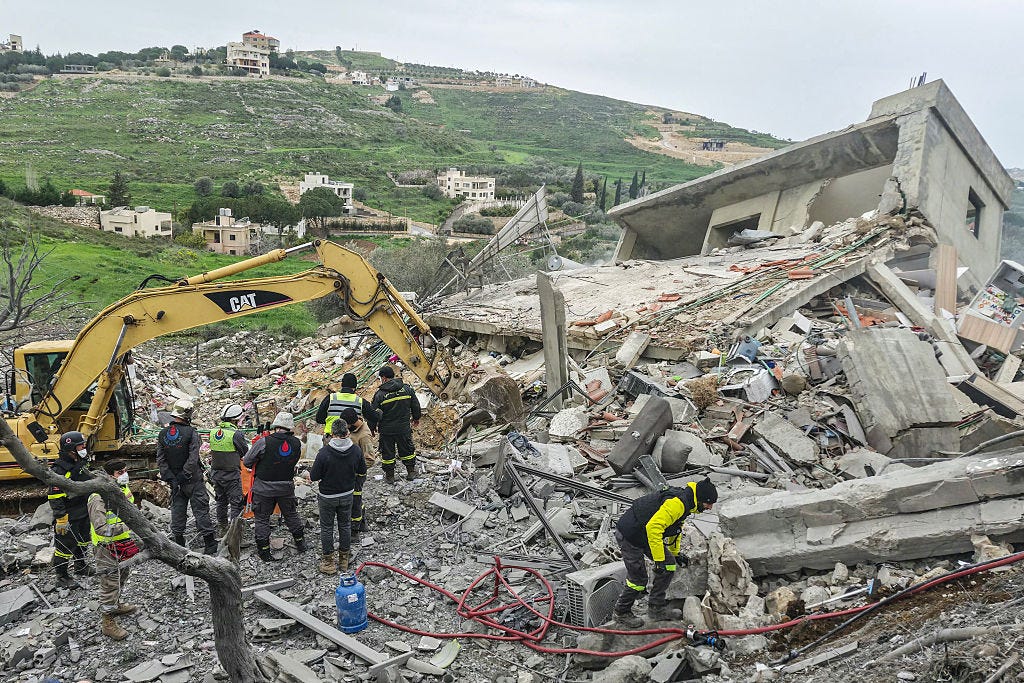
The Lebanese government has denounced Israel’s plans for “a new occupation of Lebanese territory” but is clearly incapable of intervening. By Tuesday, the Lebanese army had evacuated a number of its positions in the south, as the IDF occupation advanced northward. Hezbollah, by contrast, has continued to carry out attacks on Israeli forces throughout the week, announcing strikes on Nahariya, Acre, and a naval base in Haifa. On Thursday, Katz promised to “cleanse Hezbollah and its supporters from southern Lebanon.” Yet on Friday the Israeli military said that its long-touted aim of disarming Hezbollah was actually “unrealistic“ and not a “required goal” of its current military campaign. Analysts at the Soufan Center argue that Israel’s aggressive offensive may actually serve to prop-up the organization which was facing a dip in popularity following the resurgence of its conflict with Israel. In essence, the IDF’s invasion may enable Hezbollah “to frame the conflict as a resistance struggle against occupation—an environment in which the group historically excels.”
