

GiveDirectly is raising funds to help families affected by the Ebola outbreak in the Democratic Republic of the Congo. If you’re able to contribute, please do so!
TODAY IN HISTORY
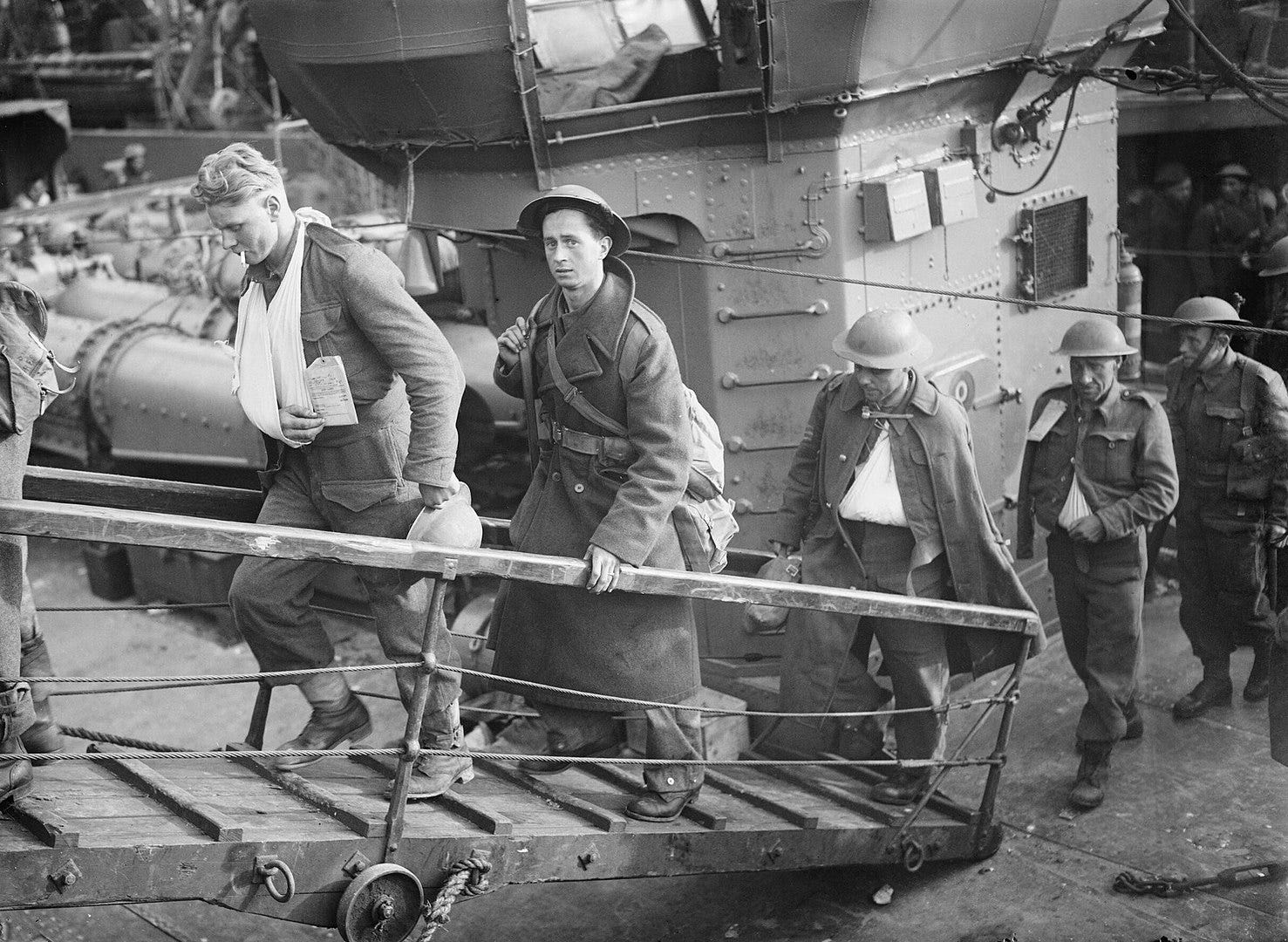
June 3, 1940: World War II’s Battle of Dunkirk ends with the last British soldiers evacuating that French city and leaving the Nazis victorious. At Winston Churchill’s order, the Royal Navy returned to Dunkirk the following day to evacuate roughly 26,000 French soldiers, so the full evacuation wasn’t completed until June 4. In all the British military (aided by dozens of small civilian vessels) evacuated 338,226 soldiers from Dunkirk, along with another roughly 192,000 evacuated from other parts of France over the ensuing three weeks. The Nazis rolled into Paris on June 14, completing their conquest of France. Britain left a considerable quantity of materiel behind but the successful rescue of most of the personnel who were trapped at Dunkirk prevented a major defeat from reaching catastrophic levels.
June 3, 1965: Gemini 4, officially the tenth crewed US spaceflight, takes off from Florida’s Cape Canaveral base (which was called “Cape Kennedy” at the time). This mission had a couple of important objectives. It was the first multi-day US space mission, with astronauts James McDivitt and Ed White spending four days in orbit. This was intended to show that human beings could survive lengthy spaceflights such as would be required for a moon mission, and to show that the US space program was catching up to the Soviet program, which had done a nearly five day mission with Vostok 5 in June 1963. Additionally, White became the first American to perform a spacewalk, again catching up to the Soviets who had done their first spacewalk on Voskhod 2 in March 1965.
INTERNATIONAL
The United Nations General Assembly elected Austria, Kyrgyzstan, Portugal, Trinidad and Tobago, and Zimbabwe to new two year terms on the UN Security Council on Wednesday. Next year they’ll join Bahrain, Colombia, the Democratic Republic of the Congo, Latvia, and Liberia plus the council’s five permanent members. They’ll be replacing Denmark and Greece in the “Western Europe and Other” group, Pakistan in the “Asia-Pacific” group, Panama in the “Latin America and Caribbean” group, and Somalia in the “Africa” group. Notably the German government came up short in the Western European group despite some fairly intensive campaigning. Yesterday the assembly elected Bangladeshi Foreign Minister Khalilur Rahman as its president for the body’s next session starting in September.
MIDDLE EAST
LEBANON
The Israeli military (IDF) killed at least nine people in Lebanon on Wednesday, including a Lebanese soldier, and came close to violating Donald Trump’s “partial ceasefire” (if that’s what we should call it) by striking a vehicle in the southern outskirts of Beirut. Iranian Foreign Minister Abbas Araghchi later warned to Lebanon’s Al Mayadeen media outlet that “any attack on Beirut will have grave consequences and lead to a full resumption of war.” Hezbollah for its part reportedly fired rockets at IDF personnel in northern Israel, which would also be inconsistent with Trump’s arrangement.
Later in the day Israeli and Lebanese negotiators meeting in Washington announced that they’d “agreed to the implementation of a ceasefire” that appears to expand on the limited framework that Trump introduced earlier this week. It is contingent on a number of actions by Hezbollah, which of course wasn’t represented in these talks, so its future seems dubious at best. Specifically Hezbollah has to agree to “a complete cessation of fire…and the evacuation of all of its operatives from the South Litani Sector.” It’s unclear what, if anything, the IDF would be expected to do.
