

You’re reading the web version of Foreign Exchanges. If you’d like to get it delivered straight to your inbox, sign up today:
TODAY IN HISTORY
January 28, 1077: Holy Roman Emperor Henry IV’s humiliating journey to the Castle of Canossa to beg forgiveness from Pope Gregory VII ends when the pope agrees to grant him an audience. Henry’s penitence was a highlight of the “Investiture Controversy,” during which the emperor and the pope got crosswise over the issue of which of them should have final say over the appointment of bishops in imperial cities. It wouldn’t be resolved until the Concordat of Worms in 1122, which affirmed the Church’s right to choose its own officials but allowed imperial authorities to have some influence on the process.
January 28, 1846: A British East India Company army under Sir Harry Smith defeats a somewhat larger Sikh force at the Battle of Aliwal. The Sikhs lost somewhere around 2000 men, many in a disorganized retreat after the British captured the village of Aliwal and were able to attack the Sikh line from two directions. The victory is seen as crucial to the British victory in the 1845-1846 First Anglo-Sikh War, because it eliminated a Sikh threat to the EIC’s supply lines and allowed its main army to undertake the decisive offensive that brought the conflict to an end.
January 29, 1258: The army of Đại Việt under the Trần dynasty defeats the Mongols at the Battle of Đông Bộ Đầu. Their defeat was so severe that the Mongols were forced to withdraw from Đại Việt altogether, marking the end of their first attempt at conquering the region. The Mongols made two more attempts in the 1280s, both of which failed, before the Trần rulers decided to make themselves vassals of the Mongols in order to spare themselves any further invasions.
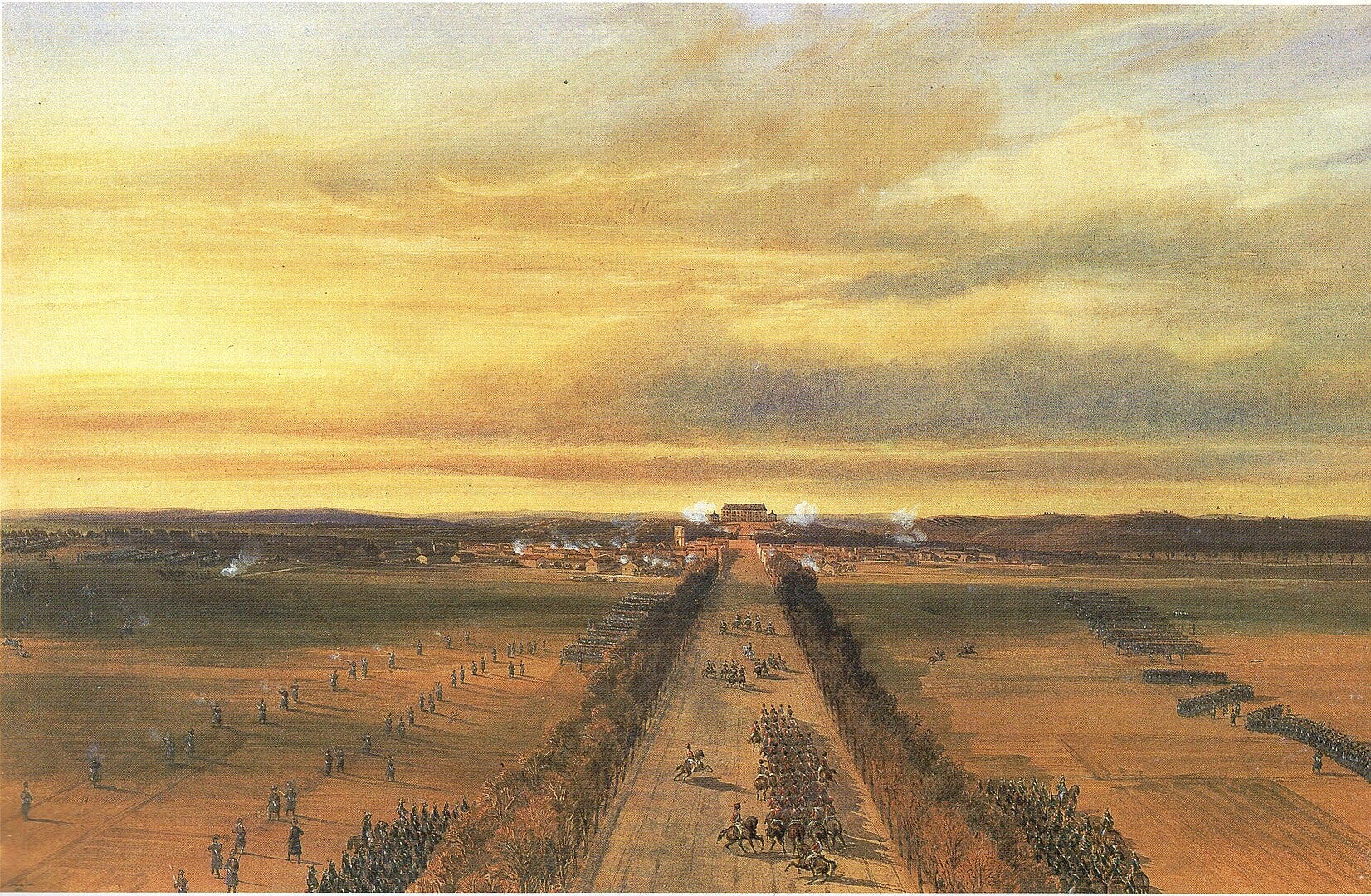
January 29, 1814: At the Battle of Brienne, a French army directly commanded by Napoleon (who had only gotten to the front a couple of days earlier) defeats a combined Prussian-Russian army in the waning days of the War of the Sixth Coalition. The French victory was nearly a disaster, as Napoleon himself was almost captured by a unit of Russian Cossacks. The French victory prevented this relief unit from reinforcing a larger Allied force under the command of Prince Karl Philipp of Schwarzenberg, but the combined invasion of that army and Arthur Wellesley’s army from Spain was too much even for Napoleon and he was forced to abdicate in April.
MIDDLE EAST
SYRIA
The Syrian Interior Ministry has moved to grant citizenship to “all Kurds residing in Syria and explicitly…those listed as stateless” according to Anadolu via Al Jazeera. The logistics behind this step are supposed to be completed by February 5. This is a step toward implementing the decree that Syrian President Ahmed al-Sharaa issued earlier this month promising citizenship and other rights and prerogatives for Syria’s Kurdish minority. A 1962 census stripped tens of thousands of Syrian Kurds of their citizenship, hence the emphasis on “stateless” people.
ISRAEL-PALESTINE
The Israeli military (IDF) killed at least two people in Gaza’s Khan Younis region on Thursday. It claimed that they were preparing to attack Israeli soldiers. Another airstrike later in the day killed one person in central Gaza. On the subject of casualties, the IDF has apparently decided that it accepts the accuracy of the Gazan Health Ministry’s body count. The ministry says that the IDF has killed at least 71,667 since the October 7 2023 attacks, with thousands more still unaccounted and potentially buried under rubble.
I feel like I have lost my capacity to be surprised by this sort of thing but it is worth noting that Israeli officials and their Western political and media support network have spent over two years routinely questioning this death toll, often overtly though sometimes more subtly via references to the “Hamas-controlled” ministry or the like. I guess that was all for public consumption. One question that arises from this is “why now,” considering the possibility that the IDF is jumping on board with the ministry’s estimate because recovery work is pointing toward a higher real death toll.
YEMEN
The United Nations World Food Program says that it is shutting down operations in Houthi-controlled northern Yemen. It cited a lack of security for its personnel and restrictions the Houthis have placed on its activities, but a lack of funding also appears to be part of the problem. Authorities in northern Yemen frequently raid UN offices and detain staff.
IRAQ
Once and possibly future Iraqi Prime Minister Nouri al-Maliki lashed out at Donald Trump on Wednesday over his “blatant interference” in Iraqi politics. Trump denounced Maliki’s PM candidacy on Tuesday, calling his potential election “a very bad choice” and threatening to cut off US support for Baghdad. Maliki alienated a number of constituencies both inside and outside of Iraq during his 2006-2014 stint as PM due to his authoritarian tendencies toward Sunni Arabs and Kurds and his friendliness toward Iran. The US government was certainly one of those constituencies. We can assume that somebody is briefing or otherwise advising Trump about Maliki’s Iranian affinities. The formation of Iraq’s next government is currently stalled over the question of who will be president, so it’s impossible to know if Trump’s threats will impact Maliki’s PM bid.
IRAN
Donald Trump is continuing to hype himself into a military conflict with Iran, taking to social media on Wednesday to note the “massive Armada” he’s sent to the region and warn that “time is running out” for Tehran to agree to a “fair and equitable” deal. The terms of that deal are believed to include an end to Iran’s uranium enrichment program (which Trump still claims the US military destroyed during the “12 Day War) as well as limits on Iran’s missile program and an end to its support for regional non-state actors. Iranian Foreign Minister Abbas Araghchi made his response via social media as well, saying that Tehran “has always welcomed” a nuclear deal concluded “on equal footing, and free from coercion, threats, and intimidation — which ensures Iran's rights to PEACEFUL nuclear technology.” He also warned that Iranian armed forces are ready to “powerfully respond” to any attack. Araghchi is reportedly heading to Turkey on Friday hoping that Ankara will relay his messages to the US.
Both sides appear to be preparing for a conflict that goes beyond the tit-for-tat strikes that marked the end of the “12 Day War” last June. The US military has moved another destroyer, the USS Delbert D. Black, into the Red Sea, giving it a total of six in the general vicinity (two in the Persian Gulf area and three more in the USS Abraham Lincoln’s carrier group in the Indian Ocean). It’s also deploying several logistical aircraft to the region. The Iranian government, meanwhile, has reportedly delegated emergency powers to provincial governors in case the central government in somehow incapacitated or cut off.
It remains an open question what Trump hopes to achieve with military action. According to Reuters he’s currently “weighing options…that include targeted strikes on security forces and leaders to inspire protesters.” Sparking protests via airstrike seems like a somewhat novel idea though given the prevailing anti-government sentiment within Iran I guess it’s not out of the question. It seems unlikely that this would achieve anything beyond another violent suppression of the protests. Trump is also reportedly considering “a much larger strike intended to have lasting impact,” perhaps aiming to heavily degrade Iran’s missile program. At this point I do feel like some US action is inevitable, though maybe if Trump notices that his antics are spiking the price of oil into the $70s per barrel range, well above his $50/barrel target, he’ll reconsider. And maybe I’m wrong—Trump indicated later in the day on Thursday that he intends to “talk” to Iran, though whether he actually means that is another open question.
In the meantime, the European Union designated Iran’s Islamic Revolutionary Guard Corps as a terrorist group on Thursday, a move that Araghchi declared was a “stunt” and “major strategic mistake.” The EU also blacklisted several Iranian officials, including the country’s interior minister and prosecutor-general, over their roles in the protest crackdown earlier this month.
ASIA
PAKISTAN
Foreign Affairs’ Michael Kugelman warns that Afghanistan and Pakistan may be on the road toward another border clash at a minimum:
In recent weeks, both the Taliban and the Pakistani military have escalated a war of words. In early January, the chief Taliban spokesperson, Zabihullah Mujahid, accused Pakistan of working with outside powers, including the United States, to destabilize Afghanistan. “Pakistan should not harbor dreams of dominance over Afghanistan,” he warned. Several days later, Pakistan’s army spokesperson, Ahmed Sharif Chaudhry, denounced the Taliban in a long press conference, declaring that terrorists across the board, including the Islamic State (also known as ISIS), al-Qaeda, and other regional militant groups, “all have one father—the Afghan Taliban.” (Ironically, Pakistan itself sponsored the Taliban from the group’s inception in the 1990s until the end of the U.S.-led war in Afghanistan in 2021). In recent days, there have been indications that Pakistan may be planning an offensive in the Tirah Valley, a TTP stronghold in the northwest of the country near the border with Afghanistan. Thousands of people have evacuated the area. Pakistani Defense Minister Khawaja Asif has denied that a military campaign is imminent, but he did acknowledge that hundreds of TTP fighters are living in Tirah and that the area could be subject to future Pakistani operations.
With the Taliban rejecting Pakistani demands to rein in the TTP, and with Pakistan committed to rooting out the terrorist group, this conflict looks likely to intensify. It has also proved resistant to outside mediation efforts. If Afghanistan and Pakistan truly do come to blows, the fighting could not just destabilize the two countries; it could spur militant attacks against Americans and American interests in South Asia, cause chaos in the wider region, and even trigger further conflict between India and Pakistan.
CHINA
According to Reuters, the apparent downfall of senior People’s Liberation Army general Zhang Youxia has some people at the Pentagon concerned about losing their contacts within the Chinese military establishment. The corruption investigation into Zhang comes in the context of a broader purge of senior PLA officers over the past few years, and whether that’s because of legitimate corruption or because Xi Jinping is reengineering the upper echelons of his military command to consolidate power (a theory that has been suggested) the purge has affected military-to-military contact.
Zhang is notable in this regard in that he was the one PLA officer whom Xi allowed to maintain some communication with the US during the nearly year and a half long period when he otherwise broke off all military-to-military contact following Nancy Pelosi’s 2022 visit to Taiwan. He was also one of a relatively small number of PLA officers with combat experience going back to the 1979 Sino-Vietnamese War and it was believed that gave him the stature to offer “objective” advice to Xi. There’s apparently also some concern that his replacement will be more deferential to Xi.
AFRICA
SUDAN
Sudanese media outlets are reporting that a Rapid Support Forces drone attack on the town of Dalang (or Dilling) in Sudan’s South Kordofan state killed “dozens” of people on Wednesday. The Sudanese military had just announced the lifting of the RSF’s two-year siege on that town on Monday. RSF drone strikes apparently began shortly thereafter as the group attempts to restore the siege. Elsewhere, the military is also claiming that its forces have retaken the Al-Sillik region, which is situated near the Ethiopian border in southeastern Sudan’s Blue Nile state. The RSF and the Sudan People’s Liberation Army-North launched a new offensive in Blue Nile over the weekend and had seized Sillik in their initial advances.
NIGER
Niger’s ruling junta is alleging that France, Benin, and Ivory Coast have attacked Niamey, after overnight reports of gunfire and explosions in the vicinity of the city’s international airport. Security personnel had called the incident a “terrorist attack” before junta leader Abdourahamane Tchiani went on state television to make this considerably more inflammatory claim. It’s unclear what evidence he has to support it, though Nigerien media did report that a “French national” was among the casualties at the airport. There’s been no comment from any of the accused countries. The actual attackers were presumably jihadists of some variety.
NIGERIA
Islamic State West Africa Province jihadists killed at least 20 people and likely more than that in an overnight attack in northeastern Nigeria’s Borno state. The militants targeted a bridge working crew and killed at least 15 workers and five soldiers. That appears to be only a partial count of the dead and on top of that several people remain missing. Elsewhere, gunmen killed three police officers in an attack in northwestern Nigeria’s Katsina state on Tuesday. Given the location these may have been bandits.
SOUTH SUDAN
The South Sudanese government has only just begun its counteroffensive against rebel forces in Jonglei state and already there reason to worry about the safety of civilians in the region. Over the weekend video surfaced of South Sudanese General Johnson Olony exhorting his soldiers to “spare no lives” in Jonglei. Olony is a member of the ethnic Shilluk community, which has past grievances with the ethnic Nuer White Army (one of the forces that have been on the move in Jonglei for the past several weeks). Putting him in command of forces involved in this counteroffensive almost invites atrocities against Nuer civilians in Jonglei, and his comments in the video are concerning to say the least.
ETHIOPIA
There are reports of fighting between Ethiopian security forces and Tigrayan fighters in the Tsemlet area in the western Tigray region. Details here are in very short supply though the fighting has been serious enough to force the cancellation of flights to Tigray so this is seemingly not a minor skirmish. Western Tigray is also claimed by the Amhara region and Amhara forces have been occupying parts of its since the end of the 2020-2022 war between the Ethiopian government and the Tigray People’s Liberation Front, but it’s unclear whether that’s contributed to this latest violence. Ethiopian officials have accused the remnants of the TPLF of aligning themselves with neighboring Eritrea and Amhara militias and preparing for a resumption of that war, while the Eritrean government has been accusing Ethiopia of trying to create a pretext for war in order to seize part of Eritrea’s Red Sea coastline.
SOMALIA
The Trump administration announced on Wednesday that it is lifting the suspension on World Food Program aid to Somalia that it imposed earlier this month. It’s unclear when aid shipments are supposed to resume. The administration had accused the Somali government of looting and destroying a US-funded WFP warehouse but Somali officials have denied that and say they removed the warehouse as part of a construction project at the Port of Mogadishu. The WFP confirmed that the facility was destroyed but said that it had recovered the aid that was stored inside, though it’s unclear whether it recovered the aid before or after US officials raised their objections.
Drop Site is reporting that the Somali government intends to respond to Israel’s recognition of the breakaway Somaliland region by supporting secessionist movements within Somaliland. In particular it plans on nurturing unrest in Awdal province, where some local clans apparently prefer the Somali federal government to the Somaliland government. Awdal is the westernmost of the provinces in Somaliland and thus is situated very close to the strategically important Bab el-Mandeb strait connecting the Gulf of Aden and the Red Sea. If the Israeli government were eyeing any part of Somaliland for a military base, particularly a naval facility, it would presumably be Awdal. There also appear to be indications, again reported by Drop Site, of more generalized disgruntlement in Somaliland over the government’s decision to open relations with Israel.
EUROPE
UKRAINE
Donald Trump claimed on Thursday that he’s gotten Russian President Vladimir Putin to agree not to strike Kyiv or other Ukrainian cities for a week in deference to the bitterly cold winter temperatures affecting the country. The Russian military’s emphasis on destroying Ukrainian electrical and heating infrastructure has left many Ukrainians struggling to stay warm under those conditions, so if this holds up (a big “if”) it would be a welcome respite and give the Ukrainian government a but of time to restore those services.
The Russian military claimed the capture of a village in Ukraine’s Sumy oblast on Thursday. There’s no confirmation of this as far as I know.
DENMARK
The US, Danish, and Greenlandic governments began three-way talks on Wednesday aimed at satisfying whatever urge is driving Donald Trump’s desire to annex Greenland. Trump came out of a meeting with NATO Secretary-General Mark Rutte at last week’s World Economic Forum gushing that they had “formed the framework of a future deal with respect to Greenland and, in fact, the entire Arctic Region,” which is at least two steps removed from an actual deal as far as I can tell. So these negotiations would be aimed at fleshing out said framework and making the hypothetical “future deal” a reality.
AMERICAS
VENEZUELA
Acting Venezuelan President Delcy Rodríguez signed into law a new bill opening the country’s oil sector up to private enterprise on Thursday. The measure reverses a 2006 law requiring the state oil firm, Petróleos de Venezuela SA (PDVSA) to be the “principal stakeholder in all major oil projects.” The Trump administration has been demanding this as a precursor to US energy firms reengaging in the Venezuelan market, and it responded to Thursday’s development by easing sanctions on Venezuelan oil and issuing new license authorizations for those US firms. Donald Trump also ordered the reopening of Venezuelan airspace to commercial flights.
CNN reported on Tuesday that the Central Intelligence Agency is aiming to establish a “permanent US presence” in Venezuela. This would presumably come in the form of a CIA annex attached to a reopened (possibly soon-to-be reopened) US embassy, but the annex could in theory precede the restoration of full diplomatic ties. The diplomatic and intelligence operations would be intertwined in terms of ensuring that the Venezuelan government remains as compliant as it has been since the Nicolás Maduro abduction.
CUBA
The Financial Times reports that Cuba is down to its last 15-20 days of oil, now that it is no longer receiving even sporadic shipments from Venezuela and its other main supplier, Mexico, also appears to be knuckling under to US demands that it cut off oil shipments to the island. And since Donald Trump signed an executive order on Thursday authorizing tariffs on any country that does supply oil to Cuba it’s unclear if or when Havana might be expecting any future shipments. The economic repercussions if Cuba runs completely out of oil (including the fuel oil that supports its already struggling electrical grid) could be profound.
CANADA
Canadian Prime Minister Mark Carney told reporters on Thursday that he’s expecting the Trump administration “to respect Canadian sovereignty,” amid reports that administration officials have been meeting with Albertan separatists. This is somewhat akin to Carney taking a meeting with the folks from Yes California (Google it) in that it’s very unlikely to mean anything but is still a fairly outrageous act of disrespect toward an ostensible ally.
UNITED STATES
Finally, you’ll be pleased to learn that the United States is leading the world when it comes to climate change—by which I mean in terms of making it worse:
The US is leading a huge global surge in new gas-fired power generation that will cause a major leap in planet-heating emissions, with this record boom driven by the expansion of energy-hungry datacenters to service artificial intelligence, according to a new forecast.
This year is set to shatter the annual record for new gas power additions around the world, with projects in development expected to grow existing global gas capacity by nearly 50%, a report by Global Energy Monitor (GEM) found.
The US is at the forefront of a global push for gas that is set to escalate over the next five years, after tripling its planned gas-fired capacity in 2025. Much of this new capacity will be devoted to the vast electricity needs of AI, with a third of the 252 gigawatts of gas power in development set to be situated on site at datacenters.
All of this new gas energy is set to come at a significant cost to the climate, amid ongoing warnings from scientists that fossil fuels must be rapidly phased out to avoid disastrous global heating.
The gas projects in development in the US will, if all completed, cause 12.1bn tonnes in carbon dioxide emissions over their lifetimes, which is double the current annual emissions coming from all sources in the US. Worldwide, the planned gas boom will cause 53.2bn tonnes of emissions over projects’ lifetimes if fulfilled, pushing the planet towards even worse heatwaves, droughts, floods and other climate impacts.
Hey, at least we’ll get more AI out of it, right? What could go wrong there?